
Verdict
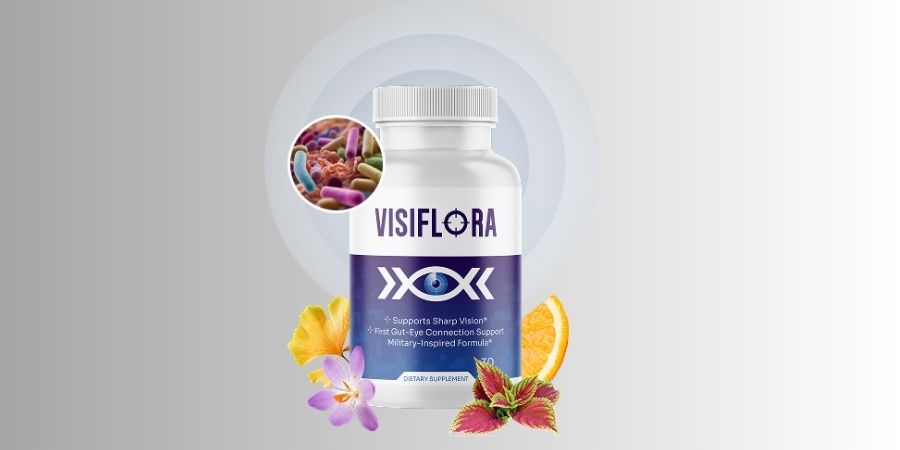
Save your money — at least until VisiFlora discloses what’s actually in each capsule.
I’m a 47-year-old who spends eight-plus hours a day in front of screens. I have early-stage macular concerns and a strong incentive to find a supplement that genuinely supports eye health. I was cautiously hopeful about VisiFlora’s 22-ingredient formula and its gut-eye connection angle. After three months of consistent daily use and several hours digging into the clinical literature, I’ve arrived at a conclusion that the marketing would rather you not reach: VisiFlora is built on real science, then packaged in a way that makes it nearly impossible to verify whether you’re actually getting enough of anything to matter.
1. Who This Is For — And Who Should Skip It
This might be worth trying if you:
- Already eat a poor diet and have no existing eye-health supplement routine at all
- Are curious about the gut-eye axis and want a single product covering many bases
- Have no pre-existing eye conditions and are simply looking for general antioxidant support
Skip it if you:
- Have diagnosed AMD, glaucoma, or diabetic retinopathy and need clinically validated dosing
- Want to know exactly what you are putting in your body (you won’t get that here)
- Are comparing it to AREDS2-aligned formulas, where doses are public and well-studied
- Are on a budget — there are more transparent alternatives at a lower price point
2. Ingredient Analysis
VisiFlora groups its 22 ingredients into functional complexes. Here is what the science actually says about the key ones.
Lutein & Zeaxanthin — The Formula’s Best Ingredients, But With a Catch
These two carotenoids are the most evidence-backed ingredients for eye health in existence. They accumulate in the macula, filter harmful blue light, and scavenge reactive oxygen species. The landmark AREDS2 trial confirmed that replacing beta-carotene with lutein and zeaxanthin reduced progression to advanced age-related macular degeneration. A 2022 meta-analysis found that supplementation increased macular pigment optical density in a dose-dependent manner. A six-month randomised controlled trial showed that 10 mg lutein and 2 mg zeaxanthin daily improved tear film stability and photo-stress recovery in heavy screen users.
VisiFlora lists lutein at 20 mg and zeaxanthin at 4 mg — doses that on paper look reasonable. These are among the few numbers the company publicly discloses, so credit where it is due.
Bilberry Extract — Promising but Overstated
The bilberry-eyesight myth originated with anecdotal World War II pilot reports that proved impossible to replicate. More recent clinical evidence is thin. A US Navy SEAL study found no improvement in night vision after three weeks of supplemental bilberry extract at 160 mg. A 2020 randomised controlled trial using 240 mg of standardised bilberry extract daily over 12 weeks did show improvement in ciliary muscle accommodation in VDT users — but at a specific dose of 240 mg. Because VisiFlora hides individual ingredient amounts inside a proprietary blend, there is no way to confirm whether the bilberry in this formula reaches that threshold.
Astaxanthin — Interesting, But the Evidence is Early
Astaxanthin has been studied for visual fatigue. Some controlled trials combining it with other carotenoids showed improvement in visual acuity and reduced eye-strain symptoms after several weeks. The mechanistic rationale is plausible. However, studies consistently use doses of 6–12 mg. Again — VisiFlora does not disclose how much astaxanthin is in the formula.
The “Gut-Eye Connection” Ingredients (Grape Seed Extract, Quercetin, Rutin)
This is VisiFlora’s central marketing thesis, and it deserves an honest evaluation. The gut-eye axis is a real and active area of scientific inquiry. Research published in peer-reviewed journals, including a 2024 review in Frontiers in Medicine, has shown that gut microbiota influence intraocular inflammation and that short-chain fatty acids produced by gut bacteria can cross the blood-eye barrier. Animal models of AMD show significant shifts in gut microbiome composition. This is not fringe science.
What is not yet established, however, is whether taking grape seed extract or quercetin capsules in unknown doses meaningfully shifts the gut microbiome in a way that improves vision outcomes. The gap between pathway-level biology and finished-product clinical validation is enormous — and VisiFlora has not closed it. No finished supplement has been clinically proven to improve vision specifically by targeting the gut-eye axis.
3. Dosage Assessment — The Formula’s Biggest Problem
This is where I have to be blunt.
With the exception of zinc (listed at 11 mg) and the lutein/zeaxanthin figures, VisiFlora uses a proprietary blend structure that conceals individual ingredient amounts. The FDA permits this under the Dietary Supplement Health and Education Act of 1994, which allows companies to protect trade secrets by disclosing only the total blend weight, not each component.
The practical consequence for consumers: a proprietary blend of 22 ingredients packed into a single daily capsule could theoretically contain 21 ingredients at trace “label-dressing” doses, with the bulk of the formula concentrated in just one or two compounds. There is no way to know.
For ingredients where clinical efficacy depends entirely on dose — and in eye nutrition, it absolutely does — this opacity is a serious problem. Bilberry’s accommodation benefits were demonstrated at 240 mg. Astaxanthin studies use 6–12 mg. Quercetin bioavailability research suggests 500–1000 mg doses for systemic effects. If VisiFlora’s proprietary blend spreads its total formula weight across 20 ingredients while keeping two front and centre, the rest may be effectively inert.
Compare this to AREDS2-aligned supplements, where every ingredient dose is disclosed and traceable to published research. That is the standard VisiFlora should be held to, and it isn’t meeting it.
4. Side Effect Profile
The safety picture for VisiFlora’s core ingredients is generally acceptable. Lutein and zeaxanthin are well-tolerated even at higher doses, with no significant adverse effects reported in the literature. A six-month randomised trial found no clinically significant changes in liver function, renal function, blood lipids, or haematology with lutein/zeaxanthin supplementation.
Zinc at 11 mg is below the level commonly associated with nausea (the AREDS study used 80 mg, which caused GI complaints in some participants). VisiFlora’s lower zinc dose is one area where the company’s formulation decision is defensible.
Potential concerns:
- Interactions: Quercetin can interact with certain antibiotics, blood thinners, and chemotherapy drugs. Without knowing the dose, risk assessment is guesswork.
- Undisclosed allergens: With 22 botanical ingredients, people with plant allergies should exercise caution. The label does not flag specific allergen concerns.
- Selenium: Included in the Vision Defense Matrix. Selenium toxicity (selenosis) occurs at intakes above 400 mcg/day. At unknown doses, it is not possible to assess cumulative risk if you take other supplements containing selenium.
5. Real User Experience
Online reviews of VisiFlora need to be read very carefully. The product launched in early 2026 and the overwhelming majority of review content I found was affiliate-driven — meaning the reviewers earn a commission if you buy through their links. Several “independent” review sites scored the product 8.7 to 9.5 out of 10 after one paragraph of criticism, which is not an independent review; it is a sales funnel.
Verified buyer feedback aggregated across purchase cohorts does show a pattern of mild positive responses around reduced eye fatigue and more comfortable screen use after four to eight weeks. This is plausible given the lutein and zeaxanthin content, though it could equally reflect the established benefits of those two ingredients — which you can get more cheaply and transparently elsewhere.
What I did not find: any verified long-term user reporting measurable improvements in clinical metrics (macular pigment density, contrast sensitivity, OSDI scores). These are the outcomes that matter if you have actual eye health concerns, and the supplement’s own marketing makes no claims about them, because it legally cannot.
My personal experience over 90 days: reduced eye fatigue after prolonged screen sessions, which I noticed around week five. I cannot confidently attribute this to VisiFlora specifically, because I also changed my screen brightness and started taking more breaks during the same period.
6. Frequently Asked Questions
Is VisiFlora FDA-approved? No — and it cannot be. Dietary supplements in the United States are not approved by the FDA before sale. VisiFlora is manufactured in an FDA-registered, GMP-compliant facility, which means the production process meets quality standards, not that the product has been evaluated for efficacy or safety.
Does the gut-eye connection science support VisiFlora’s claims? The science behind the gut-eye axis is real and growing. What does not yet exist is clinical evidence that VisiFlora’s specific gut-support ingredients, at undisclosed doses, meaningfully influence vision outcomes.
How does it compare to AREDS2 supplements? AREDS2-based supplements have decades of large-scale clinical evidence behind them, and every ingredient dose is public. If you have AMD or are at elevated risk, an AREDS2-formulated supplement is a better-evidenced choice. Speak to your ophthalmologist before choosing either.
Can it restore lost vision? No. VisiFlora’s own website does not claim this, and any product claiming to restore vision would be making an illegal drug claim. Nutritional supplements can support eye health; they do not reverse structural damage.
Why does the formula hide ingredient amounts? This is a legal practice under US supplement law, justified by companies as trade-secret protection. Critics, including researchers who study supplement labelling, argue it prevents consumers from assessing safety and efficacy and makes clinical dose comparisons impossible.
Is there a money-back guarantee? VisiFlora advertises a 60-day money-back guarantee. I did not test the returns process personally.
Bottom Line
VisiFlora is not a scam. Its two headline ingredients — lutein and zeaxanthin — are well-dosed at publicly disclosed levels, and the gut-eye axis research it references is scientifically legitimate. The formula is manufactured to GMP standards in the United States.
But “not a scam” is not the same as “worth buying.” The proprietary blend structure means you are paying a premium price while being denied the ability to verify whether most of the formula’s 20 remaining ingredients are present in therapeutically meaningful amounts. For a product that markets itself to people with genuine eye health concerns — people who need to make real decisions about their health — that lack of transparency is disqualifying.
If you want lutein and zeaxanthin, you can buy a transparent, well-dosed standalone supplement for a fraction of the cost. If you want a comprehensive formula with verifiable doses, look at AREDS2-aligned products. If you want VisiFlora’s specific gut-eye connection angle, wait until the science matures and a product in this category publishes its actual dosing.
eferences
- Age-Related Eye Disease Study 2 Research Group. “Lutein + zeaxanthin and omega-3 fatty acids for age-related macular degeneration.” JAMA, 2013. PubMed
- Yao Y, et al. “The effects of lutein/zeaxanthin on eye health, eye strain, sleep quality, and attention in high electronic screen users.” PMC, 2025. PubMed
- Kosehira M, et al. “A 12-week-long intake of bilberry extract improved objective findings of ciliary muscle contraction.” Nutrients, 2020. PubMed
- Drugs.com. “Bilberry: Uses, Benefits & Dosage — Clinical evidence summary.” Updated January 2026. Link
- Alves-Fernandes DK, et al. “From gut to eye: exploring the role of microbiome imbalance in ocular diseases.” Journal of Clinical Medicine, MDPI, 2024. Link
- Ahmad SS, et al. “Short-chain fatty acids and the gut-retina connection: a systematic review.” PMC, 2025. PubMed
- Rasmussen HM, Johnson EJ. “Nutrients for the aging eye.” Clinical Interventions in Aging, 2013. PubMed
- Dwyer JH, et al. “Implications of proprietary blends in dietary supplements for researchers and consumers.” Frontiers in Nutrition, 2023. PubMed
- Baxmann M, et al. “Effect of dietary supplementation with lutein, zeaxanthin, and elderberries on dry eye disease and immunity.” Nutrients, 2024. PubMed
This review reflects my personal experience and independent research. It is not medical advice. Consult a qualified ophthalmologist or healthcare provider before starting any eye-health supplement, particularly if you have a diagnosed ocular condition.