
Evidence-based grade — not recommended on current data
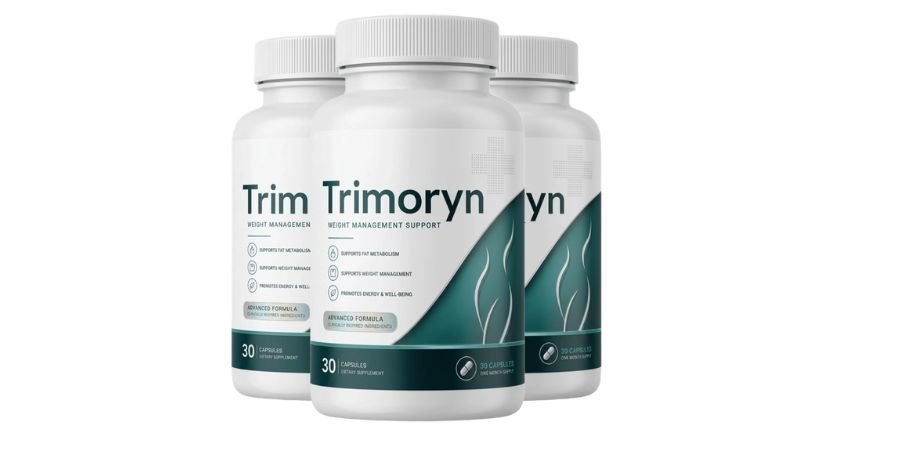
Trimoryn is a once-daily capsule marketed mainly to women over 40 for weight management, appetite balance, and metabolic support. It’s built around six research-backed compounds — berberine, glucomannan (konjac fiber), alpha lipoic acid, cinnamon bark extract, curcumin, and resveratrol — plus two probiotic strains and a B vitamin. That ingredient list looks reasonable on paper.
The problem is dose. When the exact milligram amounts on Trimoryn’s own label are lined up against the doses used in the clinical trials that generated the “may support weight management” claims, almost every active ingredient sits at roughly 1–5% of the amount actually studied. A full breakdown follows below.
- What’s good: Trimoryn discloses individual per-ingredient doses rather than hiding everything behind a vague “proprietary blend” total — genuinely uncommon in this category.
- What’s not: The doses disclosed are, with one partial exception, far below the amounts shown to do anything in human trials.
- Marketing gap: Independent investigations have found that third-party video sales letters promoting Trimoryn invoke language resembling prescription GLP-1 drugs, which the brand’s own site does not claim and the product does not contain.
Who This Is For — and Who Should Skip It
✅ Might reasonably consider it
Someone who wants a low-dose daily multi-ingredient wellness capsule as a minor adjunct to diet and exercise, isn’t expecting measurable weight loss from the product itself, and values full label transparency over “proprietary blend” secrecy.
🚫 Should skip it
Anyone hoping to replicate the results seen in berberine, glucomannan, or alpha-lipoic-acid weight-loss studies; anyone on prescription medication (several ingredients interact with glucose/lipid-lowering drugs) without medical supervision; anyone pregnant or breastfeeding; and anyone drawn in by “GLP-1 alternative” style marketing claims, since the product is not that and doesn’t claim to be on its own materials.
Ingredient Analysis: What the Research Actually Says
Trimoryn’s label lists eleven components. Below is what independent, peer-reviewed research has found for each — and how that compares to what’s actually in the capsule.
Berberine HCl — 15 mg
Berberine has real research behind it as a metabolic-health compound. A systematic review and meta-analysis of ten randomized controlled trials found berberine supplementation produced small but statistically significant reductions in BMI and waist circumference — but the trials feeding that analysis dosed participants far above what a single Trimoryn capsule provides.
Separate clinical work, including a trial giving obese subjects 500 mg three times daily for three months, reported reductions in body weight, BMI, and body fat percentage at that dose. The U.S. National Center for Complementary and Integrative Health’s own review states plainly that weight effects were seen mainly in people taking more than 1 gram per day for over eight weeks.
Trimoryn’s dose: 15 mg — about 1–1.5% of the 1,000–1,500 mg/day range used in the trials showing effects.
Konjac Fiber / Glucomannan — 50 mg (standardized to 90%)
Glucomannan has an EFSA-approved health claim for weight management, but specifically at 3 grams per day taken in split doses before meals as part of an energy-restricted diet. A meta-analysis of six randomized trials found a modest but significant weight reduction at doses in that range, and even a lower 1.33 g/day, three-times-daily protocol was used in an 8-week randomized trial from Johns Hopkins researchers. Notably, a 2014 systematic review by Onakpoya and colleagues found no statistically significant weight-loss effect versus placebo at all — the evidence for this ingredient is genuinely mixed even at proper doses.
Trimoryn’s dose: 50 mg — about 1.7% of the 3 g/day EFSA-approved amount, and well below even the lowest dose tested in published trials.
Alpha Lipoic Acid — 25 mg
A meta-analysis of twelve placebo-controlled trials found ALA supplementation produced small but significant reductions in body weight and BMI. The trials behind that finding used doses from 300 mg up to 1,800 mg per day, with 600 mg/day being the most common protocol; a 20-week trial giving obese subjects 1,800 mg/day found a modest but statistically significant weight reduction compared to placebo.
Trimoryn’s dose: 25 mg — about 1.4–4% of the 600–1,800 mg/day studied range.
Turmeric Extract (95% curcumin) — 15 mg
Curcumin research for metabolic and inflammatory endpoints typically uses doses in the 500 mg–1,000+ mg range, and curcumin is also known to have poor natural bioavailability, which is why many studied formulations pair it with piperine or use enhanced-absorption forms. Trimoryn’s label doesn’t indicate an enhanced-absorption form.
Trimoryn’s dose: ~14 mg of actual curcumin — a small fraction of typical study doses, before even accounting for absorption.
Cinnamon Bark Extract (10:1) — 100 mg
This is the closest thing on the label to a reasonably dosed ingredient. A 10:1 extract at 100 mg is roughly equivalent to 1 gram of raw cinnamon, which falls within — if at the low end of — the 1–6 gram range used in blood-sugar-focused human studies. It’s still on the modest end, but it’s the one ingredient here that isn’t dramatically underdosed relative to its research base.
Resveratrol Extract (20%) — 12 mg
This works out to roughly 2.4 mg of actual resveratrol. Human resveratrol trials for metabolic outcomes typically use 150 mg to over 1,000 mg per day. At 2.4 mg, this ingredient is present in essentially a token amount.
Bifidobacterium Breve & Akkermansia Muciniphila — 1 billion CFU each
Both are legitimate research subjects in the gut-metabolism literature, and Akkermansia muciniphila in particular has generated genuine scientific interest for metabolic health. However, published probiotic trials generally use potencies from several billion up to 100 billion+ CFU per strain. One billion CFU is on the low end of what’s typically studied, and Trimoryn’s own materials do not cite a specific trial using this exact strain-and-dose combination.
Mangosteen Powder (100 mg), Prickly Pear Extract (100 mg), Riboflavin/B2 (25 mg)
Mangosteen and prickly pear have limited, mostly preliminary human evidence for weight-related outcomes — there isn’t an established “effective clinical dose” to compare against in the first place, which itself is worth noting. Riboflavin at 25 mg (1,470% of the Daily Value) is a B-vitamin included at a well-established safe dose, but B2 sufficiency has no established mechanism for weight loss in people who aren’t deficient — it functions here mainly as a label-filling addition rather than a weight-management ingredient.
Dosage Assessment: Label Amount vs. Clinical Amount
| Ingredient | Trimoryn’s Dose | Typical Studied Dose | % of Studied Dose |
|---|---|---|---|
| Berberine HCl | 15 mg | 1,000–1,500 mg/day | ~1–1.5% |
| Glucomannan (konjac fiber) | 50 mg | 3,000 mg/day (EFSA) | ~1.7% |
| Alpha Lipoic Acid | 25 mg | 600–1,800 mg/day | ~1.4–4% |
| Curcumin (from turmeric extract) | ~14 mg | 500–1,000+ mg/day | ~1.4–3% |
| Resveratrol | ~2.4 mg | 150–1,000+ mg/day | ~0.2–1.6% |
| Cinnamon bark extract (10:1) | 100 mg (~1 g equiv.) | 1,000–6,000 mg/day (raw) | ~17–100% |
| Probiotic strains (each) | 1 billion CFU | 1–100 billion CFU | Low end |
Six of the seven comparable ingredients land under 5% of their studied dose. Cinnamon is the sole ingredient in a plausible range, and even that sits toward the bottom of it.
Side Effect Profile
The upside of underdosing: Because most active ingredients are present at a small fraction of clinical amounts, the side effects documented at full research doses — berberine’s gastrointestinal upset, alpha lipoic acid’s nausea and dizziness at 1,200–1,800 mg, or cinnamon’s coumarin-related liver concerns at high cumulative intake — are unlikely to show up at Trimoryn’s amounts. This is a case where low potency plausibly means low risk, though it cuts against effectiveness at the same time.
Independent product reviews note that Trimoryn does not publish a complete major-allergen statement and does not make manufacturing-facility or independent lab testing documents publicly available, which limits how thoroughly any safety claims can be independently verified. As with any supplement, people on prescription glucose- or lipid-lowering medication should talk to a doctor before adding berberine, alpha lipoic acid, or cinnamon extract, since all three can theoretically compound blood-sugar-lowering drug effects even at low doses.
Real User Experience: A Word of Caution
This is where things get murkiest. Trimoryn is sold through multiple near-identical “official” websites with overlapping but inconsistent marketing copy, and it’s promoted heavily through affiliate-style “review” articles that claim to have audited sources like the Better Business Bureau, Trustpilot, Reddit, and Consumer Reports.
A red flag worth naming directly: Several of these “review” sites present named, dated customer testimonials (complete with age, city, and source platform) that read like genuine social proof — but the ingredient lists those same sites describe for Trimoryn don’t match its actual Supplement Facts panel.
One prominent “review” site attributes the formula to Green Tea Extract and Garcinia Cambogia, neither of which appears anywhere on the real label. That mismatch is a strong signal that at least some of this “user review” content is templated affiliate marketing rather than verified customer experience.
A separate, more careful investigation into Trimoryn’s marketing found that the more dramatic claims — comparisons to GLP-1 drugs, “government protocol” framing, and celebrity attribution — originate from third-party video sales funnels rather than Trimoryn’s own brand materials, and concluded the underlying product should be evaluated as an ordinary dietary supplement rather than through that marketing lens.
Bottom line: there does not appear to be a body of independently verifiable, non-affiliate user experience data for this product at this time. Treat any specific weight-loss numbers you see attributed to individual “reviewers” with real skepticism.
Frequently Asked Questions
Is Trimoryn a GLP-1 drug like Ozempic or Wegovy?
No. It contains no semaglutide, tirzepatide, retatrutide, or any GLP-1 agonist. It’s a dietary supplement, not a prescription medication, and it works through entirely different (and far less studied, at these doses) mechanisms.
Will I lose weight taking Trimoryn?
Based on the doses on its own label compared to the clinical research on its ingredients, meaningful weight loss from the product alone looks unlikely. Several of its ingredients showed only modest effects even at their full studied doses — and Trimoryn provides a small fraction of those doses.
Is Trimoryn safe?
At these low doses, most ingredients are unlikely to cause the side effects seen in higher-dose clinical trials. That said, the brand hasn’t publicly released third-party lab testing or a complete allergen statement, and anyone on prescription medication — especially for blood sugar or lipids — should check with a doctor first.
Why does Trimoryn include so many ingredients at such small doses?
This is a common formulation pattern in the supplement industry sometimes called “kitchen sinking” — combining many recognizable, research-associated ingredient names on a label at doses low enough to keep costs down, even though the doses are far below what the underlying research actually tested.
Is Trimoryn a scam?
The product itself appears to be a real, legally sold dietary supplement with a disclosed ingredient panel and a stated refund policy — that’s a genuinely different question from whether it’s likely to work as advertised. The aggressive third-party marketing funnels and templated “review” sites around it deserve more skepticism than the base product itself.
References
- Pourghassem Gargari B, et al. “The effect of berberine supplementation on obesity indices: A dose-response meta-analysis and systematic review of randomized controlled trials.” PubMed. pubmed.ncbi.nlm.nih.gov/32379652
- National Center for Complementary and Integrative Health. “Berberine and Weight Loss: What You Need To Know.” nccih.nih.gov
- Absorption Kinetics of Berberine and Dihydroberberine and Their Impact on Glycemia: A Randomized, Controlled, Crossover Pilot Trial. PMC. PMC8746601
- Keithley J, Swanson B, et al. “Safety and Efficacy of Glucomannan for Weight Loss in Overweight and Moderately Obese Adults.” PMC. PMC3892933
- “Effects of glucomannan supplementation on weight loss in overweight and obese adults: A systematic review and meta-analysis of randomized controlled trials.” ScienceDirect. sciencedirect.com
- Namazi N, et al. “Alpha-lipoic acid supplement in obesity treatment: A systematic review and meta-analysis of clinical trials.” PubMed. pubmed.ncbi.nlm.nih.gov/28629898
- “A Randomized Controlled Trial of Long-Term (R)-α-Lipoic Acid Supplementation Promotes Weight Loss in Overweight or Obese Adults.” ScienceDirect. sciencedirect.com
- Koh EH, et al. “Effects of Alpha-Lipoic Acid on Body Weight in Obese Subjects.” The American Journal of Medicine. amjmed.com
- Trimoryn Supplement Facts Analysis (ingredient/dose disclosure source). GlobeNewswire, republished via Yahoo Finance, July 7, 2026. finance.yahoo.com
- “Trimoryn Reviews & Complaints Investigated (2026).” Barchart, June 24, 2026. barchart.com
This article is independent analysis for informational purposes and is not medical advice. It is not affiliated with, endorsed by, or sponsored by Trimoryn or its manufacturer. Dose comparisons reflect publicly available label information as of the research date above and may not reflect current formulations. Always consult a qualified healthcare professional before starting any new supplement, especially if you take prescription medication or have an underlying health condition. These statements have not been evaluated by the FDA. This product is not intended to diagnose, treat, cure, or prevent any disease.