
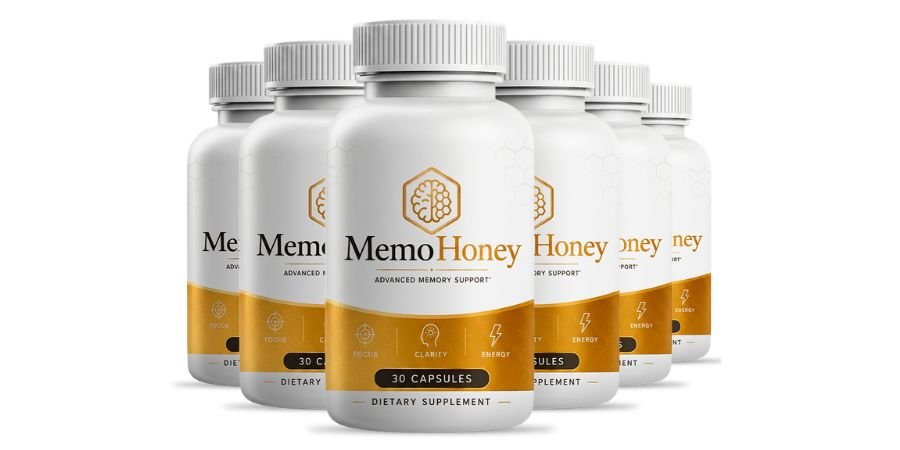
MemoHoney Review: Verdict.
Skip it. MemoHoney is marketed as a “brain blood flow” cognitive supplement built primarily around nitric-oxide amino acids (arginine and citrulline in various forms) that are well-studied for cardiovascular and exercise performance — not memory or focus.
The one ingredient with a real signal for cognitive benefit in a human trial, L-arginine, is dosed far below the amount used in that trial. Several ingredients mentioned in the brand’s own marketing (Bacopa, Ginkgo, Astaxanthin) carry no disclosed dose on the label at all.
And one active ingredient, beta-alanine, is marketed here as protecting neurons from oxidative stress — but the actual clinical literature on beta-alanine and cognition has directly tested that claim and found no effect. This is a product built on a real physiological pathway wearing a “memory supplement” label it hasn’t earned.
Who This Is For / Who Should Skip It
Might reasonably consider it (with a doctor’s sign-off): A healthy adult curious specifically about the nitric-oxide/circulation angle, who wants to self-experiment within the refund window and has no interacting conditions or medications.
Should skip it:
- Anyone on blood pressure medication, nitrates, PDE5 inhibitors (Viagra/Cialis), or potassium-sparing diuretics — the brand’s own site flags these interactions, because arginine and citrulline are vasoactive compounds.
- Anyone expecting the marketed botanicals (Ginkgo Biloba, Bacopa Monnieri) to do meaningful work — the label doesn’t disclose how much of them, if any measurable amount, is actually in the capsule.
- Anyone diagnosed with or concerned about a cognitive condition such as MCI or dementia — the brand explicitly states this is not a treatment for those, and it shouldn’t substitute for medical evaluation.
- Anyone comparing cost against alternatives — at $158–$294 for a bundle, this is priced well above what the individual disclosed ingredients (arginine, citrulline, niacin — all inexpensive, widely available compounds) would cost purchased separately.
- Anyone who wants ingredient-label consistency — the ingredient list actually differs depending on which of MemoHoney’s several sales domains you’re reading.
Ingredient Analysis — What the Research Actually Says
MemoHoney’s core disclosed formula is six ingredients: L-Arginine, L-Arginine AKG (2:1), L-Citrulline HCl, L-Citrulline Malate, Niacin, and Beta-Alanine. Some marketing pages also list Astaxanthin, Ginkgo Biloba, Bacopa Monnieri, Honey, Blueberry, and Calcium — without disclosed amounts for most of them.
L-Arginine / L-Citrulline (the core mechanism). These are legitimate nitric-oxide precursors — that part of the pitch is accurate biochemistry. For cardiovascular outcomes, the evidence is genuinely mixed: a review of registered clinical trials found a lack of robust evidence that arginine or citrulline reliably lower blood pressure in the general population, with substantial inconsistency across study designs and populations.
For cognition specifically, there is one relevant human trial: a randomized, placebo-controlled study in frail, hypertensive older adults found L-arginine improved global cognitive scores after four weeks, using a dose of 1.66 grams taken twice daily (roughly 3.3 g/day total).
That’s the only solid human cognitive evidence behind this formula’s core ingredients — and it’s in a specific, high-risk population (frail, hypertensive elderly), not general adults looking for daily focus. The dose used in that trial was also roughly 8 times higher than what MemoHoney’s label discloses (200 mg L-arginine plus 200 mg arginine AKG).
Niacin (Vitamin B3). There’s a genuine epidemiological association between higher dietary niacin intake and better cognitive performance in older populations, and one NHANES analysis found a reduced risk of cognitive impairment at higher niacin intake quartiles. But this is observational, population-level dietary data — not evidence that a 7.5 mg supplemental dose produces a measurable day-to-day cognitive effect. For context, that 7.5 mg is close to the standard RDA for niacin, not a therapeutic dose; clinical trials testing niacin as an active cognitive intervention have used doses of 500 mg to 1,500 mgin unrelated Alzheimer’s research contexts, hundreds of times higher than what’s in this capsule.
Beta-Alanine. This is the clearest mismatch between marketing claim and evidence in the whole formula. MemoHoney’s own copy describes beta-alanine as protecting neurons from oxidative stress. But beta-alanine’s actual, well-established mechanism is raising muscle carnosine to buffer acid during high-intensity exercise, typically requiring 2–6 grams per day to meaningfully raise carnosine levels — MemoHoney provides 40 mg, roughly 1–2% of a studied dose. More importantly, when researchers directly tested beta-alanine’s effect on brain carnosine and cognitive performance, they found no effect on either, and a separate study in soldiers similarly found beta-alanine improved physical performance but had no effect on cognitive function.
Ginkgo Biloba, Bacopa Monnieri, Astaxanthin, Honey, Blueberry. These ingredients do have their own bodies of cognitive research elsewhere (Bacopa in particular has reasonable trial support for memory in the wider literature), but none of them appear with a disclosed dose on MemoHoney’s label. Without a stated amount, there’s no way to know whether the capsule contains a clinically relevant quantity or a trace amount added for the ingredient list.
Dosage Assessment — Are the Amounts Actually Effective?
This is the formula’s central problem, and it’s a more specific one than a typical “proprietary blend” complaint — MemoHoney actually does disclose doses for several ingredients, which is a genuine point in its favor over something like Horse Boost. But disclosure isn’t the same as adequacy:
- L-Arginine (200 mg) + L-Arginine AKG (200 mg): The one human cognitive trial for arginine used roughly 3,320 mg/day — this formula provides a small fraction of that amount.
- Niacin (7.5 mg): Close to the baseline RDA, far below doses used in any cognitive-intervention research.
- Beta-Alanine (40 mg): About 1–2% of the dose range shown to raise carnosine levels at all, in a formula ingredient whose own supporting research shows no cognitive effect even at full dose.
- Astaxanthin, Ginkgo Biloba, Bacopa Monnieri, Honey, Blueberry: No disclosed amount — unquantifiable.
Even where the label is transparent, the amounts don’t match the doses used in the research the marketing implicitly leans on. Transparent labeling of a sub-clinical dose isn’t materially different from an opaque proprietary blend in terms of what it does for you.
Side Effect Profile — What the Evidence Says to Watch For
- Arginine/citrulline: Generally well-tolerated at normal doses; main concern is interaction with blood pressure medication, nitrates, and PDE5 inhibitors, since these compounds are vasoactive by design — the brand’s own site flags this correctly.
- Niacin: At the 7.5 mg dose in this product, side effects are unlikely; niacin’s well-known flushing effect is a high-dose (typically 100 mg+) phenomenon, so this formula’s low dose likely avoids it — which also underscores that the dose is too low to be doing much therapeutically either.
- Beta-alanine: At normal supplemental doses, the main known side effect is a harmless skin-tingling sensation (paresthesia); at 40 mg, this formula’s dose is well below what typically causes that.
- Overall: Nothing in the disclosed formula looks dangerous at these doses for a healthy adult — but that’s partly because the doses are low enough that neither the risks nor the benefits are likely to be pronounced.
Real User Experience — A Note on What’s Actually Verifiable
As with similar products in this category, one review source directly noted that no independent reviews or complaint records could be found anywhere for MemoHoney. The “verified purchase” testimonials that do exist appear directly embedded in the brand’s own sales pages — not on independent platforms like Trustpilot, the BBB, or Reddit — which means they can’t be cross-checked against a real customer base.
A few additional transparency flags are worth noting directly: the brand’s marketing operates across at least six near-identical domains (memmohoney.com, memoshoney.com, memohoneys.com, memohoneyy.com, memohoneey.com, and others), the ingredient list itself is inconsistent between these domains (some describe six active ingredients, others describe twelve), and one review source found the checkout page discloses only six of the twelve ingredients that actually appear on the physical product label.
That combination — multiple business names, inconsistent public-facing ingredient claims, and no independently verifiable customer feedback — means a buyer has no reliable external signal to check the marketing against, only the marketing itself.
Frequently Asked Questions
Does MemoHoney actually improve memory? The evidence doesn’t support that claim as marketed. Its core ingredients (arginine, citrulline) have exactly one relevant human cognitive trial, conducted in frail elderly hypertensive patients at a dose several times higher than what’s in this product.
Is the “no proprietary blend” claim accurate? Partially. Several ingredients do carry disclosed per-capsule doses, which is better than a fully hidden proprietary blend. But five to six other listed ingredients (Bacopa, Ginkgo, Astaxanthin, Honey, Blueberry) have no disclosed amount at all, so the “full transparency” claim doesn’t hold for the whole formula.
Is it safe with blood pressure medication? Not without medical supervision — arginine and citrulline are vasoactive, and the brand’s own site advises checking with a doctor if you take blood pressure medication, nitrates, or PDE5 inhibitors.
Why does beta-alanine appear in a memory supplement? It’s most established for muscular exercise endurance, not cognition. Direct research testing beta-alanine’s effect on brain carnosine and cognitive performance found no effect on either measure.
Is MemoHoney FDA-approved? No. No dietary supplement is FDA-approved for efficacy; FDA-registered facility status refers only to manufacturing site inspection eligibility, not product claims.
Why do different MemoHoney websites list different ingredients? That inconsistency across the brand’s own domains is itself a legitimate reason for caution, independent of the ingredient science — see Section 6.
References
- Assessment of Registered Clinical Trial Designs: L-Arginine and/or L-Citrulline for Hypertension. https://www.ncbi.nlm.nih.gov/pmc/articles/PMC11053694/
- L-Arginine Improves Cognitive Impairment in Hypertensive Frail Older Adults. Frontiers in Cardiovascular Medicine, 2022. https://www.frontiersin.org/journals/cardiovascular-medicine/articles/10.3389/fcvm.2022.868521/full
- Association between dietary niacin intake and cognitive function in the elderly: NHANES 2011–2014. https://www.ncbi.nlm.nih.gov/pmc/articles/PMC10420858/
- Niacin – Vitamin B3, Harvard T.H. Chan School of Public Health, The Nutrition Source. https://nutritionsource.hsph.harvard.edu/niacin-vitamin-b3/
- Nicotinic Acid for the Treatment of Alzheimer’s Disease — clinical trial listing (dose reference). https://www.centerwatch.com/clinical-trials/listings/NCT06582706/nicotinic-acid-for-the-treatment-of-alzheimers-disease
- Effects of Beta-Alanine Supplementation on Brain Homocarnosine/Carnosine Signal and Cognitive Function: An Exploratory Study. https://www.ncbi.nlm.nih.gov/pmc/articles/PMC4397072/
- β-alanine supplementation improves tactical performance but not cognitive function in combat soldiers. https://www.ncbi.nlm.nih.gov/pmc/articles/PMC3983672/
- Effects of Beta-Alanine on Muscle Carnosine and Exercise Performance: A Review of the Current Literature. PubMed. https://pubmed.ncbi.nlm.nih.gov/22253993/
- MemoHoney Reviews & Complaints Evaluated — label and ingredient-disclosure analysis. https://www.barchart.com/story/news/3437849/memohoney-reviews-complaints-evaluated-latest-research-into-the-daily-memory-focus-and-mental-clarity-support-formula-for-cognitive-wellness
- MemoHoney Reviews 2026 — ingredients, pricing, and domain/labeling inconsistencies. https://www.newswire.com/news/memohoney-reviews-2026-the-daily-cognitive-support-formula-buyers-are-comparing