
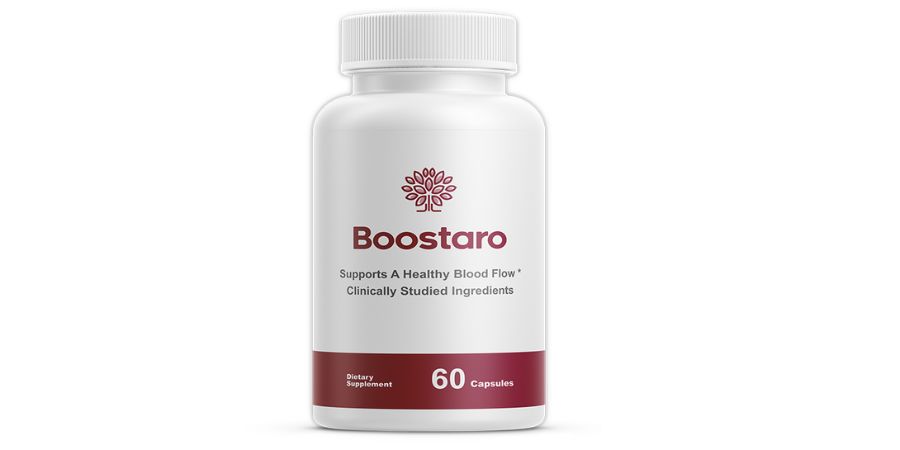
Verdict: Not recommended. Boostaro packages a handful of mildly studied ingredients into an opaque, underdosed formula and sells it at a premium price — roughly $69 per bottle — for a condition that has safe, proven, affordable medical treatments. The ingredient list is not fraudulent, but the gap between what the science actually shows and what the marketing claims is wide enough to matter. Men with real erectile dysfunction or cardiovascular concerns deserve better than a proprietary blend with no disclosed dosages, no independent clinical trials, and a sales funnel built almost entirely on affiliate reviews.
1. Who This Is For — and Who Should Skip It
Possibly worth considering if you:
- Have very mild, occasional difficulties with erection quality and are categorically opposed to speaking with a doctor
- Are already in good cardiovascular health and simply want a general circulation supplement
- Have already ruled out underlying conditions with a physician
Skip Boostaro if you:
- Have moderate to severe erectile dysfunction — the ingredients here are not clinically validated for this severity
- Have any cardiovascular condition, are on anticoagulants (e.g. clopidogrel), blood pressure medications, or statins — interactions are possible and the company does not adequately flag this
- Have diabetes — one of the most common causes of ED, and one user complaint from this population was particularly revealing: even the supplement’s own “negative review rebuttal” page acknowledged that “severe underlying conditions (diabetes with significant ED) likely require prescription intervention”
- Are on a budget — at $69 per bottle with no disclosed potency, you may be spending heavily for sub-therapeutic doses
- Are looking for something with an independent clinical trial behind it — none exists for Boostaro as a formula
2. Ingredient Analysis with Clinical Evidence
Boostaro’s formula centres on four primary ingredients: L-Citrulline, Pine Bark Extract (Maritime Pine), CoQ10, and Magnesium, alongside supporting vitamins. Here is what the science actually says about each.
L-Citrulline
This is the most defensible ingredient in the formula. L-Citrulline is an amino acid that converts to L-arginine in the body, raising nitric oxide levels and supporting vasodilation — a real mechanism relevant to erectile function.
The landmark human trial published in Urology (Cormio et al., 2011) found that 1.5 g per day over one month improved erection hardness scores in men with mild ED, with 50% of participants improving compared to 8.3% on placebo. A follow-up study in PMC (2018) confirmed these findings in men already using PDE5 inhibitors.
However: these effects were limited to mild ED. The studies explicitly noted that L-Citrulline is “less effective than phosphodiesterase type-5 enzyme inhibitors.” More importantly, the effective studied dose is 1.5–3 g per day — and Boostaro does not disclose how much L-Citrulline is in each serving.
Pine Bark Extract (Pycnogenol / Maritime Pine)
Pycnogenol has modest evidence behind it, primarily from small pilot studies. A double-blind study in 21 men (published in Phytotherapy Research, 2003) using 120 mg per day found a 33% improvement in IIEF-5 scores over three months, versus a 21% decrease in the placebo group. The antioxidant and anti-inflammatory properties are real.
Caveats: The Drugs.com clinical monograph notes that “many clinical trials [on pine bark extract] are methodologically weak, making it difficult to support the use of pine bark extract for any condition.” The studied dose for ED specifically is 120 mg/day — again, Boostaro does not tell you what dose you are getting.
CoQ10
CoQ10 is a well-established antioxidant with genuine cardiovascular evidence. A 2024 randomised controlled trial (PMC) in heart failure patients using 120 mg per day (two 60 mg doses) found significant improvements in cardiac function markers and exercise capacity.
The disconnect: CoQ10’s evidence base is primarily for people with existing cardiovascular disease or statin-induced CoQ10 depletion. For healthy men seeking erectile improvement, the evidence is indirect at best. The clinically effective range in studies is typically 100–200 mg per day. Without disclosed dosages from Boostaro, there is no basis for confidence that meaningful amounts are present.
Magnesium
Magnesium is an essential mineral that supports vascular function and ATP production. Roughly 80% of adults are deficient. As a general health supplement, it has value. But it is not a male performance ingredient — it is a nutritional gap-filler, not a mechanism for erectile improvement.
The Proprietary Blend Problem
Boostaro does not publish its exact ingredient amounts per serving on third-party retail listings or its promotional materials. This is a major red flag. Without disclosed quantities, consumers cannot verify whether any ingredient reaches the threshold studied in clinical trials. This is a standard tactic among underdosed supplements: list legitimate ingredients, hide the amounts.
3. Dosage Assessment
The dosage problem with Boostaro is fundamental and not a minor concern.
The studied effective doses for the key ingredients are:
- L-Citrulline: 1,500–3,000 mg/day (Cormio et al.; Ubie Health clinical review)
- Pine Bark Extract: 120 mg/day for ED (ScienceDirect pilot study)
- CoQ10: 100–200 mg/day for cardiovascular endpoints (Healthline; NCT review)
- Magnesium: 300–400 mg/day for general sufficiency
Each Boostaro serving is two capsules. A standard capsule holds approximately 500–700 mg of material. Two capsules therefore contains a maximum of roughly 1,000–1,400 mg of total content — including fillers, binders, and all four-plus active ingredients combined.
If you do the arithmetic, it becomes nearly impossible for Boostaro to deliver even the lowest studied effective dose of L-Citrulline alone (1,500 mg) in two capsules, let alone meaningful amounts of the remaining ingredients. You are almost certainly getting sub-therapeutic doses across the board.
This is not a theoretical concern. It is arithmetic. The formula may list the right ingredients but cannot physically contain effective amounts of all of them in a two-capsule serving.
4. Side Effect Profile with Evidence
Boostaro’s marketing claims “no reported side effects.” Independent sources tell a different story.
Documented and plausible side effects:
- Gastrointestinal upset: Multiple real-user reports describe stomach discomfort and nausea. L-Citrulline at higher doses is known to cause GI side effects, as noted in clinical pharmacokinetic literature.
- Headaches: Reported by independent users (Twitter/X, Trustpilot) and consistent with nitric oxide-mediated vasodilation effects.
- Blood pressure interactions: Pine bark extract, L-Citrulline, and CoQ10 can all lower blood pressure. Men taking antihypertensives, especially carvedilol or similar beta-blockers, face real interaction risk. A medical consultation documented on JustAnswer highlighted this concern specifically for men on cardiovascular medications — including clopidogrel (an anticoagulant) — for whom niacin-containing supplements like Boostaro warrant caution.
- PDE5 inhibitor interactions: Pine bark extract has documented potential interactions with PDE5 inhibitors (Viagra, Cialis). Men who use both without physician guidance are taking an undisclosed risk.
The claim that Boostaro has “zero side effects” is not a safety assurance — it is a marketing statement unsupported by any independent pharmacovigilance data.
5. Real User Experience
The honest picture from independent platforms (not the brand’s own testimonial pages, which are heavily curated) is mixed to negative.
One investigation aggregated reviews from neutral platforms and found a consistent pattern: complaints about minimal or no results, frustration with the refund policy, and stomach upset. One reviewer on Twitter/X wrote that her husband experienced zero effect and felt tired and nauseated after using the product.
From the supplement’s own negative review rebuttal page (boostaro.net), out of 2,847 listed reviews, 370 reported unsatisfactory experiences — a 13% dissatisfaction rate by their own count, likely understated. The site attributed nearly all negative outcomes to user error: not taking it long enough, having “severe underlying conditions,” or not buying multi-bottle packages. This framing conveniently absolves the product of all failures and places responsibility entirely on the buyer.
The pattern of negative reviews clusters around three themes:
- No noticeable effect after four to eight weeks of consistent use
- Mild digestive discomfort in the early weeks
- Difficulty getting refunds despite the advertised 180-day money-back guarantee
Notably, one independent investigation searched for Boostaro in medical journals and databases and found no independent clinical trials on the formula itself — only the brand’s references to ingredient studies.
6. Frequently Asked Questions
Is Boostaro FDA-approved? No. Boostaro is a dietary supplement and is not approved by the FDA to treat, cure, or prevent any condition, including erectile dysfunction. It is manufactured in an FDA-registered facility — which means the facility has registered its address with the FDA, not that the product has been reviewed or approved.
Can Boostaro treat erectile dysfunction? The clinical evidence does not support this claim. Individual ingredients like L-Citrulline show modest benefit for mild ED in small trials. There are no independent clinical trials of the Boostaro formula itself. For moderate to severe ED, prescription PDE5 inhibitors (sildenafil, tadalafil) have extensive, robust clinical evidence that this supplement cannot match.
Is the 180-day money-back guarantee reliable? Multiple user complaints on independent platforms raise questions about the ease of obtaining refunds. Before purchasing, document your order confirmation and communicate exclusively in writing.
Are the ingredients dangerous? For most healthy men, the ingredients at the doses likely present in the formula are probably safe. The concern is not primarily safety — it is efficacy. The bigger risk is spending money on an underdosed product while delaying a medical consultation that could identify a treatable underlying cause for ED.
Who should absolutely not take Boostaro without speaking to a doctor first? Anyone taking blood pressure medications, anticoagulants (warfarin, clopidogrel), statins, PDE5 inhibitors, or who has a cardiovascular condition, diabetes, or kidney disease.
What should I use instead? Speak with a physician. If you prefer lifestyle and natural approaches, standalone L-Citrulline supplements at 1.5–3 g/day are available for a fraction of the cost of Boostaro and have the actual clinical studies behind the dosage. Exercise, particularly aerobic exercise, has stronger evidence for ED than any supplement on the market.
7. References / Citations
- Cormio, L. et al. (2011). Oral L-Citrulline Supplementation Improves Erection Hardness in Men With Mild Erectile Dysfunction. Urology, 77(1), 119–122. https://pubmed.ncbi.nlm.nih.gov/21195829/
- Shirai, M. et al. (2018). Oral L-citrulline and Transresveratrol Supplementation Improves Erectile Function in Men With Phosphodiesterase 5 Inhibitors: A Randomized, Double-Blind, Placebo-Controlled Crossover Pilot Study. Sexual Medicine. PMC6302103. https://pmc.ncbi.nlm.nih.gov/articles/PMC6302103/
- Stanislavov, R. & Nikolova, V. (2003). Lipid Metabolism and Erectile Function Improvement by Pycnogenol®. ScienceDirect. https://www.sciencedirect.com/science/article/abs/pii/S027153170300126X
- Belcaro, G. et al. (2024). Pycnogenol® French maritime pine bark extract in randomized, double-blind, placebo-controlled human clinical studies. Frontiers in Nutrition. https://www.frontiersin.org/journals/nutrition/articles/10.3389/fnut.2024.1389374/full
- Drugs.com Clinical Monograph: Pine Bark Extract. Updated December 2025. https://www.drugs.com/npp/pine-bark-extract.html
- Schwedhelm, E. et al. (2008). Pharmacokinetic and pharmacodynamic properties of oral L-citrulline and L-arginine. British Journal of Clinical Pharmacology. Referenced via Ubie Health clinical review. https://ubiehealth.com/doctors-note/l-citrulline-erectile-dysfunction-dosing-safety-3811e3
- Mohebbi-Fani, M. et al. (2024). Effect of Coenzyme Q10 Supplementation on Cardiac Function and Quality of Life in Patients with Heart Failure. PMC12155814. https://www.ncbi.nlm.nih.gov/pmc/articles/PMC12155814/
- Ro.co Medical Review: L-arginine for Erectile Dysfunction. Updated May 2026. https://ro.co/erectile-dysfunction/l-arginine-for-ed/
This review reflects publicly available clinical literature and independent user reports as of June 2026. It is intended for informational purposes only and does not constitute medical advice. Men experiencing erectile dysfunction should consult a qualified healthcare provider.