
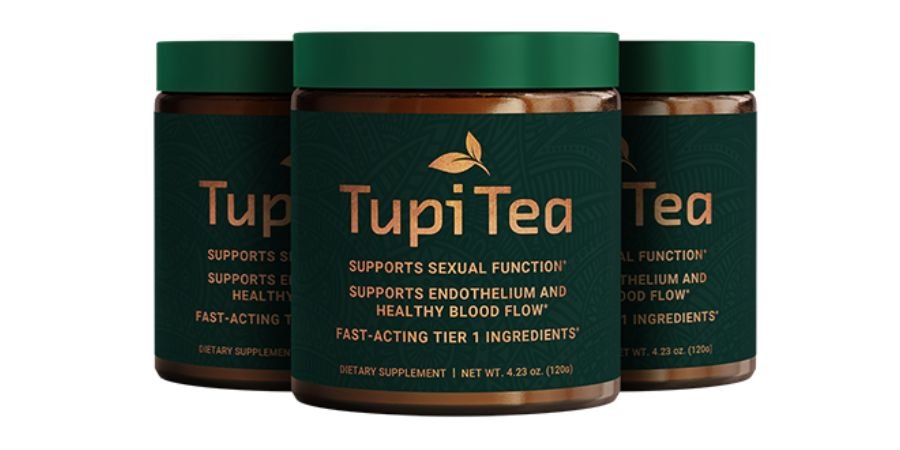
Quick verdict: TupiTea is a powdered “male vitality” supplement sold through a maze of near-identical marketing websites, built on unproven herbal ingredients, vague pseudo-scientific claims, and classic high-pressure sales tactics. There is no published clinical research on the actual TupiTea formula, and several of its central claims don’t hold up. We do not recommend it.
What Is TupiTea? {#what-is-tupitea}
TupiTea is a powdered dietary supplement marketed to men, promising benefits like increased stamina, improved blood flow, higher libido, and support for erectile function. Instead of capsules, it’s sold as a mix-with-liquid powder, which the brand leans on heavily as a point of differentiation from competitors.
On paper, it sounds like a reasonable pitch: natural ingredients, no harsh chemicals, mix it into a drink each morning. In practice, once you look past the sales copy, the product raises far more questions than it answers.
How TupiTea Is Marketed {#how-tupitea-is-marketed}
The marketing around TupiTea follows a formula that should be familiar to anyone who has shopped for supplements online: dramatic before/after framing, testimonials with no verifiable source, claims about “ancient tribal origins,” and urgent, ever-present discount banners.
The supplement is described as being based on ingredients historically used by an indigenous group to prepare for reproduction — a colorful origin story that’s impossible to verify and adds nothing to whether the product actually works today.
The Ingredients: What’s Actually in the Scoop {#the-ingredients}
Based on labeling and retail listings, the formula centers on a handful of familiar “male vitality” botanicals:
- Horny goat weed (Epimedium)
- Maca root
- Tribulus terrestris extract
- Muira puama
- Oat straw powder
These are common across dozens of competing men’s health supplements — they aren’t unique to TupiTea, despite the marketing language suggesting a proprietary breakthrough formula.
Red Flag #1: The “Hidden Sex Organ” Claim {#red-flag-hidden-organ}
One of the more misleading elements of TupiTea’s marketing is the claim that the supplement targets a “hidden sex organ” inside the male body that supposedly influences libido and performance more than the brain does. This is not an established anatomical or physiological concept. It’s a marketing hook, not a medical fact, and its presence in the sales material is a meaningful credibility red flag.
Red Flag #2: Multiple “Official” Websites {#red-flag-multiple-sites}
A basic search for TupiTea turns up several separate websites, each styled as the singular “official” TupiTea page, each with overlapping but not identical sales copy, and each pushing a different “limited time” discount. This is a hallmark of affiliate-driven supplement marketing rather than a single, transparent brand with one storefront. It also makes it harder for a prospective buyer to know which listing (if any) is authoritative, and complicates returns, refunds, and customer support.
Red Flag #3: Confusing Company Information {#red-flag-company-info}
Digging into the fine print reveals a disconnect: the product label names one company as the manufacturer, while a separate company is listed as the operator of the official website’s terms of service, with a different corporate address entirely. Whether these two entities are actually related isn’t disclosed anywhere in the public-facing materials. For a supplement asking customers to trust it with their health and their money, this lack of transparency is a serious mark against it.
Red Flag #4: Urgency and Discount Pressure Tactics {#red-flag-urgency}
Nearly every TupiTea sales page features some version of a steep, time-limited discount — 70%, 81% off, “today only.” These countdown-style offers are a standard persuasion tactic used to short-circuit comparison shopping and careful decision-making. A genuinely well-priced, well-supported product doesn’t typically need to manufacture urgency to get people to buy it.
Red Flag #5: No Clinical Trials on the Finished Product {#red-flag-no-trials}
This is the core issue. TupiTea, as a finished, branded formula, has not been through clinical trials. There’s no peer-reviewed research demonstrating that the specific combination and dosages used in TupiTea improve libido, blood flow, testosterone, or erectile function. The supplement’s own disclaimers confirm it isn’t intended to diagnose, treat, cure, or prevent any disease — standard boilerplate, but worth taking seriously given how confidently the rest of the marketing talks about “unlocking stamina and virility.”
What the Individual Ingredients Actually Show in Research {#ingredient-research}
It’s worth separating the ingredients from the product. Individually, some of these botanicals have been studied — but the evidence is thin, mixed, or specific to different conditions than what TupiTea claims:
- Maca root has some small studies suggesting a possible mild effect on libido, though sample sizes are generally small and results inconsistent.
- Tribulus terrestris has inconsistent research results, with some studies showing no meaningful effect on testosterone in men.
- Horny goat weed (icariin) shows promise in early lab and animal studies related to blood flow, but robust human clinical evidence is limited.
- Muira puama has a long history of traditional use but very little modern clinical research behind it.
Even generously interpreting this research, none of it validates the specific TupiTea formula, its dosages, or its combination of ingredients. Studying an ingredient in isolation, at a specific dose, in a specific population, is not the same as validating a proprietary blend sold under a different set of claims.
Is TupiTea Safe? {#is-it-safe}
For most healthy adults, the ingredients used are generally recognized as low-risk, and no significant pattern of serious adverse effects has been widely reported. That said, “generally safe” is not the same as “effective,” and supplements are not required to prove efficacy before going to market in the same way pharmaceuticals are. Anyone on medication — particularly blood pressure medication, blood thinners, or nitrates — should talk to a doctor or pharmacist before adding an unregulated herbal blend like this one, since interactions with botanical supplements can be unpredictable and are rarely studied.
Who Should Actually See a Doctor Instead {#see-a-doctor}
If you’re dealing with low libido, erectile difficulty, or low energy, those symptoms are worth taking seriously — but a proprietary powder from an unverifiable “tribal recipe” isn’t the way to address them. A doctor can:
- Check for underlying causes like low testosterone, cardiovascular issues, diabetes, or thyroid problems
- Review whether current medications are contributing to the issue
- Discuss evidence-based treatment options, including FDA-approved medications for erectile dysfunction
- Rule out more serious conditions that vague symptoms can sometimes mask
Supplements like TupiTea are marketed as an easy first step, but they can end up delaying a diagnosis that actually matters.
Frequently Asked Questions {#faq}
Is TupiTea FDA approved? No. TupiTea is a dietary supplement, and dietary supplements are not FDA-approved. Being manufactured in an FDA-registered facility only means the facility follows certain manufacturing practices — it says nothing about whether the product itself works.
Does TupiTea actually increase testosterone? There’s no published clinical evidence that the TupiTea formula, specifically, raises testosterone. Some individual ingredients have been studied for this, with mixed and generally weak results.
Is TupiTea a scam? “Scam” is a strong word, but the marketing around TupiTea shares several traits common to low-transparency supplement operations: multiple duplicate “official” sites, unverifiable origin stories, unproven medical-sounding claims, and constant urgency-based discounting. At minimum, buyers should approach it with real skepticism.
What’s a better alternative to TupiTea? Talking to a doctor about symptoms directly is the most reliable path. If a supplement is still of interest afterward, look for single-ingredient products with published human clinical research and transparent, verified dosing — rather than proprietary blends that hide exact amounts.
Final Verdict {#final-verdict}
TupiTea is a textbook example of supplement marketing outpacing supplement evidence. The ingredients aren’t dangerous, but they also aren’t proven — not at the doses used, not in the combination sold, and not for the specific claims made. Layer on the duplicated “official” websites, the unverifiable company structure, the manufactured urgency, and a marketing claim about a nonexistent “hidden sex organ,” and the overall picture is a product built more on persuasion than proof.
Our recommendation: Skip it. If you’re experiencing symptoms related to libido, stamina, or sexual performance, start with a conversation with a doctor rather than a proprietary powder sold through a rotating cast of “official” websites.