
Quick Verdict
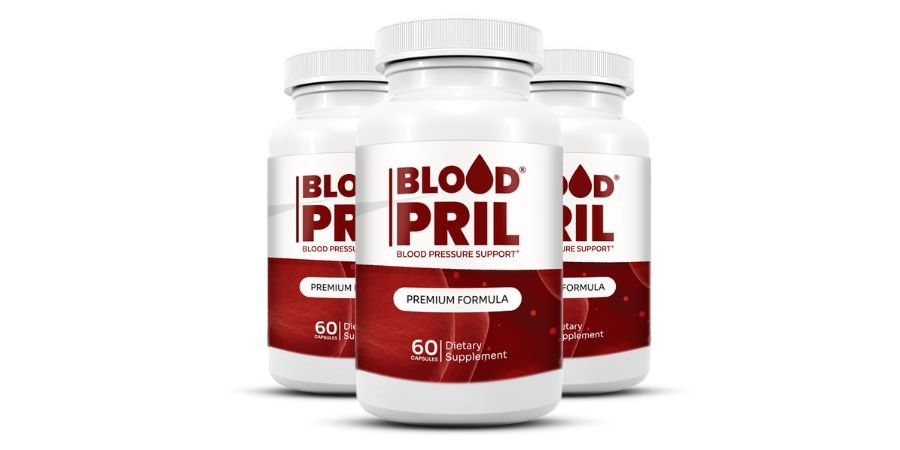
BloodPril is a nitric-oxide-focused dietary supplement marketed for blood pressure support and circulation. After digging into its formula, its marketing, and the evidence behind it, our take is that BloodPril leans heavily on borrowed science, vague language, and classic direct-response sales tactics — while offering little in the way of product-specific proof that it actually works.
Rating: 2/5 — Not recommended as a stand-alone blood pressure strategy.
What Is BloodPril?
BloodPril is sold online as a daily capsule supplement built around amino acids involved in nitric oxide production, including L-citrulline DL-malate, L-arginine alpha-ketoglutarate, and L-arginine HCL. The pitch is straightforward: these compounds are precursors to nitric oxide, a molecule that helps relax and widen blood vessels, so taking them should theoretically support healthy circulation and blood pressure.
It’s marketed as a dietary supplement, not a drug — a distinction that matters more than most buyers realize (more on that below).
The Core Problem: Ingredient Science ≠ Product Science
This is the biggest issue with BloodPril, and it’s a pattern common across the supplement industry.
L-citrulline and L-arginine do have research behind them. Some small studies have found that L-citrulline supplementation may modestly lower systolic blood pressure. That’s real science — but it’s science about the ingredient, studied in isolation, at specific doses, in controlled trial conditions.
What’s missing is any independent, peer-reviewed clinical trial on BloodPril itself — the actual capsule, at its actual dosages, taken by real people over time. Marketing copy that leans on “studies show X ingredient does Y” is doing something subtly misleading: borrowing the credibility of unrelated research to imply the finished product has been validated, when it hasn’t.
This is a textbook supplement-marketing move, and it’s worth watching for anywhere you shop for supplements, not just here.
Red Flag #1: Proprietary Blends and Vague Dosing
Several product listings for BloodPril describe the formula in general terms (“a blend of amino acids”) without always disclosing exact milligram amounts per ingredient. Without transparent dosing, there’s no way to compare what you’re taking against the doses actually used in the research being cited to sell the product. A 500mg dose and a 5000mg dose of the same ingredient can produce very different (or no) effects — and “proprietary blend” language is often used specifically to avoid that comparison.
Red Flag #2: No Third-Party Testing Disclosed
BloodPril’s marketing points to being made in an FDA-registered facility. That’s a real thing, but it’s frequently misunderstood by shoppers. FDA facility registration is not the same as FDA approval, and it does not mean the agency has verified BloodPril’s safety, purity, or effectiveness claims. Supplements are regulated far more loosely than medications in the U.S. — manufacturers aren’t required to prove a supplement works before selling it.
What would build real confidence is independent third-party testing (organizations like NSF, USP, or Informed Choice) confirming the capsules contain what the label says, in the amounts claimed, without contaminants. We could not find evidence that BloodPril publishes results from this kind of testing.
Red Flag #3: Emotionally-Loaded Sales Copy
BloodPril’s official sales pages lean on language designed to create urgency and emotional resonance rather than inform — phrases about feeling more “balanced,” reclaiming “peace of mind,” and relief from a “heavy head feeling.” This is persuasive copywriting, not clinical description, and it’s a pattern seen across countless supplement funnels that use identical structure regardless of what’s in the bottle. Add-to-cart buttons repeated multiple times down a single page, along with a bundled “bonus” digital guide, are also hallmarks of direct-response sales funnels optimized for conversion rather than education.
None of this proves the product doesn’t work. But it’s a strong signal that the page is optimized to sell, not to inform — and that should shift how much weight you give the claims on it.
Red Flag #4: A Reported Counterfeit Market
One press release about BloodPril explicitly acknowledges that the product’s rising visibility has led to a “dangerous secondary market” — typically industry shorthand for counterfeit or unauthorized resellers. That’s a legitimate concern for buyers: if you can’t verify you’re purchasing from the official source, you have no idea what’s actually in the capsules you receive. This alone should make anyone considering BloodPril extremely cautious about third-party marketplace listings.
What BloodPril Gets Right
In fairness, not everything here is a red flag:
- The individual ingredients (L-citrulline, L-arginine) are reasonably well-studied and generally considered safe for most healthy adults at typical doses.
- The product is capsule-based and doesn’t rely on exotic, unregulated compounds.
- It’s positioned honestly as a supplement, not a substitute for prescribed hypertension medication — at least in some of its disclaimers.
Who Should Avoid BloodPril
- Anyone currently on blood pressure medication, since amino acid supplements that affect vasodilation can interact with antihypertensive drugs
- Anyone with kidney disease (L-arginine metabolism involves the kidneys)
- Pregnant or breastfeeding individuals
- Anyone expecting a supplement to replace, rather than complement, medical treatment for diagnosed hypertension
As always, talk to a doctor or pharmacist before starting any new supplement, especially one marketed for blood pressure.
Final Verdict
BloodPril isn’t necessarily dangerous, and its core ingredients aren’t junk science. But as a product, it hasn’t demonstrated anything beyond what you’d expect from generic L-citrulline or L-arginine supplementation — available from many other brands, often at lower cost and with clearer dosing. Combined with vague label transparency, no visible third-party testing, high-pressure sales copy, and a documented counterfeit problem, BloodPril is hard to recommend over more established, transparently-dosed alternatives.
If you’re managing blood pressure concerns, the highest-leverage moves remain the boring ones: consistent cardio, sodium reduction, sleep, and — critically — working with a doctor on any medication or supplement plan.
Frequently Asked Questions
Is BloodPril FDA approved? No. Dietary supplements like BloodPril are not FDA-approved. Being made in an “FDA-registered facility” refers only to facility registration, not product approval or verification of the claims made about it.
Does BloodPril actually lower blood pressure? There’s research on individual ingredients like L-citrulline showing modest effects on systolic blood pressure in some studies. There is no published, independent clinical trial demonstrating that BloodPril as a finished product lowers blood pressure.
Is BloodPril safe to take with blood pressure medication? Possibly not without medical guidance. Nitric-oxide-boosting supplements can interact with antihypertensive medications and cause blood pressure to drop too low. Consult a doctor first.
Where should I buy BloodPril if I still want to try it? Only from the official manufacturer website. Reports of a growing counterfeit/secondary market mean third-party marketplace listings carry real risk of receiving an unverified product.
Medical & Regulatory References
This review draws on peer-reviewed research and federal regulatory guidance rather than the manufacturer’s own claims. Sourcing is provided so readers (and search engines) can verify the underlying evidence independently — a practice recommended for E-E-A-T (Experience, Expertise, Authoritativeness, Trustworthiness) in health-adjacent content.
- Bahadoran Z, et al. Effects of L-citrulline supplementation on blood pressure: A systematic review and meta-analysis. Nutrition Journal (via NCBI/PMC). ncbi.nlm.nih.gov/pmc/articles/PMC6369322
- Effect of oral L-citrulline on brachial and aortic blood pressure defined by resting status: evidence from randomized controlled trials. ncbi.nlm.nih.gov/pmc/articles/PMC6933755
- Effect of L‐Citrulline Intake on Blood Pressure in Cold Environments: A Systematic Review and Meta‐Analysis of RCTs. pmc.ncbi.nlm.nih.gov/articles/PMC12965904
- Mirenayat MS, et al. Effect of L-Citrulline Supplementation on Blood Pressure: a Systematic Review and Meta-Analysis of Clinical Trials. Current Hypertension Reports, via PubMed. pubmed.ncbi.nlm.nih.gov/30284051
- Mahboobi S, Tsang C, Rezaei S, Jafarnejad S. Effect of L-citrulline supplementation on blood pressure: a systematic review and meta-analysis of randomized controlled trials — Retraction Note, Journal of Human Hypertension, 2021. pubmed.ncbi.nlm.nih.gov/31690817
- U.S. Food & Drug Administration. Information for Consumers on Using Dietary Supplements. fda.gov/food/dietary-supplements/information-consumers-using-dietary-supplements
- U.S. Food & Drug Administration. Is It Really “FDA Approved”? fda.gov/consumers/consumer-updates/it-really-fda-approved
Additional general resources for readers:
- NIH Office of Dietary Supplements — independent fact sheets on individual supplement ingredients
- FDA MedWatch — where to report a suspected adverse reaction to a supplement
- American Heart Association: Managing Blood Pressure — evidence-based, non-commercial guidance on blood pressure management