
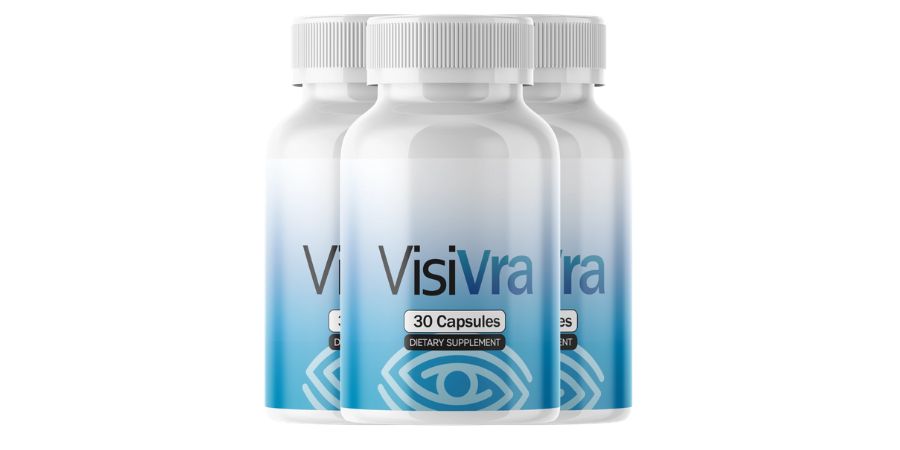
Bottom line
Visivra’s ingredients are real — but they’re not unique, not proprietary, and significantly overpriced compared to what the evidence actually supports.
What is Visivra and why is it getting attention?
Visivra is a vision support supplement that has gained traction through affiliate marketing blogs and social media promotion in 2025–2026. It markets itself around an “Ocular Support & Visual Clarity Matrix” — a branded name for what is essentially a blend of lutein, zeaxanthin, bilberry extract, astaxanthin, zinc, and vitamin A. These are not new ingredients. They appear in dozens of eye health supplements that have existed for years.
The question any informed buyer should ask before purchasing Visivra is not whether the ingredients work in isolation — some do, with caveats — but whether Visivra itself offers anything that justifies its price, its marketing language, or the confidence of its promotional claims.
The “proprietary matrix” is a marketing term, not a formula
Visivra’s “Ocular Support & Visual Clarity Matrix” is prominently featured across all promotional materials. Phrases like this are commonly used in the supplement industry to suggest proprietary science or unique formulation.
In practice, Visivra contains no patented compounds, no novel delivery mechanism, and no clinical trials specific to this product. The matrix is a combination of widely available nutraceuticals sold by dozens of competing brands at a fraction of the cost.
Lutein and zeaxanthin, the headline ingredients, are studied most rigorously in the context of age-related macular degeneration — and even that evidence comes from the AREDS2 trial, which used specific dosages and formulations that may not match what Visivra contains. Visivra does not publicly disclose exact dosage amounts per ingredient, which makes independent verification of efficacy impossible.
Visivra’s claims about blue light and screen strain are overstated
One of Visivra’s central selling points is protection from blue light exposure and digital eye strain. This is a high-demand consumer concern, and Visivra leans into it heavily. However, current ophthalmological consensus does not support the idea that oral supplements can meaningfully filter or block blue light once it reaches the eye. Blue light filtering, to the extent it matters at all, is most effectively addressed by screen settings, ambient lighting, and corrective lenses — not a daily capsule.
Visivra’s website states that the supplement “may help filter out blue light radiation” and “support visual comfort during screen exposure.” The use of “may” is deliberate — it allows the brand to avoid FDA scrutiny while still implying a clear benefit to buyers who skim rather than read carefully.
The online review landscape for Visivra is suspicious
A search for Visivra reviews returns a wave of near-identical articles rating the product 4.8 or 5 out of 5, often using the same phrases and structured in the same way. Many of these sites are affiliate marketing pages that earn a commission when readers click through and purchase.
This does not automatically mean Visivra is ineffective — but it does mean consumers have very limited access to unbiased third-party evaluations. Verified purchaser reviews from independent platforms like Amazon (where Visivra does not appear to have a significant presence) are virtually absent.
Is Visivra a scam? Probably not — but that’s a low bar
Visivra is manufactured in a GMP-certified, FDA-registered facility. Its ingredients are real and generally safe. It is not a scam in the conventional sense. However, “not a scam” is not the same as “worth buying.” The supplement industry is full of products that contain legitimate ingredients at undisclosed doses, wrapped in proprietary-sounding language, sold at inflated prices, with a 60-day money-back guarantee designed to project confidence more than it reflects actual consumer satisfaction rates.
If you are looking for genuine lutein and zeaxanthin supplementation, products like PreserVision AREDS 2 Formula are backed by the specific clinical trial that produced the strongest evidence for these ingredients — at a significantly lower cost per serving and with transparent dosage labeling.
Who should avoid Visivra
- Anyone expecting a meaningful improvement in diagnosed vision conditions — no supplement replaces clinical care
- Buyers seeking transparent, dose-labeled formulas with clinical backing specific to the product
- Consumers on a budget who want genuine lutein/zeaxanthin support available from established brands
- Anyone relying on online reviews without being able to verify they are independent
Final verdict
Visivra is a competently marketed supplement built on a foundation of familiar, legitimate ingredients. The problem is not the ingredients — it is the gap between what the product implies and what the evidence supports. Until Visivra publishes third-party clinical data, full ingredient dosages, and unaffiliated consumer reviews at scale, skepticism is the appropriate response for any analytical buyer.