
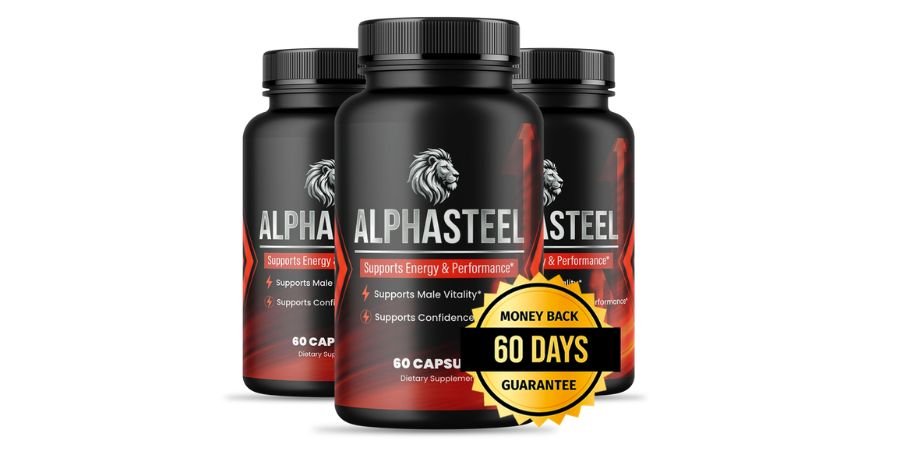
Verdict: Skip it. AlphaSteel is a seven-ingredient men’s “vitality” capsule sold exclusively through affiliate marketing pages, priced well above category norms, and dosed — in most cases — far below the amounts used in the clinical trials its own marketing leans on.
One ingredient (boron) is dosed close to a research-relevant level. The rest are either the wrong plant part, an unstandardized extract that can’t be compared to clinical doses, or a fraction of what trials actually tested. Nothing here is dangerous on its face, but nothing here is likely to do much either — at a price of $49–$79 per bottle.
Who This Is For — and Who Should Skip It
It might be a reasonable low-stakes try for you if:
- You want a stimulant-free, once-daily botanical capsule and don’t have strong expectations about outcomes.
- You’ve already ruled out (with a doctor) that low energy or libido issues stem from something medically treatable, and you’re experimenting with general wellness support.
- Price isn’t a major concern and you value the 60-day refund window enough to treat this as a low-risk trial.
You should skip this one if:
- You’re comparing it to research you’ve read on Tongkat Ali, saw palmetto, or nettle and expect the label to match clinical doses — it mostly doesn’t.
- You’re on blood pressure medication, anticoagulants, hormone therapy, or diabetes medication. Several ingredients here have documented interaction profiles, and you should not start this without a doctor’s sign-off regardless of the modest doses.
- You’re vegan or vegetarian — the capsule shell is gelatin.
- You want to buy from a retailer with independent, verifiable reviews. AlphaSteel is sold only through its own website; it isn’t on Amazon, Walmart, or GNC, which means there’s no independent verified-purchase review layer to check it against.
- You’re budget-conscious. At $49–$79 a bottle for 118 mg of total active material per serving, you’re paying a premium for ingredient amounts that, per capsule, cost pennies to source.
Ingredient Analysis: What’s Actually in the Capsule
AlphaSteel’s label (2 capsules/serving, 30 servings/bottle) discloses seven ingredients totaling 118 mg:
| Ingredient | Amount/Serving |
|---|---|
| Saw Palmetto (Serenoa repens) Berry Extract | 20 mg |
| Wild Yam (Dioscorea villosa) Root Extract | 20 mg |
| Sarsaparilla (Smilax glabra) Root Extract | 20 mg |
| Nettle (Urtica dioica) Leaf Extract | 20 mg |
| Boron Amino Acid Chelate | 20 mg |
| Tongkat Ali (Eurycoma longifolia), 100:1 extract | 10 mg |
| Horny Goat Weed (Epimedium sagittatum), 10:1 extract | 8 mg |
Saw Palmetto (20 mg). This is the most heavily researched ingredient in the formula, and also the most obviously underdosed. The clinical trial base for saw palmetto — a 2024 Cochrane review covering 27 RCTs and roughly 4,600 participants — almost universally used 320 mg/day of standardized extract for lower urinary tract symptom outcomes.[1] A 2011 JAMA dose-ranging trial tested up to three times that standard dose and still found no meaningful benefit over placebo.[2] AlphaSteel’s 20 mg is 1/16th of the studied dose. Even in the best-case literature, this amount is not doing anything measurable.
Wild Yam (20 mg). Wild Yam’s marketing hook is diosgenin, a plant steroid precursor. What’s often left out: diosgenin is converted into pharmaceutical steroid compounds through industrial chemistry, not human digestion. The human body doesn’t perform that conversion. There isn’t clinical trial literature showing dietary Wild Yam raises hormone levels in men. This ingredient is functionally decorative here.
Sarsaparilla (20 mg). Long history in traditional use, very thin modern clinical literature. The compounds of interest (sarsasapogenin, smilagenin) have some preclinical (animal/cell) data, but there’s no meaningful human RCT base to assess a 20 mg dose against.
Nettle Leaf, not Root (20 mg). This is the most important labeling detail in the entire formula. The research on nettle for men’s hormonal support — inhibiting SHBG binding, supporting free testosterone availability — is specifically about nettle root extract.[3][4][5] The mechanism (lignans blocking SHBG-receptor binding on prostate tissue) has been demonstrated with root extract in vitro and in small clinical trials of root formulations.[3][4] AlphaSteel uses leaf extract, which has a different phytochemical profile and a separate research base (mostly anti-inflammatory/allergy-related, not hormonal). If you were expecting the SHBG-related benefit associated with nettle in men’s formulas, this label doesn’t deliver the correct plant part to get it.
Boron Amino Acid Chelate (20 mg → ~1 mg elemental). This is the one ingredient with a real, dose-relevant research signal — and also the one where label math matters most. Human pilot studies showing boron’s effect on free testosterone and estradiol used 6–10 mg of elemental boron per day.[6][7][8] A 20 mg dose of boron amino acid chelate is not 20 mg of elemental boron — chelated boron compounds are typically only ~5% elemental boron by weight, meaning AlphaSteel’s 20 mg chelate delivers roughly 1 mg of elemental boron, well under the studied range. Note also that the seminal boron/testosterone study was a small pilot (n=8) over one week — promising, but far from settled science even at the correct dose.[6]
Tongkat Ali (10 mg from a 100:1 extract). The clinical literature on Tongkat Ali is genuinely substantial — a 2022 systematic review and meta-analysis of RCTs found it improves serum testosterone in both healthy and hypogonadal men.[9] But nearly every positive trial used 200–400 mg/day of a standardized water-soluble extract (often the patented Physta® extract, standardized to specific eurycomanone content).[10][11][12] AlphaSteel’s label states 10 mg of a 100:1 concentrate is “equivalent to” 1,000 mg of dry root — that ratio math is technically accurate, but concentrate ratios and standardized-extract percentages are not interchangeable units. Without a disclosed eurycomanone percentage, there’s no way to verify this 10 mg dose is bioequivalent to the 200–400 mg standardized extract used in the actual trials.
Horny Goat Weed (8 mg from a 10:1 extract). The active compound of research interest here is icariin. Clinical research on Epimedium has generally used standardized icariin doses in the 5–60 mg range. A typical 10:1 Epimedium extract yields roughly 5–10% icariin, which would put AlphaSteel’s icariin content around 0.4–0.8 mg per serving — well below even the low end of the studied range, and again, no icariin standardization is disclosed on the label to verify this.
Bottom line on ingredients: one out of seven (boron) is close to a clinically studied dose, though the human evidence for boron itself is thin. Two (Tongkat Ali, horny goat weed) use concentrate ratios that make direct dose comparison to clinical trials impossible without standardization data the brand doesn’t disclose. One (nettle) is arguably the wrong plant part for the effect people associate with it. Three (saw palmetto, wild yam, sarsaparilla) are either badly underdosed or lack a credible human mechanism at any dose.
Dosage Assessment: Does the Formula Match the Science?
Short answer: mostly no.
| Ingredient | AlphaSteel Dose | Clinically Studied Dose | Verdict |
|---|---|---|---|
| Saw Palmetto | 20 mg | 320 mg/day[1][2] | 16x underdosed |
| Boron | ~1 mg elemental (est.) | 6–10 mg elemental[6][7][8] | 6–10x underdosed |
| Tongkat Ali | 10 mg (100:1 concentrate) | 200–400 mg standardized extract[10][11][12] | Not directly comparable; likely underdosed |
| Horny Goat Weed | 8 mg (10:1 concentrate) | Icariin 5–60 mg[13] | Likely underdosed; not standardized |
| Nettle | 20 mg (leaf) | N/A — wrong plant part for the hormonal research base[3][4][5] | Not the studied form |
| Wild Yam | 20 mg | No human dose-response data exists | Untestable claim |
| Sarsaparilla | 20 mg | No robust human trial base exists | Untestable claim |
A formula built around proprietary concentrate ratios instead of standardized, percentage-verified extracts is a common way to make a modest raw-material cost look more substantial on a label (“equivalent to 1,000 mg of dry powder”) without actually delivering a dose comparable to what was tested in a clinical trial. That’s the core problem with this formula: total mass (118 mg) sounds reasonable until you check it against what the underlying research used.
Side Effect Profile: What the Evidence Says
AlphaSteel doesn’t publish a specific side-effect list beyond a standard supplement caution block (consult a physician if pregnant, nursing, under 18, or managing a medical condition). Here’s what the ingredient-level literature documents, independent of this specific product:
- Saw Palmetto: Occasional mild GI upset (nausea, stomach discomfort) at clinical-trial doses (320 mg). May interact with anticoagulant/antiplatelet medications and hormone-related prescriptions.
- Nettle Leaf: Documented interactions with blood pressure medication, diuretics, and anticoagulants in interaction databases.
- Wild Yam: Generally well tolerated; theoretical caution around hormone-modulating prescriptions due to diosgenin’s in-vitro chemistry, even though it isn’t converted to hormones in the body.
- Sarsaparilla: Thin modern safety literature; older clinical reports note a mild diuretic effect, worth flagging for anyone with kidney conditions.
- Boron: Generally well tolerated at supplemental doses (up to the ~20 mg/day upper limit cited in the literature); doses well above that (grams, not milligrams) are associated with GI symptoms and, in extreme cases, more serious toxicity — not a concern at AlphaSteel’s ~1 mg elemental estimate, but worth knowing boron isn’t infinitely safe to stack.
- Tongkat Ali: Occasional mild restlessness or sleep disruption reported when taken later in the day. Documented interaction considerations with hormone-related medications, immunosuppressants, and some diabetes medications.
- Horny Goat Weed: Documented interaction considerations with blood pressure medications and anticoagulants; caution advised for anyone with cardiovascular conditions.
None of this is alarming at the doses on this specific label — but the flip side of “these doses are probably too low to help” is “these doses are probably too low to meaningfully harm you either,” which undercuts both the risk story and the benefit story at once. The one real actionable point: if you’re on any prescription in the categories above, talk to your doctor before starting, regardless of how small the numbers on the label look.
Real User Experience: What You Can and Can’t Verify
This is the section where AlphaSteel’s marketing structure makes honest evaluation difficult. A few things worth knowing before you weigh “reviews” you find online:
- There’s no independent verified-purchase review layer. AlphaSteel isn’t sold on Amazon, Walmart, GNC, or any third-party retailer with a review system that ties feedback to a verified transaction. It’s sold exclusively through its own checkout.
- The testimonials that exist live almost entirely on the brand’s own marketing pages and affiliate/advertorial sites, not on independent consumer platforms. Several of these sites cite “Trustpilot,” “Reddit,” or “Quora” as the review source while displaying the quote only on their own promotional page — which means you can’t click through and verify the account, the purchase, or even that the platform attribution is accurate.
- The testimonial pattern itself is a red flag worth naming: uniformly glowing, uniformly brief, attributed to first-name-plus-initial identities across a spread of countries, and consistently emphasizing the same three themes (energy, “bedroom confidence,” and packaging quality) regardless of which site hosts them. That’s a pattern more consistent with brand-written or brand-curated copy than an organic spread of independent customer feedback.
- What’s genuinely missing: any user feedback on a platform AlphaSteel doesn’t control — no Reddit thread you can browse independently, no BBB complaint file with a case number, no long-term (6+ month) user reports outside the seller’s own site.
The honest takeaway: there’s currently no way to independently verify that real customers experience the benefits described in AlphaSteel’s marketing. That’s not proof the product doesn’t work for anyone — it’s an absence of the kind of evidence that would let a prospective buyer form a confident opinion either way.
Frequently Asked Questions
Is AlphaSteel FDA-approved? No dietary supplement is FDA-approved — the FDA doesn’t pre-approve supplement formulas. “Manufactured in an FDA-registered facility” refers to a mandatory facility filing, not an evaluation of AlphaSteel’s formula or claims.
How long before I’d notice anything? The brand doesn’t publish a timeline. Given how far several ingredients sit below their studied doses, a cautious expectation is that many users won’t notice a clear effect at any timeline — placebo response aside.
Can I take this with prescription medication? Talk to your doctor first, especially for blood pressure, anticoagulant, hormone, immunosuppressant, or diabetes medications. Several ingredients here carry documented interaction considerations even at modest doses.
Is it vegan? No — the capsule shell is gelatin.
Does it contain stimulants? No caffeine or stimulant compounds are listed on the label.
Is it available anywhere besides the official site? No. As of mid-2026 it’s sold exclusively through the brand’s own website. There’s no Amazon or retail-store listing, so there’s no independent review ecosystem to cross-check.
What’s the refund policy? A 60-day money-back guarantee from delivery date. You pay return shipping, and all bottles (even empty ones) must be sent back. If you try it, keep the packaging and track your 60-day window.
Is the “1,000 mg dry-root equivalent” claim for Tongkat Ali accurate? The ratio math (100:1 concentrate = 1,000 mg raw-material equivalent for a 10 mg dose) is arithmetically correct, but it doesn’t tell you how this compares to the standardized extracts used in clinical trials, since no active-compound percentage (like eurycomanone) is disclosed.
Should I buy the 6-bottle bundle to save money? Only if you’re already comfortable with the ingredient analysis above. A lower per-bottle price on a formula whose main ingredients are underdosed relative to research isn’t really a discount — it’s more of the same thing.
References
- Cochrane systematic review on saw palmetto for BPH (27 RCTs, ~4,656 participants), standard dose 320 mg/day. AAFP summary: https://www.aafp.org/pubs/afp/issues/2024/0500/cochrane-saw-palmetto-benign-prostatic-hyperplasia.html
- Barry MJ, et al. “Effect of increasing doses of saw palmetto extract on lower urinary tract symptoms: a randomized trial.” JAMA. 2011. https://pubmed.ncbi.nlm.nih.gov/21954478/
- Hryb DJ, Khan MS, Romas NA, Rosner W. “The effect of extracts of the roots of the stinging nettle (Urtica dioica) on the interaction of SHBG with its receptor on human prostatic membranes.” Planta Med. 1995. PMID: 7700987
- Nahata A, Dixit VK. “Ameliorative effects of stinging nettle (Urtica dioica L.) on testosterone-induced prostatic hyperplasia in rats.” Andrologia. 2012. PMID: 21806658
- Stinging nettle root extract (Bazoton-uno) long-term treatment RCT. Urologe A. 2004. PMID: 15045190
- Pilot study on 10 mg/day boron for one week, free testosterone +28%, estradiol -39% (n=8). Summarized in: https://essentialelementsnutrition.com/blogs/nutrition/how-boron-impacts-testosterone
- Naghii MR, et al. Comparative effects of daily and weekly boron supplementation on plasma steroid hormones. ScienceDirect: https://www.sciencedirect.com/science/article/abs/pii/S0946672X10001148
- Examine.com research summary on Boron: https://examine.com/supplements/boron/research/
- Leisegang K, Finelli R, Sikka SC, Panner Selvam MK. “Eurycoma longifolia (Jack) Improves Serum Total Testosterone in Men: A Systematic Review and Meta-Analysis of Clinical Trials.” Medicina. 2022. https://pubmed.ncbi.nlm.nih.gov/36013514/
- Tambi MI, et al. “Standardised water-soluble extract of Eurycoma longifolia, Tongkat ali, as testosterone booster for managing men with late-onset hypogonadism.” Andrologia. 2011 (200 mg dose, n=320 clinic patients). https://pubmed.ncbi.nlm.nih.gov/21671978/
- Talbott SM, Talbott JA, George A, Pugh M. “Effect of Tongkat Ali on stress hormones and psychological mood state in moderately stressed subjects.” J Int Soc Sports Nutr. 2013 (200 mg dose, n=63).
- Physta® Tongkat Ali dose-ranging study (200/400/600 mg/day, n=20), summarized at: https://akarali.com/physta-clinical-studies/
- Examine.com research summary on Tongkat Ali: https://examine.com/supplements/tongkat-ali/research/
This review is independent editorial content, not sponsored by or affiliated with AlphaSteel, Instituto Experience, or any distributor of the product. It is not medical advice. Ingredient research findings summarized above describe effects observed for the ingredient in isolation at the studied dose — they are not evidence that AlphaSteel, as a finished product, produces any specific effect. Individual results vary. Consult a physician before starting any new supplement, particularly if you take prescription medication or have an existing medical condition.