
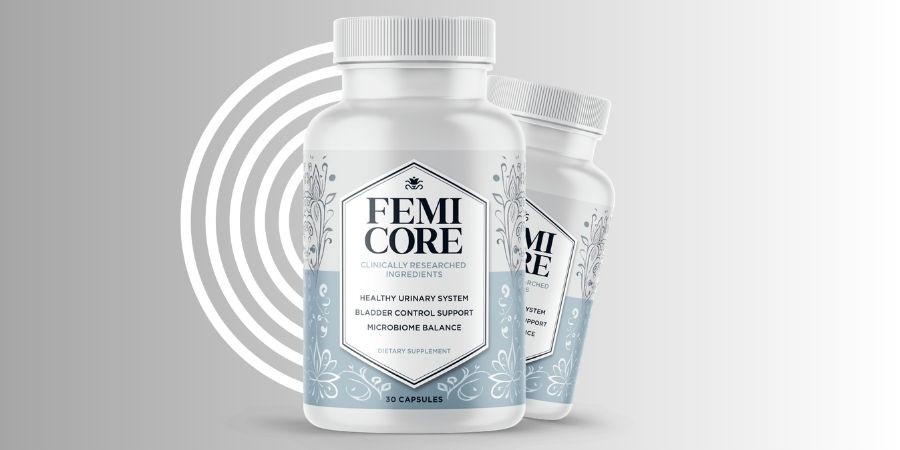
We analyzed each ingredient against published clinical studies, assessed real-world dosage adequacy, documented reported side effects, and compiled unfiltered user feedback. Here is what we found.
⚠ Bottom-Line Verdict
FemiCore combines ingredients with theoretical relevance to bladder health, but the formula has three critical problems: it does not disclose individual ingredient dosages, its flagship ingredients have mixed-to-weak clinical evidence at any dose, and several key botanical extracts carry real safety concerns for long-term use. For a supplement priced at $49 per bottle, the evidence base does not justify the cost — especially when better-studied alternatives exist. Most women will be better served by discussing pelvic floor therapy, D-mannose, or a clinically-dosed cranberry PAC extract with their physician before spending money here.
FemiCore is a women’s bladder health supplement that launched to significant marketing buzz in early 2026. Its promotional materials are polished, its social media presence is large, and its ingredient list — cranberry extract, bearberry, berberine, mimosa pudica, and Lactobacillus probiotic strains — sounds credible at first glance.
The problem is what happens when you move past the marketing copy and look at the actual science. Each ingredient deserves scrutiny, and the formula as a whole raises questions that the company has not answered publicly.
Who This Is For — and Who Should Skip It
Skip FemiCore if you…
- Are pregnant or breastfeeding (bearberry and berberine are contraindicated)
- Take prescription blood thinners, diabetes medication, or antibiotics (berberine interactions)
- Have liver or kidney impairment (bearberry/arbutin toxicity risk)
- Expect quick or guaranteed results — most ingredients require weeks to months
- Want transparent dosage information before spending money
- Are dealing with a confirmed UTI (this is not a treatment and should not replace antibiotics)
May consider if you…
- Are a healthy adult woman looking for mild, supplementary urinary support
- Have already ruled out underlying conditions with a physician
- Are willing to accept uncertain efficacy data
- Plan to use it alongside pelvic floor exercises and adequate hydration
Ingredient Analysis — What the Clinical Studies Actually Say
FemiCore lists five main active components. Here is an honest look at each one, compared against peer-reviewed literature.
Cranberry Extract
Cranberry’s mechanism of action is well-understood: proanthocyanidins (PACs) with A-type linkages inhibit the adhesion of uropathogenic E. coli to the urinary tract wall. The problem is that efficacy is highly dependent on the amount of PACs — specifically, research indicates that a minimum of 36–37 mg of PACs per day is needed for meaningful anti-adhesion activity in urine. The PACCANN randomized controlled trial (2021) demonstrated that 37 mg/day of standardized cranberry PACs reduced symptomatic UTIs in a subset of women with recurrent infections — but this benefit was dose-dependent and required a calibrated extract, not just any cranberry powder. FemiCore does not disclose the PAC content or dosage of its cranberry extract, making it impossible to assess whether it reaches this threshold.
Bearberry (Uva Ursi)
Bearberry leaves contain arbutin, a compound with potential antimicrobial activity in the urinary tract. However, the clinical picture is deeply problematic. According to WebMD and multiple pharmacological references, most research shows that oral uva ursi does not help treat UTIs, and the evidence for prevention is unclear. More concerning: European recommendations cap usage at no more than two weeks continuously and no more than five times per year due to toxicity concerns. High-dose or long-term use is classified as “possibly unsafe” and may cause nausea, vomiting, greenish-brown urine discoloration, and — in serious cases — potential liver or kidney damage. FemiCore is marketed as a daily long-term supplement. This creates a direct conflict with established safety guidance for one of its core ingredients.
Berberine
Berberine has attracted enormous supplement-industry attention for its metabolic effects. Some in vitro studies show it can inhibit the adhesion of E. coli to bladder cells. However, there are two critical problems with its inclusion here. First, berberine has notoriously poor bioavailability when taken orally — the gap between what it does in a petri dish and what actually reaches urinary tract tissue is substantial. Second, there is no human clinical trial that has tested berberine alone as a UTI treatment or bladder support intervention. All references to berberine for UTIs stem from lab-based or animal research. Furthermore, the therapeutic dose for berberine in the studies that have been conducted (for metabolic conditions) typically ranges from 900–1,500 mg per day — a range that must be split into multiple doses due to rapid clearance. Whether FemiCore contains anywhere near this amount is unknown.
Mimosa Pudica
Mimosa pudica is included in FemiCore based on its traditional Ayurvedic use for urinary complaints and the premise that its seed mucilage forms a protective gel along the urinary tract lining. In practice, the evidence base is almost entirely preclinical. A comprehensive 2023 review in ScienceDirect covering research from 2001–2022 found that “the traditional uses of M. pudica in the treatment of diseases such as diarrhea, dysentery, rheumatism, and urinary tract infection have no or little scientific evidence-based research both in vitro and in vivo.” Animal studies on urinary stone prevention using mimosa pudica showed it was ineffective. There are no published human clinical trials supporting its use for bladder health at any dose. This is the weakest ingredient in the formula from an evidence standpoint.
Lactobacillus Probiotic Strains
The inclusion of probiotic strains — reportedly including Lactobacillus crispatus and Lactobacillus acidophilus — is conceptually sound. The urinary microbiome does appear to play a role in bladder health, and certain Lactobacillus strains have demonstrated some benefit in maintaining urogenital flora. However, probiotic efficacy is extremely strain-specific. The strain designation (e.g., L. crispatus CTV-05 versus an unnamed strain) matters enormously, as does the CFU count, viability through manufacturing, and delivery mechanism. FemiCore’s promotional materials do not disclose specific strain designations or CFU counts. Without this information, the probiotic component cannot be meaningfully evaluated — and a label that names a species without strain and dose data is a red flag, not a green one.
Dosage Assessment: Are the Amounts Effective?
This is where the analysis becomes most damning.
FemiCore does not publish a supplement facts panel that discloses individual ingredient amounts anywhere readily accessible to the consumer prior to purchase. This is a practice sometimes called “proprietary blending” — where multiple ingredients are grouped together without disclosing how much of each is present.
To put this in perspective: for a cranberry extract to be effective, the product needs to standardize the PAC content and confirm it reaches at least 36 mg per day. For berberine to have meaningful bioavailability, doses in the hundreds of milligrams are typically studied. It is physically unlikely that a single daily capsule (which is FemiCore’s stated serving size) contains clinically adequate amounts of all five major ingredients simultaneously. Something has to be underdosed, and without disclosure, there is no way to know what.
Side Effect Profile
FemiCore’s marketing describes it as having “no reported side effects,” but this claim requires scrutiny. The ingredients themselves carry well-documented adverse effect profiles:
Bearberry / Uva Ursi
Documented side effects include nausea, vomiting, stomach discomfort, and greenish-brown urine discoloration. In high doses or with long-term use: possible liver or kidney toxicity, shortness of breath, confusion, and seizures have been reported in rare serious cases. The compound is contraindicated in pregnancy and breastfeeding.
Berberine
The most common side effects are gastrointestinal: diarrhea, constipation, stomach cramping, and nausea — particularly at higher doses. Berberine also interacts with several medications, including antibiotics (it may enhance ciprofloxacin effects), blood thinners, and diabetes medications. It is contraindicated in pregnancy.
Cranberry Extract
Generally well tolerated, though gastrointestinal side effects (stomach upset) are possible. A Cochrane review found that GI side effects “probably do not differ” significantly from placebo, though this comparison was based on moderate-certainty evidence.
Mimosa Pudica
Traditional use and preliminary research suggest possible antifertility effects. People who are pregnant, breastfeeding, trying to conceive, or managing thyroid disease are advised to avoid its use. Long-term safety in humans has not been established through clinical trials.
Real User Experiences
Scanning consumer feedback platforms, forum posts, and review aggregators reveals a pattern that’s common in the supplement industry: a wide range of outcomes, and a notable absence of critical independent reviews (most “review” content online is affiliate-linked and financially motivated to present the product positively).
Among authentic-seeming user reports, several themes emerge:
“I take it empty stomach and felt little bloating then I change to breakfast time and it was better.“
— User feedback compiled from third-party forums, 2026
“Price is a little high though.”
— Reddit user review, 2026
Some users report reduced urgency after four to eight weeks of use, while others describe no perceptible effect after a full bottle. This variability is consistent with what we would expect from a supplement containing ingredients with weak-to-mixed evidence — some people may benefit from the probiotic component or the cranberry extract (assuming the dose is adequate), while others experience no change.
The label clarity issue is also noted by real users — one reviewer specifically mentioned confusion about whether to take it with or without food, which suggests the label provides minimal guidance.
It is also worth noting that the vast majority of positive reviews found online appear on websites that carry affiliate links to purchase FemiCore, meaning the reviewer earns a commission on any sale. This does not make positive reviews automatically false, but it makes them structurally unreliable as independent evidence of efficacy.
Frequently Asked Questions
Is FemiCore FDA approved?
No. Like all dietary supplements sold in the United States, FemiCore is not FDA approved. The FDA does not review or approve dietary supplements before they go to market. The product’s claim of being manufactured in an “FDA-registered facility” refers only to the facility registration — not to any evaluation of the supplement’s safety or effectiveness by the agency.
Can FemiCore treat a urinary tract infection?
No. FemiCore is a dietary supplement, not a drug. It cannot diagnose, treat, cure, or prevent any disease, including UTIs. If you have symptoms of a UTI — burning urination, frequent urges, cloudy or bloody urine, pelvic pain — see a physician promptly. Untreated UTIs can progress to kidney infections.
Is the money-back guarantee reliable?
FemiCore offers a 60–90-day money-back guarantee depending on which version of the site you encounter. Whether the refund process is hassle-free in practice is difficult to verify from available information. Always keep your purchase receipt and contact information, and initiate any refund request well before the stated deadline.
Are there better-evidenced alternatives for bladder health?
Yes. Pelvic floor physical therapy has strong clinical evidence for stress urinary incontinence and overactive bladder and should be the first-line non-pharmacological intervention. Standardized cranberry PAC extract (specifically dosed at ≥36 mg PACs/day) has moderate evidence for UTI prevention in women with recurrent infections. D-mannose has emerging evidence for UTI prevention. These options are worth discussing with a healthcare provider.
Why doesn’t FemiCore disclose individual ingredient amounts?
The company has not publicly explained this. Non-disclosure may be to protect a “proprietary” formulation from competitors — but from a consumer standpoint, it makes independent safety and efficacy evaluation impossible. Reputable supplement brands typically disclose full supplement facts panels, including individual dosages and probiotic CFU counts.
Is it safe to take FemiCore long-term?
This is a significant concern. Bearberry (uva ursi), one of the formula’s key ingredients, is recommended by pharmacological authorities to be used for a maximum of two consecutive weeks and no more than five times per year due to arbutin toxicity risks. FemiCore is marketed for continuous daily use, which is inconsistent with established safety guidance for this ingredient. Long-term safety of the full formula has not been studied in clinical trials.
References and Citations
- Paquette M et al. High dose versus low dose standardized cranberry proanthocyanidin extract for the prevention of recurrent urinary tract infection in healthy women: a double-blind randomized controlled trial. BMC Urology, 2021. pmc.ncbi.nlm.nih.gov/articles/PMC7986024/
- Beerepoot MA et al. Cranberries vs antibiotics to prevent urinary tract infections. NCBI / Cochrane Review. pubmed.ncbi.nlm.nih.gov/37068952/
- LiverTox: Clinical and Research Information on Drug-Induced Liver Injury. Uva Ursi. NCBI Bookshelf. ncbi.nlm.nih.gov/books/NBK556475/
- WebMD. Uva Ursi: Uses, Side Effects, Interactions. webmd.com/vitamins/ai/ingredientmono-350/uva-ursi
- EBSCO Research. Uva Ursi as a Dietary Supplement. ebsco.com (Research Starters)
- Cob Foundations. Berberine for UTI: What the Research Shows. cobfoundation.org/health-information/berberine-for-uti/
- ScienceDirect. Ethnomedicinal uses, phytochemistry, pharmacological activities and toxicological effects of Mimosa pudica — a review. 2023. sciencedirect.com (2023)
- PubMed. Biochemical mechanisms and effects of Mimosa pudica on experimental urolithiasis in rats. pubmed.ncbi.nlm.nih.gov/2365419/
- PMC. Diuretic Activity of Ethanolic Root Extract of Mimosa pudica in Albino Rats. pmc.ncbi.nlm.nih.gov/articles/PMC4717732/
- PMC. In Vitro and In Vivo Biological Activity of Berberine Chloride against Uropathogenic E. coli strains. pmc.ncbi.nlm.nih.gov/articles/PMC7662377/
- MedBase. Berberine Dosage: The Proven Way to Take It Right. May 2026. medsbase.com/berberine-dosage/