
Table of Contents
What Is Vigor Peak?
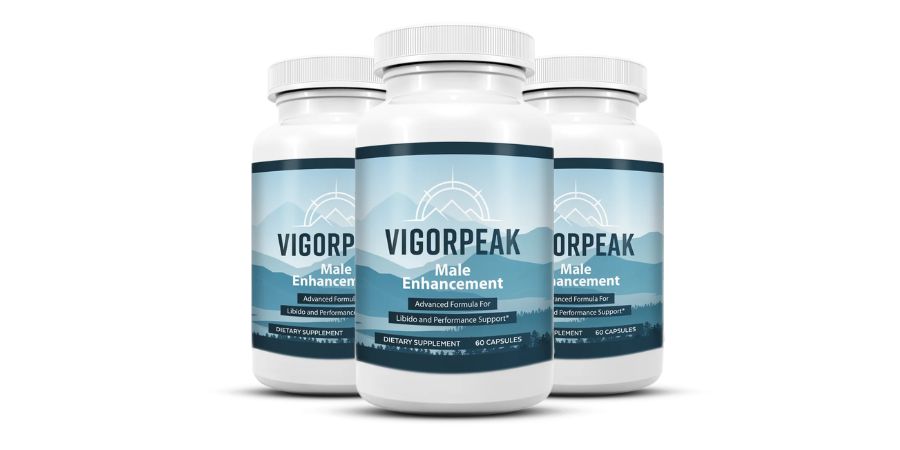
Vigor Peak is a men’s dietary supplement that markets itself as a natural, all-in-one solution for boosting energy, stamina, testosterone balance, and reproductive health. It’s sold directly through its own website and on Amazon, typically priced at around $49 per bottle for a 30-day supply, with mild discounts if you purchase multi-packs.
The product is positioned squarely at men who feel like their energy, drive, or physical performance has declined — a demographic that’s grown significantly as awareness around men’s hormonal health has increased over the past few years. The pitch is familiar: a proprietary blend of natural herbs and vitamins that promises to restore vitality without harsh chemicals, synthetic hormones, or prescription drugs.
On paper, it sounds appealing. The branding is clean, the website is professional, and the ingredient list reads like a who’s-who of the men’s health supplement world. But as with most supplements in this space, there’s a wide gap between what’s promised and what’s delivered.
As someone who has spent years critically evaluating health products — cross-referencing marketing claims against peer-reviewed research — I committed to an honest, structured eight-week trial. What follows is everything I found.
Spoiler: I came away unconvinced.
Who Is It For?
Vigor Peak is marketed broadly at adult men experiencing:
- Low energy or persistent fatigue
- Reduced libido or sexual performance concerns
- Decreased physical stamina or gym performance
- General feelings of low vitality or motivation
This is a massive target audience, and it’s worth noting that many of these symptoms have well-documented causes — poor sleep, nutritional deficiencies, chronic stress, sedentary lifestyle, or underlying medical conditions — that a dietary supplement simply cannot address adequately. The danger with products like Vigor Peak is that they can give men the false sense that they’re “doing something” about a problem that actually requires lifestyle change or medical evaluation.
That said, if a man is otherwise healthy, has ruled out underlying conditions, and simply wants to supplement his routine with natural compounds that might provide a marginal edge, the conversation is at least worth having. Whether Vigor Peak delivers on that in a cost-effective way is another matter entirely.
Ingredient Breakdown
Let’s dig into what’s actually inside the capsules. Vigor Peak contains a blend of herbal extracts, amino acids, and micronutrients. Based on publicly available information, the formula includes:
- Tongkat Ali (Eurycoma longifolia) – A Southeast Asian herb that has been studied for potential testosterone support and libido enhancement. Some research suggests modest benefits, but results are dose-dependent and most positive studies used standardized extracts at 200–400mg daily.
- Panax Ginseng – One of the most widely studied adaptogens in the world. It has legitimate evidence for reducing fatigue and supporting cognitive function, but clinical results for testosterone or libido specifically are mixed at best.
- Horny Goat Weed (Epimedium) – A staple of traditional Chinese medicine, containing the compound icariin, which is theorized to work similarly to PDE5 inhibitors. However, human clinical trial data is extremely limited, and the concentrations needed for meaningful effect are unclear.
- L-Citrulline – An amino acid that supports nitric oxide production, which is genuinely associated with improved blood flow and circulation. This is one of the more credible inclusions in the formula, though efficacy depends heavily on dosage — typically 3–6 grams per day in research settings.
- Ginkgo Biloba – Often included for circulatory support and cognitive performance. Evidence is inconsistent across studies, and the European Medicines Agency considers its benefits for circulation “not well established.”
- Muira Puama – A Brazilian herb sometimes called “potency wood” in traditional medicine. Clinical human research is almost nonexistent, making it very difficult to evaluate its inclusion here.
- Zinc – A genuinely essential micronutrient with well-established importance for testosterone production, immune function, and sperm health. Most men in Western countries, however, are not clinically deficient in zinc, meaning supplementation may not provide noticeable benefit above baseline.
- Vitamin C – An antioxidant with broad health benefits. Its inclusion here feels more like label padding than a targeted ingredient for male vitality.
The critical problem with all of the above?
Vigor Peak does not publish a transparent, complete supplement facts panel with exact milligrams per ingredient. This is not a minor omission — it’s a fundamental barrier to evaluating the product. Without knowing precise dosages, it is impossible to determine whether the active compounds are present in clinically relevant amounts, or whether you’re essentially getting trace quantities of well-known herbs wrapped around a proprietary marketing story.
This practice — known in the industry as a “proprietary blend” — is legal, but it is increasingly viewed as a consumer-unfriendly approach. Reputable supplement brands are moving toward full disclosure because informed customers demand it. The fact that Vigor Peak hasn’t done this in 2026 is a meaningful red flag.
What the Science Actually Says
It’s worth stepping back and examining the broader scientific landscape for the category of supplement Vigor Peak represents — because the marketing language often runs well ahead of the evidence.
Testosterone supplements generally: A 2019 systematic review in the World Journal of Men’s Health found that while certain plant-based compounds (including Tongkat Ali and Ashwagandha) showed modest testosterone-elevating effects in some studies, the magnitude of change was generally small, studies were often short-term, and populations varied widely. In healthy men with normal testosterone levels, supplementation effects were typically negligible.
Libido supplements: The evidence base for herbal libido enhancement in human males is surprisingly thin. Most studies are small, poorly controlled, and funded by the supplement industry itself — a well-documented source of publication bias.
Energy and stamina claims: Adaptogenic herbs like ginseng have the most robust evidence base for reducing perceived fatigue in stress-exposed individuals. But “reduced fatigue” is not the same as “increased testosterone” or “enhanced performance,” even if the marketing treats them as equivalent.
The takeaway: the ingredients in Vigor Peak are not all pseudoscientific. Some have real, if limited, evidence behind them. But the leap from “this herb has been associated with modest effects in some studies” to “this supplement will restore your vitality” is enormous — and Vigor Peak’s marketing doesn’t acknowledge that gap.
Did It Work? My Results Week by Week
I used Vigor Peak consistently for eight weeks, taking the recommended dose each morning with food. To minimize confounding variables, I kept my diet, sleep schedule, alcohol intake, and workout routine as consistent as possible throughout the trial period.
Weeks 1–2: Baseline adjustment
Nothing noticeable. I wasn’t expecting a miracle in the first two weeks, and I didn’t get one. Energy levels felt the same. No change in workout performance. Sleep quality unchanged.
Weeks 3–4: Watching for early signals
Some supplement categories — creatine, for example — show measurable effects within 2–4 weeks. By week four with Vigor Peak, I had tracked eight workouts with no meaningful change in reps, sets, recovery time, or perceived exertion. Energy levels throughout the day remained flat relative to my pre-trial baseline. Libido — subjective as it is to measure — showed no discernible change I could separate from normal variation.
Weeks 5–6: Midpoint assessment
Still nothing. I was beginning to wonder whether I might simply be a non-responder, which is a legitimate possibility with herbal supplements. But I also noticed I wasn’t reading anything in the research literature that would suggest a six-week timeframe was too early — most of the positive Tongkat Ali studies showed results within 4–8 weeks.
Weeks 7–8: Final stretch
By week eight, I had completed the trial and could say with reasonable confidence that Vigor Peak had produced no meaningful, attributable benefit in any of the areas it claims to support: energy, stamina, libido, mood, or physical performance.
Summary of my results:
- Energy levels: No meaningful improvement attributable to the supplement.
- Stamina/endurance: Workout performance tracked flat throughout the trial.
- Libido/vitality: No reliable change beyond normal week-to-week variation.
- Mood/confidence: No discernible effect.
- Body composition: No change.
Eight weeks is a fair window. The brand acknowledges results “may take several weeks to appear” — a disclaimer that conveniently extends the accountability window indefinitely. At some point, if you’re not seeing results after two months of consistent use, the supplement is simply not working for you.
Price vs. Value
At $49 for a one-month supply, Vigor Peak sits in the mid-to-premium tier of men’s health supplements. That price point might be justifiable if the formula were transparent, third-party tested, and backed by strong evidence. It isn’t any of those things.
Many of the individual ingredients it contains can be purchased as standalone supplements at significantly lower cost, with full dosage disclosure and better quality verification credentials.
Approximate monthly costs for equivalent standalone supplements:
- Quality zinc supplement (50mg): ~$8–12/month
- Standardized Tongkat Ali extract (200mg, 2%+ eurycomanone): ~$15–20/month
- Reputable Panax Ginseng (400mg standardized): ~$10–15/month
- L-Citrulline (3g daily): ~$12–18/month
You could build a more targeted, better-documented supplement stack for a similar or lower cost — and crucially, you would know exactly what you’re taking and at what dose.
The multi-pack discounts Vigor Peak offers (2 or 3 bottles at reduced per-unit cost) are a common sales tactic that encourages over-commitment before the buyer has established whether the product works for them. For a first-time user, there is no compelling reason to buy more than one bottle upfront.
Side Effect Concerns
I didn’t experience serious adverse effects during my trial, but there are legitimate concerns worth raising for certain populations.
1. Herbal-drug interactions Ingredients like Ginkgo Biloba and Panax Ginseng are known to interact with a number of medications — including blood thinners (warfarin, aspirin), antihypertensives, antidepressants (particularly MAOIs), and diabetes medications. Vigor Peak’s own labeling notes that those on prescription medications should consult a doctor, but this warning is easy to overlook and not prominently featured in the product’s marketing.
2. Undisclosed dosages create safety blind spots Without knowing the exact quantities of each herbal ingredient, it’s difficult for a consumer or their physician to assess cumulative risk — especially if they’re already taking other supplements that share ingredients. A proprietary blend that includes stimulant-adjacent herbs like ginseng at an unknown dose is a legitimate concern for people with cardiovascular sensitivities.
3. Reported mild adverse effects Some users in online reviews reported headaches, mild digestive discomfort, and occasional nausea during the first week of use. These are consistent with what you’d expect from higher-dose ginseng or L-citrulline and typically resolve, but they’re worth knowing about before you start.
4. No independent third-party testing Vigor Peak claims to be manufactured in an FDA-registered, GMP-certified facility. This is a baseline industry requirement, not a mark of distinction. What’s absent is any mention of independent third-party testing through organizations like NSF International, Informed Sport, or USP — programs that verify label accuracy and screen for banned substances or contaminants. Without this, there is no external verification that what’s on the label is what’s in the bottle.
For most healthy men, Vigor Peak is unlikely to cause harm. But for anyone with underlying health conditions, on medication, or with a history of sensitivity to herbal supplements, the lack of transparency is a legitimate reason to look elsewhere.
What Other Users Are Saying
Online reviews for Vigor Peak are a mixed picture, and it’s worth parsing them carefully.
Positive reviews tend to emphasize subjective improvements in energy and libido, often written shortly after purchase. These are the hardest reviews to evaluate — placebo effects are well-documented with supplements, and the desire for a product to work after spending $49 on it creates a real psychological bias toward positive self-reporting.
More critical reviews raise concerns that align closely with my own experience: limited or no results after several weeks, difficulty obtaining refunds, and frustration with the broad, vague nature of the product’s claims. Several reviewers noted that the “results may take time” language made them feel they couldn’t legitimately complain until they’d spent months and hundreds of dollars.
A pattern common to this product category: a surge of early positive reviews following launch, followed by a flattening or downturn in average rating over time as the novelty effect wears off and long-term users report their actual experiences.
How It Compares to Alternatives
If you’re genuinely interested in supporting male vitality through supplementation, there are better-documented options worth considering:
- Ashwagandha (KSM-66 or Sensoril): One of the most researched adaptogens for stress reduction and testosterone support. Multiple well-designed studies back modest but real effects. Available as a standalone with clear dosing.
- Zinc + Magnesium (ZMA): If you suspect deficiency — common in athletes who sweat heavily — targeted zinc and magnesium supplementation has legitimate evidence. Cheap and transparent.
- Creatine Monohydrate: If physical performance and energy are the primary concern, creatine remains one of the most evidence-backed supplements in existence, with decades of research and a strong safety record.
- Vitamin D3: Many men are deficient, and low vitamin D is directly associated with reduced testosterone. A simple blood test can confirm deficiency; supplementation is cheap and effective.
None of these are as glamorous as a “male vitality formula,” but they’re grounded in real science with real dosing guidance.
Final Verdict
Vigor Peak isn’t dangerous for most healthy adult men, and some of its individual ingredients have genuine, if modest, scientific support. But as a complete package — considering its lack of dosage transparency, absence of third-party verification, high price point relative to alternatives, and the thin evidence for its combined formula — it is difficult to recommend.
The supplement industry is full of products like this: professionally marketed, broadly appealing, and built on a foundation of plausible-sounding ingredients that stop short of delivering meaningful, verifiable results. Vigor Peak fits comfortably in that category.
Who might consider it: Men who strongly prefer a single all-in-one capsule over managing multiple supplements, have no contraindicated medications, and have realistic expectations about the modest potential upside.
Who should look elsewhere: Anyone who values full ingredient transparency, wants third-party verified quality assurance, is looking for evidence-based performance support, or is taking prescription medications.
If you’re serious about addressing low energy, reduced stamina, or hormonal imbalance, the most valuable first step is a conversation with a physician and a basic blood panel — not a $49 supplement with a proprietary blend. Real answers start with real data.
Overall Rating: 2/5 Not recommended as a primary solution. Explore more transparent, better-evidenced alternatives first.
Frequently Asked Questions
Is Vigor Peak FDA approved? No. Like all dietary supplements, Vigor Peak is not FDA approved. The FDA does not approve dietary supplements before they go to market. Manufacturers are responsible for ensuring safety and label accuracy, which is why third-party testing matters.
How long does Vigor Peak take to work? The company suggests results may take several weeks. In my eight-week trial, no meaningful results were observed.
Can I take Vigor Peak with other medications? You should consult a doctor before doing so. Several ingredients — including Ginkgo Biloba and Panax Ginseng — are known to interact with common prescription medications.
Is Vigor Peak a scam? It’s not a scam in the legal sense — it’s a legitimate product you receive after paying for it. Whether it delivers value proportional to its cost is a separate question, and based on my experience and analysis, the answer is no.
Are there better alternatives to Vigor Peak? Yes. Standalone supplements with transparent dosing — such as ashwagandha (KSM-66), zinc, magnesium, Vitamin D3, or creatine — offer better value, clearer evidence, and full ingredient transparency.
Disclaimer: This review reflects personal experience and independent research. It is not intended as medical advice. Always consult a qualified healthcare provider before starting any new supplement regimen.