
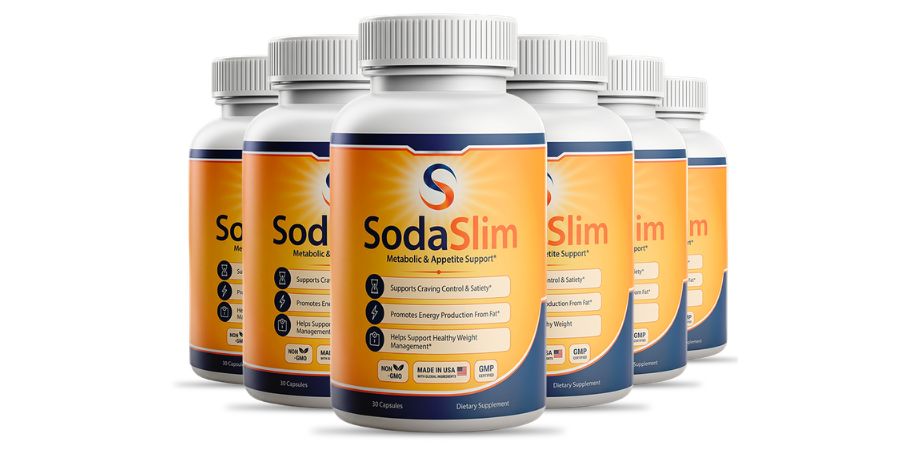
The Verdict, Upfront
SodaSlim is a five-ingredient weight-management capsule (green coffee bean extract, green tea extract, garcinia extract, raspberry ketone, and caffeine anhydrous) launched in mid-2026 and sold almost entirely through affiliate-marketing press releases rather than independent testing.
The short version: this is a caffeine supplement wearing a weight-loss costume. Strip away four ingredients with weak-to-negligible human evidence, and what’s left is a genuinely stimulant-heavy capsule — by some label accounts over 138 mg of caffeine in a single serving, roughly what you’d get from a large coffee, plus additional caffeine hidden in the “green tea extract” line.
None of the individual ingredients are outright dangerous at reasonable doses, but none of them are proven to meaningfully help you lose weight either, and the specific product has never been clinically tested as a finished formula.
If you’re stimulant-sensitive, on certain medications, or expecting a scientifically validated fat-loss aid, this isn’t it. If you want a legal, moderate energy boost with a marketing story attached, it will probably do that — at a price and risk profile you could get more cheaply and predictably from a cup of coffee.
Who This Is For — and Who Should Skip It
Might be a reasonable (if overpriced) option for:
- Healthy adults who already tolerate 100–150+ mg of caffeine daily without issue
- People looking for a mild energy/focus lift alongside diet and exercise changes, not instead of them
- Those who specifically want a single-capsule caffeine + botanical stack instead of stacking coffee, tea, and separate supplements
Should skip it entirely:
- Anyone with high blood pressure, arrhythmia, or other cardiovascular conditions
- Anyone pregnant, breastfeeding, or under 18 — explicitly listed as a contraindication on SodaSlim’s own label
- People with anxiety disorders or caffeine sensitivity
- Anyone taking blood thinners, stimulant medications, or — notably — statins like atorvastatin, since green tea catechins can interact with statin metabolism
- Anyone with existing liver conditions, given the hepatotoxicity data on concentrated green tea extract discussed below
- Anyone already consuming coffee, energy drinks, or pre-workout products daily, since the caffeine will stack
- People expecting clinically meaningful weight loss without diet or exercise changes — no ingredient in this formula supports that expectation at the doses typically used in commercial supplements
Ingredient-by-Ingredient: What the Clinical Evidence Actually Shows
Green Coffee Bean Extract (~130 mg, standardized to 50% chlorogenic acids)
This ingredient’s reputation is inseparable from its origin story: a 2012 study promoted on a national talk show as a “miracle” fat burner. The FTC reached a $3.5 million settlement with the manufacturer after regulators found the underlying study “so hopelessly flawed that no reliable conclusions could be drawn from it,” and the researchers later retracted the paper themselves over data integrity issues. Since then, the broader scientific consensus has settled on weak support at best for green coffee bean extract as a weight-loss aid in humans.
Garcinia Cambogia / Hydroxycitric Acid, HCA (~130 mg, standardized to 50% HCA)
This is the best-studied ingredient in the formula, and the data is a mixed bag that leans toward “not worth it.”
- A meta-analysis pooling nine randomized controlled trials found a small, statistically significant difference in weight loss favoring HCA over placebo, at roughly −0.88 kg (about 2 pounds) compared with placebo, with a 95% confidence interval that nearly crossed zero. The same review noted the dosages used across trials didn’t produce a consistent dose-response relationship, and separately found gastrointestinal side effects occurred at roughly twice the rate in the HCA group versus placebo.
- A more recent scoping review of 14 studies reached a harsher conclusion: all of the included studies failed to demonstrate a clinically significant decrease in weight or BMI, and the authors found no sufficient evidence to support the claims made by commercial Garcinia products.
- A third dose-response meta-analysis of eight trials (530 subjects) did find modest, statistically significant reductions in weight, BMI, and waist circumference — but the effect sizes were small enough to be clinically marginal for most users.
Bottom line: at best, garcinia gets you a couple of pounds over weeks to months, with a documented side effect of more stomach upset — and several rigorous reviews think even that modest benefit doesn’t hold up.
Raspberry Ketone (~130 mg)
This is the weakest link in the formula. Raspberry ketone’s popularity also traces back to a talk-show endorsement, and the actual research trail tells a different story:
- The clinical evidence in humans has been rated with a strength-of-evidence grade of “C,” meaning there is insufficient evidence to either support or discourage its use for weight loss in humans.
- Virtually all of the promising data — including mechanisms like reduced body weight gain and reduced adipose tissue in animal models given raspberry ketone by gavage — comes from rodent and cell-culture studies, not human trials at supplement-relevant doses.
- Human trials that do exist have returned discouraging headlines directly in their titles — one is literally titled “Raspberry ketone fails to reduce adiposity beyond…” — indicating no meaningful benefit once combined with a controlled diet.
Bottom line: raspberry ketone has essentially no solid human evidence behind it at the doses used in commercial capsules. It’s a flavor compound with a marketing history, not a fat burner.
Green Tea Extract (~130 mg, standardized for EGCG/catechins)
Green tea extract has the most legitimate metabolic research of the group — modest thermogenic and fat-oxidation effects are reasonably well documented — but it also carries the formula’s most serious safety concern, one that rarely makes it into marketing copy: liver injury risk at concentrated doses.
- Green tea extract has an “A” likelihood score in the NIH’s LiverTox database, meaning it is a well-established cause of clinically apparent liver injury, with catechins — particularly EGCG — implicated as the toxic component.
- A 10-year regulatory review found liver damage occurred in case-report patients taking anywhere from 140 to 1,000 mg of EGCG per day, and that most patients who developed acute liver injury had been taking green tea extract daily for two weeks or longer — a duration well within how these supplements are typically used.
- Multiple independent reviews converge on roughly 800 mg of EGCG per day as a threshold associated with increased liver enzyme elevations, with case reports documenting acute hepatitis and, rarely, liver failure in supplement users, while ordinary brewed green tea remains generally safe.
- One published case report specifically involved a patient taking 400 mg of green tea extract standardized to 50% EGCG, twice daily for one month — a dosing pattern not far removed from stacking a green-tea-containing supplement with other sources of catechins.
To be clear: SodaSlim’s per-capsule EGCG content isn’t independently disclosed at the isolated-compound level in the sources reviewed, and one capsule a day is a far cry from the multi-hundred-milligram daily EGCG doses in the case reports above. But green tea extract is not the risk-free “healthy” ingredient it’s positioned as — it belongs on the same watch list as the stimulant content, especially for anyone with existing liver risk factors or who combines it with alcohol, acetaminophen, or other hepatotoxic exposures.
Caffeine Anhydrous
The one ingredient in the formula that will unambiguously do something — because caffeine reliably increases alertness and modestly boosts metabolic rate — is also the one most likely to cause noticeable side effects, discussed below.
Dosage Assessment: Are the Amounts Actually Effective?
This is where SodaSlim runs into a credibility problem, and it isn’t just about whether the doses are “enough” — it’s that the label itself doesn’t consistently agree on what those doses are.
Different SodaSlim label reviews and third-party breakdowns report meaningfully different numbers for the same product:
| Source | Caffeine anhydrous | Green tea extract | Garcinia | Raspberry ketone | Green coffee bean |
|---|---|---|---|---|---|
| Label Guide / press release | Not itemized here | Not itemized here | Not itemized here | Not itemized here | 130 mg |
| Pricing/label breakdown | 138 mg | 130 mg | — | — | 130 mg |
| Consumer research writeup | 138 mg | 130 mg (40% EGCG) | 130 mg (50% HCA) | 130 mg | 130 mg |
| Independent review site | “Totaling 138mg” across all five ingredients, individual doses undisclosed | — | — | — | — |
One independent review put this bluntly: the formula’s total ingredient weight is disclosed as 138 mg, but individual ingredient doses are not broken out — meaning the actual caffeine content could be anywhere from an ineffective 50 mg to a meaningful 120 mg, and that opacity is difficult to describe as anything other than consumer-unfriendly.
That’s a genuinely important discrepancy. If each of the five ingredients is dosed around 130 mg individually (as several sources suggest), the total capsule weight would be well over 600 mg, not 138 mg. Either the “138 mg total formula” claim is wrong, or the “130 mg per ingredient” claims are wrong — both can’t be true. This kind of internal inconsistency across a brand’s own marketing materials is a red flag for label reliability in general, independent of whether any single number is dangerous.
Setting the disclosure problem aside, here’s how the individual amounts stack up against research-effective doses:
- Garcinia/HCA (130 mg, if accurate): Clinical trials showing even modest weight-loss effects generally used considerably higher HCA doses — one trial referenced in the systematic reviews above used 1,000 mg of HCA per day, given as a divided dose over an 8-week period. At 130 mg in a single daily capsule, SodaSlim is dosed well below the range used in the trials that found any measurable effect.
- Raspberry ketone (130 mg, if accurate): There’s no established effective human dose to compare against, since human trials at supplement-relevant doses haven’t demonstrated a benefit in the first place. The animal studies showing activity used doses scaled to body weight that don’t translate cleanly to a flat 130 mg in an adult human.
- Green coffee bean extract (130 mg): In range with typical commercial products, but this is largely moot given the discredited evidence base behind the ingredient generally.
- Caffeine (138 mg or less, disputed): This is the one dose plausibly in an “effective” range for an energy/alertness effect — a typical 8 oz cup of coffee has roughly 95 mg, so 138 mg is a moderate-to-strong single dose. If the true figure is lower (per the “138 mg total formula” reading), the stimulant effect would be correspondingly weaker.
Net assessment: the ingredients most likely to be under-dosed relative to their own supporting research are also the ones with the weakest research to begin with. The one ingredient dosed in a plausibly “effective” range — caffeine — is effective for alertness, not for weight loss beyond a minor, temporary metabolic bump.
Side Effect Profile: What the Evidence Says to Expect
| Side effect | Likely source | Evidence basis |
|---|---|---|
| Jitteriness, elevated heart rate, anxiety, insomnia | Caffeine anhydrous + caffeine in green tea extract | Well-established, dose-dependent stimulant effects; magnified if combined with other caffeine sources |
| Gastrointestinal upset (nausea, cramping, diarrhea) | Garcinia/HCA | <cite index=”26-1″>GI adverse events occurred at roughly twice the rate in HCA groups compared with placebo in clinical trials</cite> |
| Headache, dizziness | Caffeine + green coffee bean extract | Common stimulant-related effects reported in green coffee bean trials |
| Elevated blood pressure or heart rate concerns | Combined stimulant load | Consistent with caffeine’s known cardiovascular effects, amplified by the multiple caffeine-containing ingredients in one capsule |
| Liver enzyme elevation, and rarely, acute hepatitis or liver injury | Green tea extract (EGCG) | <cite index=”39-1″>Documented “well established” cause of liver injury in concentrated extract form per NIH’s LiverTox database</cite>; risk is dose- and duration-dependent and rises with continued daily use |
| Drug interactions | Green tea extract, caffeine | User-reported concern about interaction with statins (e.g., atorvastatin); caffeine can interact with stimulant medications and some antidepressants |
A pharmacy-hosted product listing included a pointed user complaint worth flagging directly: a reviewer on atorvastatin for cholesterol reported that nowhere on the main product page does it clearly state that green tea extract can interact with the medication, and they only found the relevant pharmacist note after digging through the fine print. That’s a real-world illustration of the disclosure gap between what’s technically on the label and what’s prominently communicated to buyers.
Real User Experience
Independent reviews are sparse — most of what’s searchable is company-sponsored press coverage — but a couple of consumer accounts surfaced through pharmacy and retail listings give a useful, unvarnished picture:
“It’s an average supplement. I feel a slight energy boost in the mornings after taking it, similar to a cup of green tea. The appetite suppression is minimal, I still get hungry at my usual times, but maybe I snack slightly less… For $79 per bottle, I expected more noticeable results, but it’s not terrible.”
“Dangerous for people on medication. I’m on atorvastatin for cholesterol, and nowhere on the main product page does it clearly state that green tea extract can interact with this medication.”
The pattern across available accounts is consistent with what the ingredient science predicts: a mild, coffee-like energy lift, negligible-to-minimal appetite effects, and a price tag that outpaces the actual results — plus at least one credible complaint about inadequate interaction warnings.
Independent review platforms have also flagged unresolved inconsistencies in SodaSlim’s own policies: one analysis noted the brand’s Terms of Service page describes its money-back guarantee differently from the main sales page — 60 days from delivery in one place versus “no questions asked” language elsewhere — meaning the documents don’t fully agree with each other. Worth reading the fine print carefully before purchasing.
Is SodaSlim FDA-approved? No. Like all dietary supplements sold in the United States, SodaSlim is not FDA-approved and is not evaluated by the FDA for safety or effectiveness before sale. Structure/function claims like “supports metabolism” are brand-stated, not independently confirmed.
Has the finished SodaSlim formula been clinically tested? No. Multiple independent reviews explicitly note that while individual ingredients have been studied, the finished SodaSlim formula itself has not been independently evaluated in clinical trials. Everything in this article is based on research into the individual ingredients, not the specific combination or brand.
How much caffeine is really in one capsule? This is genuinely unclear — see Section 4. Different brand-affiliated sources list 138 mg of caffeine anhydrous alone, while at least one independent reviewer states the entire five-ingredient formula totals 138 mg with individual amounts undisclosed. Either way, factor in additional caffeine from the green tea extract component, and don’t assume you know your exact intake.
Can I take SodaSlim with my daily coffee? Not advisable without doing the math first. Between the disclosed (or possibly higher) caffeine content and your regular intake, you could be well past 200–300+ mg of caffeine before noon, into range for jitteriness, elevated heart rate, or sleep disruption in caffeine-sensitive people.
Is it safe for my liver? Likely fine for most healthy adults at one capsule per day, but not risk-free. Concentrated green tea extract carries a documented, dose- and duration-dependent hepatotoxicity risk in the medical literature, and daily supplement use for two or more weeks is exactly the pattern seen in reported case studies. Anyone with liver disease, heavy alcohol use, or other hepatotoxic medication exposure should talk to a doctor first.
Will it actually help me lose weight? Based on the clinical literature for its individual ingredients, expect little to no meaningful weight-loss effect beyond what a placebo and lifestyle changes would produce. The best-supported ingredient (garcinia/HCA) shows a small effect of roughly a couple of pounds in some meta-analyses — and other equally rigorous reviews found no clinically significant effect at all. Raspberry ketone and green coffee bean extract have particularly weak or discredited human evidence.
References
- Onakpoya I, Hung SK, Perry R, Wider B, Ernst E. The Use of Garcinia Extract (Hydroxycitric Acid) as a Weight Loss Supplement: A Systematic Review and Meta-Analysis of Randomised Clinical Trials. J Obes. 2011. https://pubmed.ncbi.nlm.nih.gov/21197150/
- Effect of Garcinia cambogia supplement on obesity indices: A systematic review and dose-response meta-analysis. Complement Ther Med. 2020;52:102451. https://pubmed.ncbi.nlm.nih.gov/32951714/
- Efficacy of Garcinia Cambogia (HCA) in Reducing Body Weight in Overweight and Obese Adults: A Scoping Review. https://www.researchgate.net/publication/396282791
- Raspberry ketone induces brown-like adipocyte formation through suppression of autophagy in adipocytes and adipose tissue. https://pubmed.ncbi.nlm.nih.gov/29525531/
- Raspberry ketone fails to reduce adiposity beyond [dietary changes]. https://pubmed.ncbi.nlm.nih.gov/28378858/
- Effect of Raspberry Ketone on Normal, Obese and Health [outcomes]. https://pubmed.ncbi.nlm.nih.gov/31603036/
- Anti-obese action of raspberry ketone. https://pubmed.ncbi.nlm.nih.gov/15862604/
- Green Tea. LiverTox: Clinical and Research Information on Drug-Induced Liver Injury. National Institute of Diabetes and Digestive and Kidney Diseases (NIH). https://www.ncbi.nlm.nih.gov/books/NBK547925/
- Green tea extract–associated acute liver injury: Case report and review. https://journals.lww.com/cld/fulltext/10.1002/cld.1254
- A Case of Drug Induced Liver Injury Caused by Green Tea. Am J Gastroenterol. 2020. https://journals.lww.com/ajg/fulltext/2020/10001/s2597_case_report__a_case_of_drug_induced_liver.2597.aspx
- Investigating the Immune Basis of Green Tea Extract Induced Liver Injury in Healthy Donors Expressing HLA-B*35:01. Chem Res Toxicol. https://pubs.acs.org/doi/10.1021/acs.chemrestox.3c00253
- The safety of green tea and green tea extract consumption in adults – Results of a systematic review. https://www.sciencedirect.com/science/article/pii/S0273230018300928
- 10-Year Review Offers Insight on Green Tea Extracts & Liver Injury (USP Expert Panel summary). Nutraceuticals World. https://www.nutraceuticalsworld.com/10-year-review-offers-insight-on-green-tea-extracts-liver-injury/
- SodaSlim Review 2026: Weight Loss Claims Examined. Tutela Medical. https://www.tutelamedical.com/sodaslim-review-2026-weight-loss-claims-examined/
- SodaSlim Supplement Product Listing and Verified Reviews. OK Pharmacy RGV. https://www.okpharmacyrgv.com/product/sodaslim/
- Soda Slim Pricing 2026 — Label and Guarantee Analysis. Newswire. https://www.newswire.com/news/soda-slim-pricing-2026-tempted-by-the-49-bottle-price-which-package-actually
- Soda Slim Reviews & Complaints Evaluated. Barchart. https://www.barchart.com/story/news/3439397/
- SodaSlim Side Effects 2026 (sponsored/advertorial disclosure). Barchart. https://www.barchart.com/story/news/3434599/
Note on sources: Items 14–18 are brand-affiliated marketing or paid advertorial content (several explicitly disclosed as such) and are cited here only for label-content and user-review data, not as independent safety endorsements. This article is for informational purposes and is not medical advice — talk to a doctor or pharmacist before starting any new supplement, especially if you take medication or have an existing health condition.