
Key Highlights:
- Memopezil markets itself as a “Natural Donepezil,” a misleading name designed to evoke a real prescription Alzheimer’s drug.
- Its five main ingredients (Bacopa Monnieri, Rhodiola Rosea, L-Theanine, Panax Ginseng, BCAAs) are not harmful but are not unique or special.
- Consumer complaints on the BBB report inaccessible customer service and difficulties getting refunds.
- The product’s ads have been flagged for using fake AI-generated celebrity endorsements.
- Most “Memopezil scam warning” articles online are actually paid affiliate content in disguise.
- Memopezil is not FDA approved to treat any condition.
What Is Memopezil?
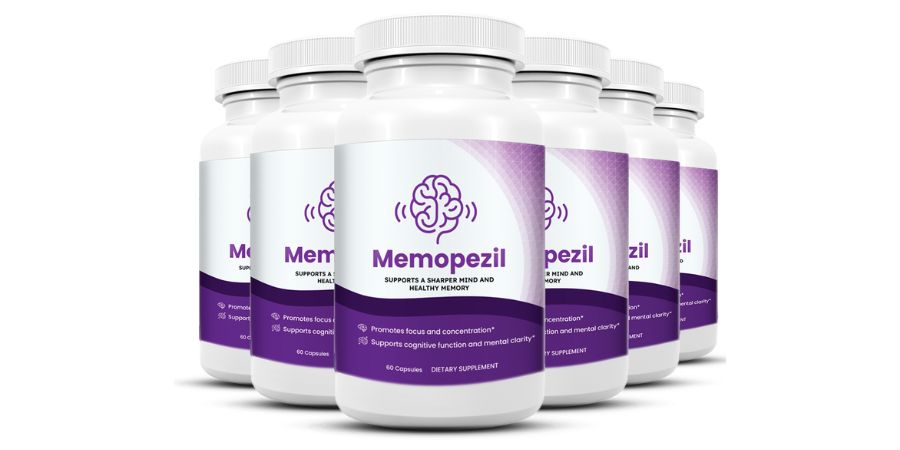
Memopezil is a dietary supplement marketed for cognitive support. According to its product listings on Amazon and Walmart, it is designed for adults seeking daily support for memory, focus, and mental clarity. It comes in capsule form, with a suggested dose of two capsules per day, and is marketed as stimulant-free, non-GMO, and manufactured in a GMP-certified facility in the USA.
The supplement contains a five-ingredient formula: BCAAs (Branched-Chain Amino Acids), Bacopa Monnieri Extract, Rhodiola Rosea Extract, L-Theanine, and Panax Ginseng Extract. These are all fairly well-known nootropic ingredients that appear in many brain health supplements on the market.
On the surface, none of that sounds particularly alarming. So what’s the problem?
The “Natural Donepezil” Marketing Claim — A Major Red Flag
Let’s start with the most glaring issue: the name itself.
Donepezil (brand name Aricept) is a prescription medication used to treat symptoms of Alzheimer’s disease. It works by inhibiting the enzyme that breaks down acetylcholine, a critical neurotransmitter for memory and learning. It is a pharmaceutical drug, approved by the FDA, prescribed by doctors, and monitored carefully because of its side effect profile.
Memopezil is none of those things.
By naming their product “Memopezil” and marketing it as a “Natural Donepezil,” the makers are deliberately creating an association with a serious prescription drug — strongly implying a level of clinical efficacy that no dietary supplement can legally or scientifically claim. This is a textbook example of misleading supplement marketing, designed to attract people who are worried about cognitive decline or have a loved one with dementia and are desperately looking for solutions.
It is worth noting clearly: Memopezil is not a substitute for donepezil or any other prescription medication. If you or a family member are dealing with cognitive decline, please consult a licensed physician — not a supplement with a drug-like name.
The Ingredients: Are They Legitimate?
To be fair, let’s look at what’s actually in the product. The five disclosed ingredients are not inherently problematic:
Bacopa Monnieri is an Ayurvedic herb with a reasonable body of research suggesting it may support memory consolidation over time with consistent use. It is one of the more credible nootropic ingredients available.
Rhodiola Rosea is an adaptogen that has been studied for its potential to reduce mental fatigue and support stress resilience. Some research supports its use for mood and focus.
L-Theanine is an amino acid commonly found in green tea. It is well-researched for promoting calm focus, especially when combined with caffeine (though Memopezil is caffeine-free).
Korean Ginseng has been used in traditional medicine for centuries and has some evidence for supporting cognitive performance and reducing fatigue.
BCAAs (Branched-Chain Amino Acids) are primarily associated with muscle recovery and protein synthesis. Their inclusion in a brain supplement is unusual and lacks the same level of cognitive support evidence as the other ingredients.
So the ingredient list is not outright dangerous, but it’s also not remarkable — these are common nootropic ingredients found in dozens of other products, often at lower price points. Importantly, one review investigation noted that many online review articles about Memopezil listed completely wrong ingredients, including Ginkgo Biloba, Phosphatidylserine, and Huperzine A — ingredients that don’t appear on the actual supplement facts panel. This inconsistency across the internet is another reason to be cautious.
Consumer Complaints: What Real Buyers Are Saying
This is where things get more serious.
A complaint filed with the Better Business Bureau (BBB) by a real buyer tells a troubling story. The consumer purchased three bottles of Memopezil for $207. Upon receiving the product, they discovered it contained grapefruit — an ingredient contraindicated with several common medications including statins and immunosuppressants. When they attempted to contact customer service for a refund, they found that the phone number on the bottle was completely blocked, and calls to the order confirmation number were met with unresponsive white noise.
Even more concerning, the buyer noted that the company listed on the order was called “Health Group,” while the bottle itself was branded under “GEX Corp” — two different entities, adding another layer of opacity to who actually stands behind the product.
Beyond that individual complaint, multiple sources have flagged that Memopezil’s advertising uses AI-generated fake videos of celebrities including Bill Gates and Chris Hemsworth as testimonials. This is a widely recognized hallmark of predatory supplement scam operations. These fake endorsements are not only deceptive — they are illegal under FTC advertising guidelines.
The “Scam Warning” Articles Online Are Also Suspicious
Here’s something else worth calling out: if you search for “Memopezil scam” or “Memopezil review,” you’ll find dozens of articles with alarming headlines like “URGENT SCAM WARNING” or “Ingredients Investigated.” Don’t be fooled — most of these articles are paid advertorials with affiliate links. They use scam-warning language to appear credible while ultimately steering readers toward purchasing the product.
Several of these articles are published via press release wires and contain the following disclosure buried at the bottom: “This content is a paid advertorial… If a purchase is made through links in this content, a commission may be earned.”
In other words, the fake warning articles are themselves part of the marketing machine. It’s a sophisticated strategy: flood the search results with affiliate content that co-opts the language of consumer skepticism to manufacture trust.
This review has no affiliate relationship with Memopezil or any competing product.
Is Memopezil FDA Approved?
No. Like all dietary supplements sold in the United States, Memopezil has not been evaluated or approved by the Food and Drug Administration (FDA) to diagnose, treat, cure, or prevent any disease or health condition. The FDA does not review dietary supplements for safety or efficacy before they go to market.
This doesn’t automatically make every supplement dangerous, but it does mean there is no independent third-party verification that Memopezil contains what it claims to contain, at the dosages it claims, or that it produces the effects it advertises.
Price and Value: Is It Worth the Cost?
Memopezil is sold at a premium price point. One consumer reported paying $207 for three bottles — roughly $69 per bottle. For comparison, the individual ingredients in Memopezil’s formula (Bacopa Monnieri, Rhodiola Rosea, L-Theanine, Panax Ginseng) are widely available as standalone supplements or in combination nootropic stacks at a fraction of the cost, from brands with longer track records and more transparent business practices.
When you factor in the reported difficulty of obtaining refunds and the lack of accessible customer service, the price-to-value ratio is poor.
Final Verdict: Should You Buy Memopezil?
Based on my research, I would not recommend purchasing Memopezil. Here’s a summary of why:
The product name is deliberately engineered to evoke a prescription Alzheimer’s drug, which is misleading and potentially dangerous for vulnerable consumers.
Its advertising has been reported to use AI-generated fake celebrity endorsements. Real buyers have reported being unable to reach customer service or obtain refunds. The supplement ingredients, while not harmful, are not unique or superior to other products on the market. The internet is flooded with paid fake-review articles designed to look like independent warnings.
If you are genuinely concerned about memory, focus, or cognitive health — whether for yourself or a loved one — the most important step is to speak with a healthcare professional. There are evidence-backed lifestyle interventions (sleep, exercise, diet, stress management) and legitimate medical options that are far more reliable than any over-the-counter supplement with a pharmaceutical-sounding name.
This review is based on independent research. The author has no financial relationship with Memopezil or any competing supplement brand. Always consult a licensed healthcare provider before starting any new supplement, especially if you take prescription medications.