
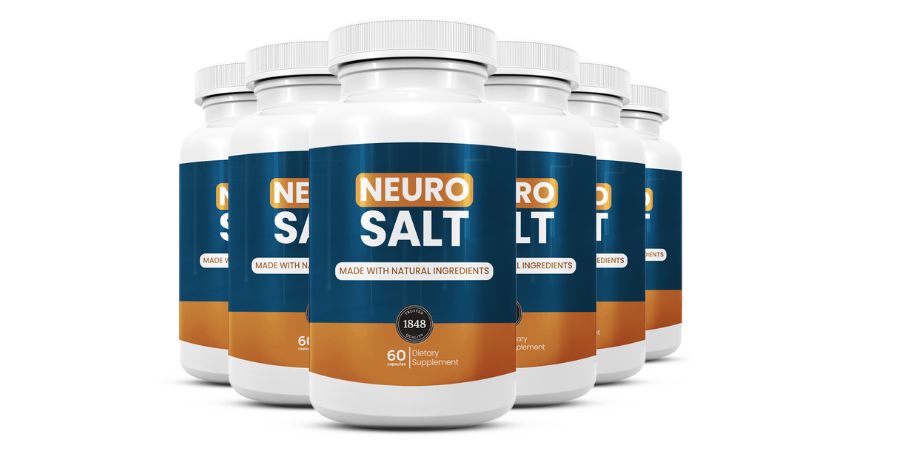
Verdict: Don’t Buy NeuroSalt Until You Read This
Let’s cut straight to it. NeuroSalt is not a nerve pain supplement in any meaningful clinical sense. It is a five-herb calming formula dressed up in neuropathy language, sold through aggressive viral marketing, and priced at $49–$79 per bottle for dosages that don’t match the amounts studied in research. It contains none of the ingredients with the strongest clinical track records for peripheral neuropathy — no alpha-lipoic acid, no benfotiamine, no B12, no acetyl-L-carnitine. What it does contain is a collection of botanical sedatives and anti-inflammatories in amounts too low to be confident they do much of anything at all.
If you’re here because a “pink salt trick” or “morning nerve repair ritual” ad followed you around social media, this review is exactly what you need before spending any money.
1. Who This Is For — and Who Should Skip It
Who might consider it (barely)
NeuroSalt positions itself for adults experiencing peripheral neuropathy symptoms: tingling, burning sensations, numbness, and disrupted sleep. If you have very mild, stress-driven nerve sensitivity, some of the calming botanical ingredients might offer marginal comfort — primarily through sedative action (better sleep, lower anxiety) rather than any nerve-repair mechanism.
Who should absolutely skip it
Anyone with new, progressive, or unexplained nerve symptoms. Tingling, numbness, and burning that are new or worsening require a clinical diagnosis first. Peripheral neuropathy can signal B12 deficiency, unmanaged diabetes, thyroid dysfunction, or autoimmune disease — all of which have targeted, evidence-backed treatments. Taking a botanical supplement and waiting 90 days before seeing a doctor is a dangerous mistake.
Anyone on prescription medications. Passionflower and California Poppy Seed both have documented GABAergic sedative activity. Combined with prescription sedatives, benzodiazepines, sleep aids, or anticonvulsants, you risk compounding CNS depression. Prickly Pear has blood-glucose-lowering properties that can interact with diabetes medications. Anyone on blood thinners (warfarin, clopidogrel) faces additional interaction risk from the botanical compounds in this formula.
Anyone with diabetic peripheral neuropathy specifically. The formula contains none of the compounds with the most clinical evidence for this presentation: no alpha-lipoic acid, no benfotiamine, no B vitamins.
Anyone expecting results comparable to medication. This is not gabapentin. It is not pregabalin. It does not address nerve damage at the structural or metabolic level.
2. Ingredient Analysis: What the Science Actually Says
NeuroSalt’s Supplement Facts panel lists five botanical ingredients. Here is what the peer-reviewed literature actually shows about each — not what the marketing copy says.
Passionflower (Passiflora incarnata) — 145 mg
Passionflower is the most-studied ingredient in the formula and the one with the most legitimate research context. It has documented GABAergic properties — meaning it interacts with the GABA neurotransmitter system, which plays a role in regulating nerve excitability and pain perception. A 2016 study in BMC Complementary and Alternative Medicine found that Passiflora incarnata extract reduced neuropathic allodynia in animal models via GABAergic and opioidergic mechanisms.
The problem? All meaningful neuropathic pain research on passionflower is in animal models. A 2025 systematic review published in MDPI Neurology International acknowledged broader neurobiological actions of Passiflora but noted that human clinical trials specifically evaluating it for neuropathic pain remain limited. The review noted diverse non-GABAergic actions including modulation of opioidergic, monoaminergic, and glutamatergic systems — interesting mechanistically, but not a clinical proof-of-concept in humans.
In short: passionflower may help with anxiety and sleep (there is reasonable human trial data for these), but its role as a nerve pain treatment is almost entirely theoretical and animal-based.
Corydalis (Corydalis yanhusuo) — 100 mg
Corydalis contains dehydrocorybulbine (DHCB), which was identified in a landmark 2014 paper in Current Biology as the only compound with a reproducible analgesic effect when researchers screened 500 fractionated samples across eight traditional Chinese medicines. DHCB works partly by blocking dopamine D2 receptors and does not appear to produce tolerance — a legitimately interesting finding.
But the problems stack up quickly. That research was conducted in mice. Human analgesic evidence for corydalis remains thin: a review in the Journal of Alternative and Complementary Medicine (2018) noted that clinical trials using corydalis-containing formulas showed pain reductions, but findings were heterogeneous with significant methodological limitations. Furthermore, most analgesic research uses the isolated alkaloids L-THP and DHCB in doses relative to body weight (10 mg/kg minimum effective dose in animal models) — and NeuroSalt provides only 100 mg of whole Corydalis extract. The active alkaloid content of a generic corydalis extract is not standardized, which means you don’t actually know how much DHCB or L-THP you’re getting.
Marshmallow Root (Althaea officinalis) — 110 mg
Marshmallow root has a long history in traditional medicine as a soothing herb for irritated mucous membranes. Its anti-inflammatory mucilaginous compounds are reasonably well-characterized. However, there is no meaningful peer-reviewed evidence for marshmallow root and peripheral neuropathy or nerve pain in humans. It is the most weakly supported ingredient in this formula in terms of neuropathy-specific application. Its inclusion appears to be driven by the general “anti-inflammatory” narrative rather than any targeted neurological research.
Prickly Pear Extract (Opuntia phaeacantha, 20:1 concentrate) — 50 mg
Prickly pear is rich in betalains and flavonoids with antioxidant activity. Oxidative stress is genuinely implicated in nerve damage, so the mechanism is plausible. However, research on prickly pear for neuropathic pain relief in human clinical trials is limited. Prickly pear research is primarily in the context of blood sugar management and metabolic syndrome — and notably, its blood-glucose-lowering properties mean it can interact with diabetes medications, a concern given that many people taking this supplement likely have diabetic neuropathy.
At 50 mg (even as a 20:1 concentrate, equivalent to roughly 1,000 mg of raw plant), the antioxidant contribution is modest at best.
California Poppy Seed (Eschscholzia californica) — 45 mg
Despite sharing the word “poppy” with the opium poppy, California poppy contains no morphine or opioid compounds. There is no drug-testing concern. What it does contain are mildly sedative alkaloids. Research on California poppy is limited largely to traditional use evidence and animal studies. At 45 mg — the lowest dose in the formula — its contribution is primarily as a complementary calming herb alongside passionflower.
The Glaring Omissions
What NeuroSalt doesn’t contain is more damning than what it does. The compounds with the deepest human clinical trial record for peripheral neuropathy are conspicuously absent:
- Alpha-lipoic acid (ALA): A meta-analysis of randomized controlled trials published in ISRN Endocrinology found that intravenous ALA at 600 mg/day over three weeks produced a clinically significant reduction in neuropathic pain (Grade A recommendation). Oral administration at >600 mg/day also showed significant improvements. ALA is authorized for the treatment of diabetic peripheral neuropathy in several countries.
- Benfotiamine: A fat-soluble form of vitamin B1 that crosses nerve cell membranes more efficiently than standard thiamine, with clinical evidence for symptom reduction in diabetic neuropathy.
- Methylcobalamin (B12): B12 deficiency is one of the most common and reversible causes of peripheral neuropathy. A year-long randomized double-blind placebo-controlled trial found B12 supplementation beneficial for diabetic neuropathy patients.
NeuroSalt’s formula targets nervous system calming — not nerve regeneration, not metabolic correction, not myelin repair. These are fundamentally different goals.
3. Dosage Assessment: Are the Amounts Effective?
Even granting that each ingredient has some relevant biological activity, the dosages in NeuroSalt raise serious concerns.
Passionflower at 145 mg: Animal studies used doses of 30–300 mg/kg body weight. Scaling to a 70 kg adult, the lower threshold is approximately 2,100 mg — roughly 14× the amount in NeuroSalt. Human sleep studies have used passionflower tea preparations representing much higher total flavonoid content than 145 mg of an unspecified extract.
Corydalis at 100 mg: As established above, the minimum effective analgesic dose of the key active alkaloids (L-THP and DHCB) is approximately 10 mg/kg in animal models. The alkaloid content of a generic, non-standardized 100 mg corydalis extract is uncertain. A 2015 PMC study on antinociceptive properties of Corydalis yanhusuo noted that 500 mg/kg of the whole herb was used in animal models to produce meaningful effects, and the active alkaloid concentration was approximately 1 mg of L-THP and 1 mg of DHCB per 500 mg of herb. By this ratio, 100 mg of whole herb extract would contain only about 0.2 mg of each active alkaloid — a vanishingly small amount.
Prickly Pear at 50 mg (20:1): While the concentration ratio elevates effective potency to around 1,000 mg equivalent, meaningful antioxidant studies in humans typically use much higher whole-food quantities of prickly pear. The 50 mg dose is largely symbolic.
California Poppy Seed at 45 mg: The lowest dose, the least-studied ingredient, and the weakest research context. Almost certainly sub-therapeutic regardless of concentration.
Bottom line: NeuroSalt’s dosages appear to have been chosen to populate a label, not to match evidence-based efficacious amounts. None of the ingredients are at dosages that correspond to what was used in the most positive available research.
4. Side Effect Profile
NeuroSalt’s calming botanical ingredients are not without risks, particularly for vulnerable populations.
Sedation and CNS interactions: Passionflower and California Poppy Seed both act on the GABA system. Users on prescription sedatives, benzodiazepines, anti-anxiety medications, sleep aids, opioid pain medications, or anticonvulsants face additive CNS depressant effects. For someone taking gabapentin or pregabalin for neuropathy — a very common scenario — adding two sedative botanicals is a medication interaction risk that requires physician oversight.
Blood sugar effects: Prickly Pear has documented blood-glucose-lowering properties. For anyone on metformin, sulfonylureas, or insulin, this can compound hypoglycemic effects.
Corydalis and liver health: Long-term daily use of corydalis without medical supervision carries concern for liver health, according to a 2026 VitaLibrary safety guide. Continuous daily use for 90+ days (the minimum NeuroSalt recommends) without liver monitoring is inadvisable.
Corydalis dopaminergic effects: DHCB and L-THP block dopamine D2 receptors. In people on dopaminergic medications (for Parkinson’s disease, for example) or antipsychotics, this interaction is a serious concern.
Common reported side effects include: drowsiness or sedation, digestive upset (bloating, nausea, stomach discomfort), headaches, and dizziness. None are typically severe, but they are real, documented, and worth weighing against the weak evidence of benefit.
The product is not appropriate for pregnant or breastfeeding women, or anyone under 18.
5. Real User Experiences
The online review landscape for NeuroSalt is a minefield. The official website claims over 14,000 five-star reviews, a figure that has not been independently verified. The review ecosystem surrounding this supplement is heavily affiliate-driven: a large proportion of “review” articles online are written by publishers who earn a commission on every sale, which creates obvious incentive to be flattering.
What we can glean from less commercially compromised sources:
The expectation gap is the dominant complaint. On Reddit, the most common negative pattern is users who tried NeuroSalt for two to four weeks, noticed no meaningful change in nerve symptoms, and concluded it doesn’t work. Defenders of the product argue that the cumulative anti-inflammatory mechanism requires 60–90 days, which may be true — but that same logic means you may spend $150–$200 before you can make an informed judgment.
No improvement in core symptoms is the most frequent complaint. Independent reviews surfaced complaints including persistent tingling and numbness with no change, mild dizziness, headaches after initial use, and digestive discomfort. One reviewer noted: “After five weeks, nothing changed. My hands feel just as tingly and I got mild dizziness. Customer service never responded to my refund request.”
Customer service and refund issues appear repeatedly. Multiple independent sources flag unresponsive customer support, difficulty actualizing the 60-day money-back guarantee, and billing complaints including reports of unexpected recurring charges.
Reviews on the official product page should be treated with extreme skepticism. A 5.0/5 rating from 14,000 reviews on a direct-to-consumer supplement website sold through ClickBank is not a credible signal of product efficacy. This is a structural issue with how these products are marketed, not necessarily an accusation of outright fraud — but consumers should understand that unverified testimonials on the seller’s own platform carry no evidential weight.
6. Frequently Asked Questions
Q: Is NeuroSalt FDA-approved? No. NeuroSalt is a dietary supplement and has not been evaluated or approved by the FDA to treat, cure, or prevent any disease. The “FDA-registered facility” language refers to the manufacturing site’s registration requirement — it is not the same as FDA approval of the product.
Q: What is the “pink salt trick” and does it work? The “pink salt trick” is a marketing phrase used to generate curiosity and viral search traffic. It is not a clinical protocol, not a medical term, and not an ingredient. NeuroSalt contains no salt of any kind. The phrase refers to the product’s two-capsule morning routine, branded with a catchy hook. Do not confuse the marketing narrative with the actual product.
Q: Does NeuroSalt contain opioids because it has “poppy” in the ingredients? No. California Poppy (Eschscholzia californica) is an entirely different genus from the opium poppy (Papaver somniferum). It contains no morphine, no codeine, and no opioid compounds. There is no drug-testing concern.
Q: Are there better alternatives for neuropathy? Yes. For peripheral neuropathy, the evidence-based first steps are: (1) identifying and treating the underlying cause (diabetes, B12 deficiency, thyroid issues, alcohol use, etc.), (2) alpha-lipoic acid (600 mg/day has Grade A evidence for diabetic neuropathy), (3) B-vitamin complexes including B1/benfotiamine, B6, and B12, and (4) working with a neurologist for appropriate diagnosis. These are not substitutes for each other, and none are substitutes for medical evaluation.
Q: Can I take NeuroSalt with gabapentin or pregabalin? Not without speaking to your doctor first. Passionflower and California Poppy Seed have documented GABAergic sedative activity that can add to the CNS-depressant effects of these medications. This is a real and documented interaction concern.
Q: How long until I see results? NeuroSalt marketing says 60–90 days of consistent use. There is no clinical trial data for the combined formula in humans to validate this timeline. What we know from the individual ingredients is that their calming/sedative properties would be noticeable fairly quickly; anti-inflammatory accumulation is more gradual. But there is no human study demonstrating that 90 days of NeuroSalt produces measurable improvements in neuropathy outcomes.
Q: Is NeuroSalt a scam? The product exists, is manufactured in a GMP-certified facility, and does contain the listed ingredients. It is not a scam in the sense of shipping an empty box. However, the marketing makes claims — including the implication that this formula meaningfully treats peripheral neuropathy — that are not supported by the clinical evidence. Whether you call that deceptive or simply aggressive marketing, the practical outcome is the same: people with real nerve pain may delay appropriate medical care while spending money on a product unlikely to address the root cause of their condition.
8. References and Citations
- Passiflora incarnata and neuropathic allodynia (2016) — Pokushalov et al., BMC Complementary and Alternative Medicine. Animal model study on GABAergic/opioidergic mechanisms. PMC4765057
- Systematic review: Neurobiological mechanisms of Passiflora beyond GABA modulation (2025) — MDPI Neurology International. Thirteen-study review covering opioidergic, monoaminergic, glutamatergic, and anti-inflammatory pathways. doi.org/10.3390/nu18101538
- Passiflora incarnata — spatial memory and neurotransmission in rats (2016) — PubMed. Rat study using 30–300 mg/kg doses. PMID: 26814055
- Dehydrocorybulbine (DHCB) as analgesic compound from Corydalis yanhusuo (2014) — Current Biology. Landmark screen of 500 TCM fractions; DHCB identified via dopamine D2 receptor blockade. Referenced in: Science-Based Medicine
- Antinociceptive properties of Corydalis yanhusuo extract (2016) — PMC. 500 mg/kg effective dose in animal tail-flick assay; alkaloid content approximately 1 mg L-THP and 1 mg DHCB per 500 mg herb. PMC5021270
- Clinical evidence for Corydalis: analgesic limitations (2018) — Journal of Alternative and Complementary Medicine. Review noting heterogeneous and methodologically limited human trial data. Summarized at Vicile.com
- Alpha-lipoic acid meta-analysis for diabetic peripheral neuropathy (2012) — ISRN Endocrinology / PubMed. Pooled analysis of RCTs showing significant reduction in neuropathic pain scores. PMID: 22331979
- Alpha-lipoic acid in diabetic peripheral neuropathy: 70-year review (2025) — MDPI Cancers. ALA holds unique position as pathogenesis-oriented therapy; authorized in multiple countries. PMC12191796
- Vitamin B for treating peripheral neuropathy — Cochrane-style review (2024) — PMC. Limited but suggestive evidence for higher-dose B-vitamin complexes; some evidence benfotiamine reduces vibration detection deficits. PMC12373429
- Alpha-lipoic acid and benfotiamine in DPN: critical review (2026) — Nutrients. Narrative review of PubMed/MEDLINE covering mechanisms and clinical evidence. doi.org/10.3390/nu18101538
- NeuroSalt verified Supplement Facts analysis (2026) — TotalHealthRD.com. Independent verification of five-ingredient panel; confirmed absence of B vitamins, ALA, benfotiamine. TotalHealthRD
This review is for informational purposes only and does not constitute medical advice. Peripheral neuropathy symptoms should be evaluated by a qualified healthcare professional. Do not delay or replace medical treatment on the basis of any supplement.