
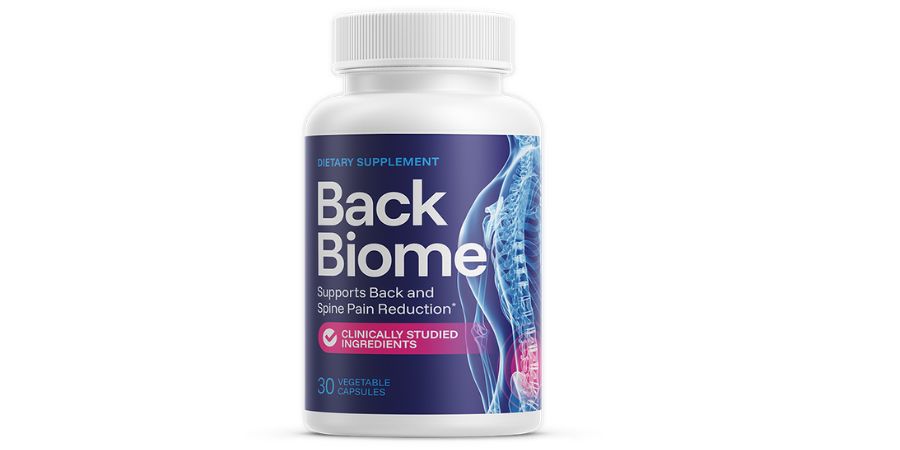
My Verdict: Proceed With Serious Caution
After spending considerable time dissecting BackBiome’s ingredient list, marketing claims, pricing structure, and the underlying science they rely on — my honest conclusion is this: BackBiome is an aggressively marketed supplement built on a foundation of real but immature science, hidden dosage information, and a proliferation of suspiciously identical promotional websites that make independent verification nearly impossible.
The individual ingredients — Turmeric, Boswellia serrata, ginger, probiotics — are not snake oil. Some have legitimate clinical backing. But whether they are present in BackBiome at doses that actually work is something the company conspicuously refuses to confirm. That alone is a serious red flag for any supplement making bold medical-adjacent claims.
I want to be clear: I didn’t go into this review trying to tear the product apart. I went in curious. I came out skeptical.
Who This Review Is For — And Who Should Skip BackBiome Entirely
This review is for you if:
- You’ve seen BackBiome ads claiming it can eliminate back pain through the “gut-spine axis” and want to understand what that actually means scientifically
- You’re considering spending $79–$295 on this product and want a no-nonsense breakdown before you do
- You’ve already purchased it and are wondering why your results don’t match the testimonials
You should skip BackBiome entirely if:
- You have a diagnosed spinal condition (herniated disc, spinal stenosis, scoliosis, degenerative disc disease) — this product is not a treatment and should not replace medical care
- You are pregnant or breastfeeding — the product has not been tested in these populations
- You are on blood thinners, NSAIDs, or immunosuppressants — several BackBiome ingredients (particularly turmeric/curcumin and Boswellia) have known interactions with these drug classes
- You have IBS, Crohn’s disease, or a compromised immune system — introducing new probiotic strains without medical supervision carries real risk
- You are diabetic — curcumin can lower blood sugar and may compound the effect of diabetes medications
Red Flag #1: A Web of Near-Identical Websites
Before I even got to the ingredients, one thing immediately raised my suspicion. A simple search for “BackBiome” returns at least 6–8 completely different websites — backbiome.net, trybackbiome.us, backbiome.com, www-backbiome.com, en-us-en–backbiome.com, backsbiome.us — all selling what appears to be the same or a very similar product, often with different ingredient descriptions and different price points.
This is a classic pattern in the supplement industry known as “multi-storefront marketing,” and it exists for one purpose: to make a product look more established, more independently reviewed, and harder to criticize than it actually is. When you search for “BackBiome reviews,” almost every result you find is either a sponsored promotional article or another BackBiome-affiliated website.
This is not the behaviour of a transparent, science-first company.
Red Flag #2: The “Gut-Spine Axis” Is Real, But BackBiome Exploits It
I’ll give BackBiome’s marketing team credit for one thing: they latched onto a genuinely emerging area of research. The “gut-spine axis” concept is legitimate. A 2023 narrative review published in Frontiers in Cell and Developmental Biology proposed the concept formally, noting that gut microbiota has associations with spinal degenerative diseases through immune and inflammatory pathways.
However, the research is at an extremely early stage. As one expert noted, “direct evidence that probiotics improve spinal pathology is limited” and probiotics should be viewed as “adjunctive, not primary, interventions” — particularly in patients with chronic pain or inflammatory conditions. The research consensus as of 2026 is that we understand an association between gut health and spinal health, not a direct cause-and-effect that can be corrected by swallowing a capsule.
BackBiome’s marketing takes this early-stage science and presents it as a fully established, actionable mechanism. That leap is dishonest, and it sets up consumers for disappointment.
Ingredient Analysis: What’s In It, What Works, and What’s Missing
BackBiome is not transparent about exact dosages per ingredient on its marketing pages. Different websites list slightly different ingredient combinations, which is itself a problem. Based on the most consistent information I could piece together, the formula appears to include:
Turmeric Root Extract (Curcumin)
What the research shows: Curcumin has real anti-inflammatory properties. A meta-analysis published in Pain Medicine found that curcuminoids significantly reduced pain scores across eight randomised controlled trials (606 patients total). Another systematic review of 29 RCTs involving 2,396 participants concluded that curcumin improved pain and inflammation in various arthritis types.
The dosage problem: Clinical trials that produced these results used doses ranging from 500–1,500 mg of curcumin extract daily — and critically, most used curcumin extract standardised to 95% curcuminoids, not whole turmeric root powder. Here’s the problem: whole turmeric root contains only 2–8% curcuminoids by weight, meaning a 1,000 mg turmeric capsule delivers just 20–80 mg of actual active compound. Research also shows that plain curcumin has poor oral bioavailability unless taken with piperine (black pepper extract) or a fat-based delivery system. BackBiome’s marketing does not clearly specify whether its turmeric is a standardised extract, what percentage it’s standardised to, or how much is in each serving.
Verdict on this ingredient: Promising on paper, deeply questionable in practice without dosage transparency.
Boswellia Serrata
What the research shows: Boswellia has legitimate anti-inflammatory evidence behind it. A randomised double-blind, placebo-controlled study published in Frontiers in Pharmacology (2025) found that a Boswellia-curcumin combination at 400 mg/day for 28 days reduced pain and stiffness in spondylitis patients. A Cochrane-cited review found that 100 mg of enriched Boswellia extract over 90 days meaningfully improved pain and function in osteoarthritis. For chronic lower back pain specifically, a published RCT found that a Boswellia-curcumin combination (300 mg/day for 90 days) significantly reduced pain scores and inflammatory biomarkers including TNF-α and IL-6.
The dosage problem: These studies used specific, standardised extracts. Research notes that because both curcuminoids and boswellic acids have poor oral bioavailability, high doses of 500–1,000 mg of curcumin alongside 500 mg of Boswellia extract twice daily are generally recommended for clinical efficacy. BackBiome does not publicly confirm it meets these thresholds.
Verdict on this ingredient: One of the more credibly supported ingredients in the formula — but only if dosed correctly, which we cannot verify.
Probiotic Blend (Bacillus subtilis, Lactobacillus strains, Bifidobacterium strains)
What the research shows: There is emerging observational evidence linking gut microbiome diversity to inflammatory conditions affecting the spine. A 2023 review in PMC proposed that gut microbiota dysbiosis may contribute to spinal degenerative disease. A 2025 review in Neurology noted that therapies targeting gut microbiota “may offer novel, non-surgical approaches” to disc degeneration.
The critical caveat: All of this research is either observational, conducted in animal models, or refers to fecal microbiota transplantation — not standard probiotic supplements. Taking a few capsules of generic Lactobacillus strains has not been shown in any rigorous clinical trial to directly repair spinal tissues or reliably reduce back pain. One expert explicitly warned that “indiscriminate intake of standard probiotics can even cause more harm than good in certain circumstances.”
Verdict on this ingredient: A marketing hook built on an interesting hypothesis, not a proven treatment.
Ginger Root Extract, Bromelain, Magnesium Glycinate
These are supportive ingredients with anti-inflammatory or muscle-relaxant properties. Ginger and bromelain have modest evidence for general inflammation reduction. Magnesium glycinate supports muscle function and sleep quality. None of these are controversial inclusions — but without knowing the dose, it is impossible to say whether they’re present in therapeutically meaningful amounts or merely listed to make the label look more impressive.
Dosage Assessment: The Information They’re Hiding
This is perhaps the most important section of this review, and the most damning for BackBiome.
A reputable supplement discloses exact ingredient amounts. You should be able to see “Turmeric Root Extract (standardised to 95% curcuminoids) — 500 mg” on the label. BackBiome’s marketing materials consistently avoid this level of specificity. Even independent critical analysis of the product has noted that “research on compounds like curcumin and glucosamine is highly dosage-dependent. A clinically meaningful amount matters far more than a long ingredient list.”
When a supplement company refuses to tell you how much of each ingredient is in the product while simultaneously citing clinical studies to justify those ingredients, they are using real science as marketing dressing. This practice is widespread in the supplement industry and it is one you should always treat as a red flag.
The question you should ask before purchasing BackBiome — or any supplement — is: Does this product disclose the exact milligrams of each active ingredient, and do those amounts match what was used in the clinical studies they reference? If the answer to either part of that question is no, walk away.
Side Effect Profile: What to Know Before You Take It
BackBiome markets itself as “100% natural” and “non-habit forming,” which is technically true but meaningfully incomplete. “Natural” does not mean risk-free.
Curcumin/Turmeric: Can cause nausea, diarrhoea, and stomach upset at higher doses. It acts as a mild blood thinner and can interact with anticoagulants like warfarin. It may lower blood glucose — a concern for diabetics. High-dose curcumin has been linked to liver toxicity in rare cases involving high-dose supplements.
Boswellia Serrata: Generally well-tolerated in clinical trials, with no serious adverse events reported. Minor GI discomfort has been noted in some users.
Probiotics: Can cause bloating, gas, and digestive discomfort during the first 1–2 weeks of use as your gut microbiome adjusts. In immunocompromised individuals, there have been rare reports of probiotic-related systemic infections. This is rare but not trivial.
Bromelain: A natural blood thinner derived from pineapple. Can interact with antibiotics and anticoagulants. May cause allergic reactions in individuals with pineapple or latex sensitivity.
Overall risk profile: For healthy adults with no drug interactions or underlying conditions, BackBiome is unlikely to cause serious harm. But the “zero side effects” narrative pushed on the product’s sales pages is not accurate.
Real User Experience: Reading Between the Lines
I spent time analysing user reviews across Reddit, Trustpilot, and third-party platforms. Here is what genuinely stood out to me:
Pattern I noticed in positive reviews: They are remarkably uniformly enthusiastic. Phrases like “zero pain, it’s a miracle” and “the only thing that ever worked” are strikingly common across otherwise unrelated platforms. Testimonials of this type are frequently generated or curated, and I would urge extreme scepticism toward any review that uses absolute language (“zero pain,” “completely healed”) about a supplement.
Pattern I noticed in the actual negative feedback: The most consistent real complaints weren’t about side effects or lack of efficacy — they were about slow shipping, billing transparency issues, and difficulty getting refunds despite the much-advertised 60-day money-back guarantee. This pattern (bold refund guarantees + reported difficulty actually using them) is common in the direct-to-consumer supplement space.
What some users honestly reported: A small number of users noted initial digestive discomfort (expected with probiotics), modest improvement in general stiffness, and little to no effect on pre-existing structural back issues. This aligns with what the science would actually predict — mild supportive benefit at best, no structural repair.
Frequently Asked Questions
Is BackBiome FDA-approved? No. No dietary supplement in the United States is FDA-approved for treating a disease or condition. BackBiome is manufactured in an FDA-registered, GMP-certified facility — which means the facility meets quality standards, not that the product has been reviewed or approved by the FDA for any health claim. The FDA has not evaluated whether BackBiome does what it claims.
Does BackBiome work for herniated discs or structural back problems? No supplement can repair a herniated disc, decompress a nerve, or correct spinal stenosis. If your back pain is structural in origin, BackBiome cannot address the underlying cause. Please see a physician, physiotherapist, or spinal specialist.
Is the gut-spine axis real? Yes, as an emerging concept, it is. There is early scientific evidence for associations between gut microbiome health and inflammatory markers that can affect spinal tissues. However, the clinical evidence that a generic probiotic supplement translates this association into meaningful back pain relief is, as of 2026, insufficient to justify BackBiome’s marketing claims.
Why are there so many BackBiome websites? This is a common tactic used in the supplement industry to saturate search results with promotional content, making it harder for consumers to find genuinely independent reviews. I would encourage anyone researching this product to search specifically for critical or sceptical perspectives.
Should I try BackBiome if other treatments haven’t worked? Before spending money on BackBiome, I would strongly encourage you to consult a healthcare provider, explore physiotherapy, evaluate sleep quality and anti-inflammatory dietary changes, and consider whether your back pain has an underlying structural or lifestyle cause. These interventions are evidence-based. BackBiome is not.
Can I get a refund if it doesn’t work? The company advertises a 60-day money-back guarantee. However, user reports across multiple platforms suggest the refund process is not always smooth. If you do purchase, keep all receipts and document your purchase date.
My Final Thoughts
BackBiome is not the worst supplement I’ve reviewed. Some of its ingredients have legitimate science behind them. But legitimate ingredients do not automatically produce a legitimate product — especially when dosages are hidden, the science is extrapolated well beyond what the evidence supports, and the marketing ecosystem is designed to look like independent validation while being anything but.
If you want to support inflammation reduction and general joint health through supplementation, there are better-documented, more transparent options available. If you want to address genuine back pain, please see a doctor.
The price point for BackBiome — up to $79 for a single bottle — is simply not justified by the available evidence.
References and Clinical Citations
- Gut-spine axis — PMC (2023): Proposed the gut-spine axis concept, linking gut microbiota to spinal degenerative diseases. → https://pmc.ncbi.nlm.nih.gov/articles/PMC10641865/
- Curcuminoids and pain — Pain Medicine, Oxford Academic (2015): Meta-analysis of 8 RCTs (606 patients) finding curcuminoids significantly reduced pain scores. → https://academic.oup.com/painmedicine/article/17/6/1192/2240744
- Curcumin in arthritis — PubMed (2022): 29 RCTs, 2,396 participants showing curcumin improved inflammation and pain in arthritis patients at doses of 120–1,500 mg. → https://pubmed.ncbi.nlm.nih.gov/35935936/
- Curcumin and knee osteoarthritis — ScienceDirect (2021): Meta-analysis of 11 studies (1,258 participants) supporting curcuminoids for joint pain. → https://www.sciencedirect.com/science/article/pii/S0965229921001163
- Boswellia-Curcumin for chronic lower back pain — PubMed (2024): RCT showing a Boswellia-curcumin combination (300 mg/day, 90 days) significantly reduced chronic lower back pain and inflammatory biomarkers. → https://pubmed.ncbi.nlm.nih.gov/39700654/
- Boswellia-Curcumin for spondylitis — Frontiers in Pharmacology (2025): Randomised double-blind trial at 400 mg/day for 28 days reduced pain and stiffness; notes that 500–1,000 mg curcumin + 500 mg Boswellia twice daily is generally recommended for clinical efficacy. → https://pmc.ncbi.nlm.nih.gov/articles/PMC12260406/
- Boswellia serrata and osteoarthritis — PubMed / Cochrane (2014): 100 mg enriched Boswellia extract over 90 days reduced pain and improved function. → https://pubmed.ncbi.nlm.nih.gov/24848732/
- Gut microbiome and musculoskeletal pain — Neurology (2025): Emerging evidence linking gut dysbiosis to disc degeneration; probiotics and other gut-targeted therapies flagged as novel but non-surgical approaches. → https://www.neurology.org/doi/10.1212/WNL.0000000000208583
- Probiotics in pain regulation — Microbiological Journal (2025): Review of mechanisms through which probiotics may modulate pain, noting potential but acknowledging limited direct clinical evidence. → https://ojs.microbiolj.org.ua/index.php/mj/article/download/363/148/2771
- Probiotics and spinal health — Medscape (2026): Expert commentary confirming direct evidence for probiotics improving spinal pathology remains limited; probiotics should be adjunctive, not primary, interventions. → https://www.medscape.com/viewarticle/intersection-between-gut-and-spine-health-2026a1000ai0
Disclaimer: This review is based on publicly available research, clinical literature, and my personal analysis of BackBiome’s marketing claims. Nothing here constitutes medical advice. Always consult a qualified healthcare professional before starting any supplement.