
The Verdict, Upfront
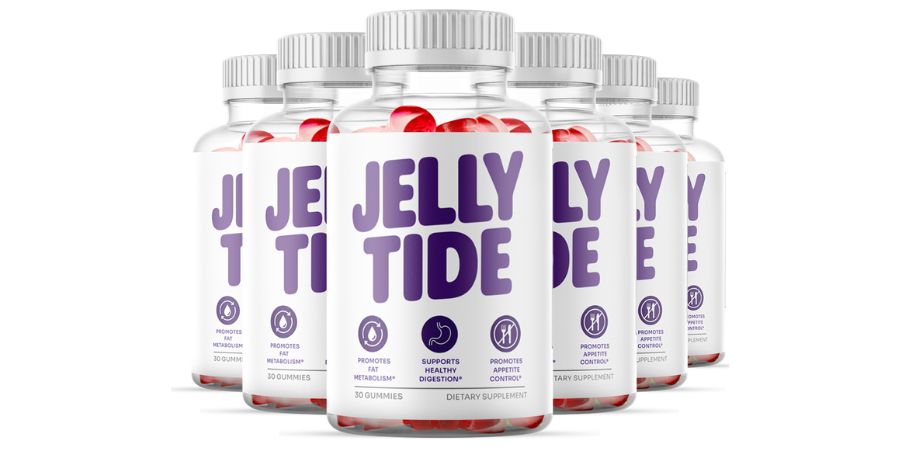
JellyTide is a $59–$79/bottle gummy that pairs apple cider vinegar (ACV) with BHB (beta-hydroxybutyrate) mineral salts, marketed as a metabolism-boosting, fat-burning, appetite-controlling weight loss aid. After digging into the actual clinical literature behind both ingredients, comparing the doses used in real trials to what’s actually in this product, and looking at how it’s sold, the short answer is: skip it.
The core problem isn’t that ACV or BHB are fake or dangerous compounds — they’re both real, studied substances. The problem is that JellyTide packs a total of 525mg of proprietary blend (ACV plus three separate BHB salts combined) into a single daily gummy, while the clinical trials showing any effect from these ingredients use doses that are 10 to 100 times larger. On top of that, the product is sold through a sprawling network of nearly identical affiliate websites with copy-pasted marketing claims, at least one price-gouging pattern documented in look-alike “jelly”-branded products, and zero clinical testing of the finished formula itself.
Who This Is For — and Who Should Skip It
Skip it if:
- You’re looking for a product with actual clinical evidence behind the specific formula you’re buying, not just the individual ingredients in isolation
- You take diuretics, insulin, digoxin, or other blood-sugar or potassium-affecting medications
- You’re pregnant, nursing, or under 18
- You have kidney issues, low potassium (hypokalemia), or a history of acid reflux/GERD
- You’re expecting meaningful weight loss without diet or exercise changes
- You dislike being upsold — most of these gummy brands push multi-bottle “bundles” hard at checkout
It might be low-risk to try if:
- You’re a generally healthy adult who already tolerates ACV well
- You understand you’re essentially paying a premium for a pre-measured, good-tasting way to get a small amount of ACV and BHB, not a clinically validated fat-loss formula
- You go in with modest expectations and treat it as a minor adjunct to diet and exercise, not a replacement for either
Ingredient Analysis: What the Research Actually Shows
Apple Cider Vinegar
ACV is the most-discussed ingredient in JellyTide, and the evidence is genuinely mixed rather than uniformly positive.
On the positive side, a 2018 randomized clinical trial found that pairing 30 mL/day of ACV with a calorie-restricted diet reduced body weight, BMI, hip circumference, and visceral adiposity index compared to diet alone over 12 weeks, with the ACV group showing significantly reduced body weight, BMI, hip circumference, visceral adiposity index, and appetite score. A broader 2025 systematic review and meta-analysis of 10 randomized controlled trials involving 861 adults similarly concluded that ACV supplementation can meaningfully reduce body weight, BMI, and waist circumference, with the strongest effects showing up at a daily dose of 30 mL, based on results from nearly 3,000 studies screened down to 10 qualifying RCTs published between 2009 and 2024.
But there’s a major asterisk here: one of the most widely cited and publicized ACV weight-loss trials — a study on Lebanese adolescents and young adults that generated massive media coverage in 2024 — was retracted by BMJ Group in late 2025 over data quality and trial registration concerns, with the publication’s ethics editor stating that the results were unreliable despite the temptation to promote it as a simple, helpful weight-loss aid. A Stanford researcher commenting on the retraction noted that outside of that flawed study, the evidence on ACV for weight loss remains limited and inconsistent, with small studies showing modest effects likely tied to delayed gastric emptying and increased satiety, but suffering from small sample sizes, short durations, and methodological weaknesses.
Bottom line on ACV: there’s a real, if modest, signal in the literature — but it’s built on shaky methodological ground, and one of its biggest headline studies didn’t survive scrutiny.
BHB (Beta-Hydroxybutyrate) Salts
This is where JellyTide’s case gets much weaker. Exogenous ketone research is fairly extensive, but almost none of it supports BHB salts as a standalone weight-loss tool.
A comprehensive review of the exogenous ketone literature concludes plainly that evidence does not support exogenous ketones as a primary weight-loss tool — they contain their own calories (roughly 4 kcal/g), and while some users report short-term appetite suppression, no long-term randomized trial has demonstrated actual fat loss from BHB supplementation alone. A 2023 systematic review of the mechanistic literature found that most human evidence in this space still needs replication, with much of the foundational work coming from animal studies rather than humans.
Even the trials that do find some metabolic effect from BHB use doses far larger than what’s in a gummy. One 8-week randomized, double-blind, placebo-controlled trial giving 51 overweight or obese adults racemic BHB mineral salts twice daily alongside modest calorie restriction did find a significant reduction in fat mass in the BHB group compared to placebo, using participants assigned to receive either the BHB salts or a placebo alongside caloric restriction over eight weeks — but that’s a twice-daily, multi-week clinical protocol, not a once-a-day gummy.
Dosage Assessment: The Formula’s Biggest Weakness
This is the section that should give any prospective buyer real pause.
JellyTide’s own marketing and third-party coverage confirm the formula contains a 525mg proprietary blend — and critically, that 525mg figure is the combined total of the apple cider vinegar and all three BHB salt forms (calcium, magnesium, and sodium BHB) put together in a single gummy.
Compare that to the actual clinical doses:
- ACV: The meta-analysis showing weight-loss benefit used 30 mL/day — that’s roughly 30,000mg of liquid vinegar, or about six teaspoons. Even accounting for concentration differences between liquid vinegar and dried/powdered ACV extract, a fraction-of-a-gram total blend is nowhere near that range.
- BHB salts: Dosing guidance compiled from the exogenous ketone research literature puts effective ketone salt doses at 140 to 468 mg per kilogram of bodyweight, or a total of 6 to 36 grams per dose. For a 70kg (154 lb) adult, that’s a floor of roughly 9,800mg just for the BHB portion alone — again, dozens of times higher than what’s left over once you subtract out the ACV from JellyTide’s 525mg total blend.
Put simply: even if you assume 100% of JellyTide’s proprietary blend were BHB salts (it isn’t — it also has to cover the ACV), it would still fall short of even the low end of doses shown to raise blood ketone levels in clinical studies, let alone the doses associated with any metabolic effect. This is the single biggest reason to be skeptical that this product does much beyond flavoring your mouth with a hint of vinegar.
Side Effect Profile: What the Evidence Says
ACV’s downsides are well documented in clinical and dental literature, even though JellyTide’s small dose likely limits real-world risk:
- Tooth enamel erosion. Dental researchers note that acetic acid can weaken enamel and increase cavity risk with regular exposure, which is part of why dental organizations recommend diluting ACV, drinking it through a straw, and avoiding brushing immediately afterward.
- Esophageal irritation. Case reports describe throat burns and esophageal injury from concentrated or prolonged vinegar exposure, serious enough that reviewers have called for acetic acid products to be treated as a caustic substance and stored safely away from children.
- Potassium and drug interactions. Diuretics, insulin, and digoxin can all interact with ACV’s effects on potassium and blood sugar, and clinicians warn that combining these medications with meaningful ACV intake raises the risk of dangerously low potassium or hypoglycemia.
BHB salts carry their own, separate profile: gastrointestinal upset (nausea, diarrhea, cramping) is the most commonly reported issue, particularly at higher doses, and because the salts are bound to sodium, calcium, and magnesium, they add to daily electrolyte intake — a relevant consideration for anyone with kidney disease or hypertension.
Given how small JellyTide’s actual dose is, severe versions of these side effects are unlikely — but that cuts both ways: a dose too low to meaningfully affect metabolism is also, unsurprisingly, a dose too low to cause serious harm. It’s essentially a wash on both efficacy and risk.
Real User Experience: What’s Actually Being Reported
Reviews of JellyTide and its close look-alike products (the market is flooded with nearly identically named and formulated “jelly”-branded gummies — JellyTide, Jellythin, Jelly Lean, Jelly Burn, Gelatide) show a fairly consistent pattern across independent write-ups and consumer review platforms:
- Mixed-to-minimal weight loss results. Multiple independent reviews note that not everyone experiences a noticeable effect, with some users reporting minimal or no change even after 30–60 days of consistent use.
- Mild digestive side effects for a subset of users. A minority of reviewers mention brief stomach upset, sour aftertaste, or mild nausea in the first few days — consistent with what you’d expect from a small dose of vinegar-based product, and generally reported as resolving quickly.
- Complaints clustered around price and sales tactics, not danger. The most common substantive complaint across review write-ups is cost relative to expected results, along with occasional shipping delays.
- Serious red flags around adjacent “jelly” gummy brands. This is the part that matters most. Independent scam-analysis coverage of the broader “jelly” gummy category has documented landing pages using fabricated testimonials, fake urgency counters (stock warnings, “X people viewing now”), and unverified certification badges designed to pressure impulse purchases. Separately, a closely related product in this same gummy category has accumulated numerous complaints on Trustpilot describing customers being shipped and charged for far more bottles than ordered — in one documented case, a customer expecting to pay roughly $30 was instead billed $555 for 18 bottles, only resolved through a credit card fraud dispute.
To be clear: those billing complaints are documented against a related but distinct product, not proof that JellyTide itself engages in the same practices. But the fact that this exact gummy format, marketing language, and sales-funnel structure is being reused across a cluster of similarly named products is itself a reason for caution — it suggests a template being run by affiliate marketers rather than a single company standing behind a well-tested product.
Frequently Asked Questions
Does JellyTide actually cause weight loss? There’s no published clinical trial on the finished JellyTide formula itself. The individual ingredients have some supporting research, but at doses far higher than what’s in this product. Expect, at best, a placebo-adjacent effect for most users.
Is JellyTide dangerous? At the doses present, probably not for most healthy adults — though anyone on diuretics, insulin, digoxin, or with kidney issues, low potassium, or who is pregnant or nursing should talk to a doctor before use, since even small amounts of ACV and BHB salts can interact with these conditions and medications.
How is JellyTide different from just drinking apple cider vinegar? Mainly convenience and taste — you avoid the harsh flavor and the direct tooth/esophagus exposure of liquid vinegar. But you’re also getting a meaningfully smaller total dose than what liquid ACV protocols use in the studies showing any benefit.
Is the 60-day money-back guarantee real? The guarantee is advertised across JellyTide’s various websites, but as with any direct-to-consumer supplement sold through affiliate marketing funnels, be sure to read the specific refund terms before ordering, keep confirmation emails, and use a credit card (not a debit card) so you have dispute options if something goes wrong.
Why are there so many websites selling JellyTide? JellyTide is distributed across a wide network of near-duplicate websites with reused marketing copy — a common structure in affiliate-driven supplement marketing, where multiple parties promote the same product through different-looking storefronts to capture search traffic.
Should I just try liquid apple cider vinegar instead? If you’re specifically curious about ACV’s studied benefits, diluted liquid ACV (roughly 15–30 mL/day, always diluted in water and consumed through a straw to protect your teeth) more closely matches the doses used in the research showing modest effects — for a fraction of the cost. Still, talk to your doctor first given the medication interaction risks above.
References
- Hadi A, et al. Beneficial effects of Apple Cider Vinegar on weight management, Visceral Adiposity Index and lipid profile in overweight or obese subjects receiving restricted calorie diet: A randomized clinical trial. Complement Ther Med. Available via ScienceDirect: https://www.sciencedirect.com/science/article/abs/pii/S1756464618300483
- Effect of Apple Cider Vinegar Intake on Body Composition in Humans with Type 2 Diabetes and/or Overweight: A Systematic Review and Meta-Analysis of Randomized Controlled Trials. Nutrients (2025). PMC: https://pmc.ncbi.nlm.nih.gov/articles/PMC12472926/
- BMJ Group. BMJ Group retracts trial on apple cider vinegar and weight loss (2025). https://bmjgroup.com/bmj-group-retracts-trial-on-apple-cider-vinegar-and-weight-loss/
- Meta-analysis on apple cider vinegar dosing and weight reduction, covered in: How much apple cider vinegar reduces weight? Meta-analysis points to 30 mL daily. News-Medical.net (2025). https://www.news-medical.net/news/20250922/How-much-apple-cider-vinegar-reduces-weight-Meta-analysis-points-to-30-mL-daily.aspx
- Examine.com. Exogenous Ketones: benefits, dosage, and side effects. https://examine.com/supplements/exogenous-ketones/
- Clarke K, et al. Systematic review on exogenous ketone mechanisms, PMID 36533967, summarized in: Best Exogenous Ketones Supplements 2026. https://bodysciencereview.com/blog/best-exogenous-ketones-supplement/
- Effect of Exogenous Ketones as an Adjunct to Low-Calorie Diet on Metabolic Markers. Nutrients (2025). PMC: https://www.ncbi.nlm.nih.gov/pmc/articles/PMC12655410/ and https://www.mdpi.com/2072-6643/17/22/3582
- Tolerability and Acceptability of an Exogenous Ketone Monoester and Ketone Monoester/Salt Formulation in Humans. PMC: https://www.ncbi.nlm.nih.gov/pmc/articles/PMC10708260/
- Effects of Exogenous Ketone Supplementation on Blood Glucose: A Systematic Review and Meta-analysis. PMC: https://pmc.ncbi.nlm.nih.gov/articles/PMC9526861/
- Healthline. 7 Potential Side Effects of Apple Cider Vinegar. https://www.healthline.com/nutrition/apple-cider-vinegar-side-effects
- Cleveland Clinic. What Apple Cider Vinegar Can (and Can’t) Do for You. https://health.clevelandclinic.org/exploring-the-health-benefits-of-apple-cider-vinegar
- American Dental Association. Experts provide latest science on apple cider vinegar. https://adanews.ada.org/huddles/experts-provide-latest-science-on-apple-cider-vinegar/
- WebMD. Apple Cider Vinegar: Benefits, Uses, Risks, and Dosage. https://www.webmd.com/diet/apple-cider-vinegar-and-your-health
- Trustpilot consumer complaints regarding a related ACV/BHB gummy product’s billing practices. https://www.trustpilot.com/review/gelatide.lovable.app
- MyAntiSpyware. Jelly Tide Reviews, Jillian Michaels Gelatin Recipe Trick Scam Exposed (2026). https://www.myantispyware.com/2026/05/12/jelly-tide-reviews-jillian-michaels-gelatin-recipe-trick-scam-exposed/
- Muddy River News (sponsored content). JellyTide Reviews – Is It Worth Trying? 2026 Analysis of Ingredients, User Results & Pricing. https://muddyrivernews.com/sponsored-content/jellytide-reviews-is-it-worth-trying-2026-analysis-of-ingredients-user-results-pricing/20260519064852/
Disclaimer: This article is for informational purposes only and is not medical advice. It is not affiliated with, endorsed by, or sponsored by JellyTide or any related brand. Consult a qualified healthcare professional before starting any new dietary supplement, particularly if you are pregnant, nursing, under 18, or managing a medical condition or taking medication.