
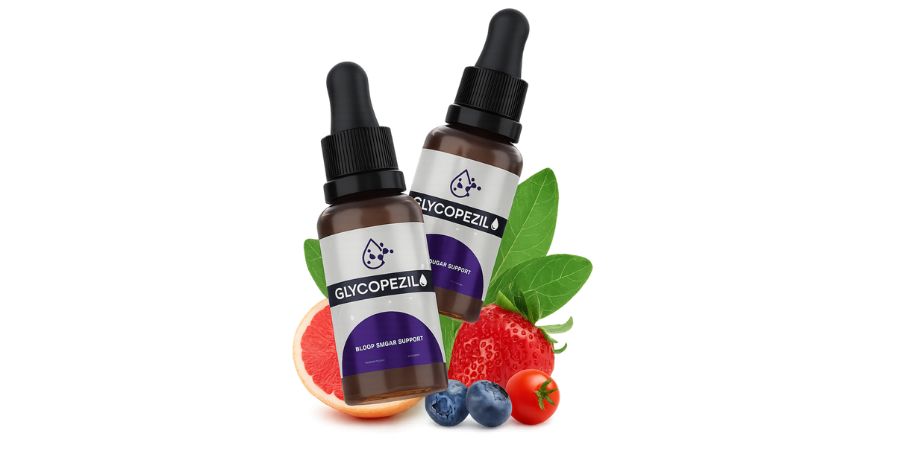
⚠️ VERDICT (UPFRONT): Glycopezil is a blood sugar supplement with no published clinical trials proving it works as a product, a deeply inconsistent ingredient label across sellers, a marketing funnel built on deepfake celebrity endorsements, and a track record of refusing refunds. If you have diabetes, prediabetes, or any metabolic condition, this product should not be anywhere near your medicine cabinet. Skip it entirely.
Who This Is For — And Who Should Absolutely Skip It
This review is for:
- Anyone who has seen Glycopezil ads on social media or YouTube and is wondering whether to buy
- People with Type 2 diabetes, prediabetes, or metabolic syndrome looking for “natural” help
- Family members researching a product on behalf of a vulnerable loved one
- Anyone who has already bought it and is trying to understand what they purchased
You should absolutely skip Glycopezil if:
- You have a diagnosed blood sugar condition and are currently on medication (dangerous interaction risk)
- You are pregnant or breastfeeding
- You are under 18
- You cannot afford to lose money on a product that may refuse to honour its refund policy
- You found this product through a video featuring Dr. Sanjay Gupta, Dr. Phil, Tom Hanks, or any other celebrity — those videos are AI-generated deepfakes and the celebrity did not endorse this product
How I Found Out About Glycopezil
I’ll be honest with you. I didn’t stumble upon this product at a pharmacy. I watched a lengthy social media video — a slick, emotionally manipulative production — that claimed a doctor had “finally revealed” a natural method to reverse Type 2 diabetes using a blend of botanicals.
The “doctor” turned out to be a deepfake. The endorsements from famous faces were fabricated using AI. By the time I’d finished watching, I hadn’t bought anything, but I understood exactly why millions of people have.
Glycopezil is being promoted through what investigators describe as a “long-form video sales funnel” — an infomercial-style format designed to bypass critical thinking through emotional appeals, fake urgency, and manufactured authority. This review exists to give you the facts the ads won’t.
Ingredient Analysis: What’s Actually Inside?
This is where things get strange immediately.
There is no single, consistent ingredient label for Glycopezil. Depending on which website, listing, or bottle you find, the formula appears to change dramatically:
- One Amazon listing shows: chromium picolinate, maca root extract, grape seed extract, African mango seed extract, astragalus root extract, green tea leaf extract, glycerin, purified water, natural lemon flavour, stevia leaf extract
- An official-looking website lists over a dozen additional ingredients including gymnema sylvestre, guarana, grapefruit extract, panax ginseng, raspberry ketones, L-glutamine, L-tyrosine, L-arginine, GABA, L-carnitine, coleus forskohlii, cayenne, and more
- Yet another site markets it as a vision supplement, claiming to support eye health
- One eBay listing reportedly includes brahmi (bacopa), gotu kola, and motherwort
No legitimate supplement has this level of label inconsistency. It is one of the most glaring red flags I encountered. Independent investigators have noted that “none of the public pages examined provide a single, verifiable, consistent, complete ingredient label.”
Here is what the science says about the ingredients most commonly named:
Chromium Picolinate
Chromium picolinate is the most evidence-backed ingredient in the formula — but the bar matters. Published research does suggest it may support modest improvements in fasting glucose and HbA1c in people with Type 2 diabetes or prediabetes, at doses of 200–1,000 mcg per day. A PubMed review found that chromium supplements “at 200–1,000 mcg chromium as chromium picolinate a day have been found to improve blood glucose control” — but critically, these effects are “more pronounced in individuals with poor baseline glucose control or confirmed chromium deficiency” and the effect sizes are small (roughly 0.5–1% HbA1c reduction at best). Chromium does not appear to benefit blood sugar in healthy, non-diabetic individuals at all. Glycopezil does not publish its chromium dose anywhere visible, so there is no way to assess whether you’d even be getting a therapeutic amount. [PubMed: PMID 15208835]
Gymnema Sylvestre
The “sugar destroyer” of Ayurvedic tradition has some of the most interesting mechanistic research of any botanical. Small human trials suggest it may reduce sugar cravings and provide modest glucose-lowering effects. However, the NIH’s LiverTox database lists it as a “possible rare cause of clinically apparent liver injury,” and more importantly, human studies have shown that diabetic patients taking gymnema extract alongside prescription drugs can develop hypoglycaemic episodes. It may also interfere with metformin’s effectiveness. If you are on any diabetes medication and take gymnema without telling your doctor, you could end up with dangerously low blood sugar. [PubMed: PMID PMC7015520, NBK610217]
Maca Root
Maca is an adaptogen from the Andes traditionally used for energy and stamina. There is limited, preliminary research suggesting it may support energy and potentially regulate glucose metabolism through specific cellular pathways — but the evidence is far too sparse to justify its inclusion as a blood sugar supplement ingredient. It has not been approved for metabolic treatment anywhere.
Green Tea Extract
Green tea extract has reasonable antioxidant properties and is one of the more studied botanicals for general metabolic support. However, it is not a clinically validated treatment for blood sugar regulation on its own. High doses can also cause liver stress — particularly in supplement form rather than as brewed tea.
Guarana
This is worth flagging specifically: guarana is a natural caffeine source. If you are sensitive to stimulants, have heart disease, anxiety, or are taking stimulant medications, guarana-containing supplements carry real risk. Yet Glycopezil markets itself as “stimulant-free” on some platforms while including guarana on others. You cannot know what you are actually getting.
The Bottom Line on Ingredients
Some of the individual compounds have plausible mechanisms. None of them, in any combination at unknown doses in an unverified formula, have been proven to work as Glycopezil claims to work. Most critically: no independent clinical trials specific to Glycopezil as a formulated product have ever been published. Zero. The product has not been tested as a whole.
Dosage Assessment: Are the Amounts Actually Effective?
This section is necessarily short, because Glycopezil does not publicly disclose its ingredient doses.
For reference, the clinical research on the relevant ingredients points to the following effective ranges:
- Chromium picolinate: 400–1,000 mcg/day for meaningful glucose effects
- Gymnema sylvestre: 400–1,000 mg/day in most studied protocols
- Berberine (listed in some variants): 1,500 mg/day across three doses in most trials
A liquid drop formula offering “60 servings” in a 2 fl oz (60 mL) bottle is roughly 1 mL per serving. It is physically impossible to pack therapeutic doses of multiple ingredients into 1 mL of liquid. This is sometimes called “fairy dusting” in the supplement industry — adding trace amounts of recognisable ingredients to a label so the product can reference their research, while delivering quantities far too small to have any effect.
Without a disclosed supplement facts panel showing exact milligrams per serving, there is no basis for believing you are getting effective amounts of anything.
Side Effect Profile: What the Ads Won’t Tell You
Glycopezil’s marketing claims most users experience no side effects. The reality is more nuanced:
Drug interactions — the most serious risk: Several listed ingredients can actively lower blood sugar. If you are on metformin, sulfonylureas, insulin, or any other glucose-lowering medication, combining them with gymnema or other botanicals without medical supervision could result in hypoglycaemia — dangerously low blood sugar, with symptoms including dizziness, confusion, fainting, and in severe cases, seizures or coma. This is not a theoretical risk; it has been documented in clinical literature.
Liver stress: Both gymnema (rare but documented) and high-dose green tea extract carry potential hepatotoxic effects. Long-term safety of gymnema in humans has, in the words of the NIH, “not been well documented.”
Guarana/caffeine effects: Anxiety, elevated heart rate, insomnia, and hypertension are possible, particularly if you consume other caffeine sources.
Gastrointestinal upset: Gymnema and several other botanicals commonly cause nausea, stomach cramps, and diarrhoea, especially on an empty stomach.
Unknown interactions: Because the full ingredient list is inconsistent and doses are undisclosed, it is impossible to fully assess the interaction profile of this product with other medications. That opacity alone is a reason to avoid it.
Real User Experience: What Customers Are Actually Saying
Setting aside the heavily curated testimonials on Glycopezil’s own websites, here is what independent platforms show:
On Trustpilot, reviews of the related product “Glucopezil” are overwhelmingly negative. A sample of reported experiences includes:
“I believe that this is a scam. What was spoken on the video pertaining to the ingredients used by Dr. Phil and his colleagues is not what is written on the bottle. Have been using it for almost two months and no change.”
“I purchased 3 bottles, after the first bottle I phoned asking for my money back and they suggested that it takes 30 days for it to start working… Almost done the second bottle and again no results. I emailed to explain my displeasure and they said I had gone over the 60 day guarantee.”
“Don’t want to even give them 1 star. They are a complete scam. I’ve called every phone number I could find for them to make a return and every number is out of service.”
These reviews reveal a pattern that goes beyond product inefficacy: the 60-day money-back guarantee — heavily advertised as a risk-free safety net — appears to be structured so that customers delay long enough to miss the window. This is a known tactic in the supplement scam ecosystem.
Additionally, investigative reporting has confirmed that Glycopezil promotional videos have used deepfake AI-generated likenesses of Dr. Sanjay Gupta, Dr. Phil McGraw, Barbara O’Neill, Dr. Robert Lustig, Tom Hanks, Halle Berry, Serena Williams, and others to fabricate celebrity and medical endorsements that do not exist. The same investigation found that claims of MIT involvement in the product’s development are entirely fabricated.
The FDA Registration Misdirection
Glycopezil’s marketing frequently states the product is “manufactured in an FDA-registered, GMP-certified facility.” This language is carefully chosen to sound like FDA approval — but it is not.
FDA registration of a facility is a basic administrative requirement. It means the building has been registered, not that the product inside it has been reviewed, tested, approved, or verified by the FDA. The FDA does not evaluate dietary supplements before they go to market. Glycopezil is not FDA approved for any purpose. Using facility registration language to imply product approval is, as one investigation put it, “a tactic common in supplement scams and designed to create a false sense of safety.”
FREQUENTLY ASKED QUESTIONS
Q: Can Glycopezil replace my diabetes medication? No. Full stop. No dietary supplement can replace prescribed medication for diabetes. Attempting to do so without medical supervision is dangerous and could result in uncontrolled blood sugar with serious long-term consequences.
Q: Are any of the ingredients legitimate? Some individual ingredients, like chromium picolinate and gymnema sylvestre, have limited supporting research in isolation. However, the product as formulated has no clinical evidence behind it, and the doses are unknown. “Legitimate ingredients” does not equal “legitimate product.”
Q: Is Glycopezil the same as prescription glipizide? No, and the name appears deliberately designed to evoke the prescription medication glipizide. Glipizide is a pharmaceutical drug with rigorously tested dosing and decades of clinical evidence. Glycopezil is a supplement with none of these.
Q: The ad showed a famous doctor talking about it. Is that real? No. Multiple investigations have confirmed that promotional videos for Glycopezil use deepfake AI technology to fabricate endorsements from recognisable doctors and celebrities. None of the people depicted have endorsed this product.
Q: Can I get a refund if it doesn’t work? The 60-day guarantee is advertised prominently, but user reports consistently indicate that refund requests are deflected, contact numbers go dead, and customers who waited to see results often find they have inadvertently passed the return window.
Q: What should I take for blood sugar support instead? Talk to your doctor. If lifestyle interventions and your current medications are not enough, there are evidence-based supplementary options (like berberine, at appropriate doses, under supervision) that your physician can help evaluate. Real metabolic health comes from dietary changes, physical activity, sleep quality, and stress management — not a dropper bottle.
References & Further Reading
The following PubMed and credible sources underpin the ingredient analysis in this review:
- Chromium picolinate and insulin resistance — Vincent JB. A scientific review: the role of chromium in insulin resistance. Diabetes Educ. 2004. PubMed PMID: 15208835
- Gymnema sylvestre safety and hepatotoxicity — NIH LiverTox Database. Gymnema sylvestre. National Library of Medicine. https://www.ncbi.nlm.nih.gov/books/NBK610217/
- Gymnema risk assessment as food supplement — Rietjens IMCM et al. Risk assessment of substances used in food supplements: the example of the botanical Gymnema sylvestre. EFSA-supported publication. PMC7015520. https://www.ncbi.nlm.nih.gov/pmc/articles/PMC7015520/
- Gymnema + Chromium combination trial — Luzzi R et al. Efficacy and Tolerability of a Food Supplement Based on Zea mays, Gymnema sylvestre, Zinc and Chromium. Nutrients. 2024. PMC11314272. https://www.ncbi.nlm.nih.gov/pmc/articles/PMC11314272/
- Chromium picolinate RCT in high-risk adults — Katz DL et al. Chromium picolinate does not improve glucose tolerance in adults at risk for type 2 diabetes. J Nutr. 2010. CDC archive text
- Glycopezil scam investigation (deepfakes, fabricated endorsements) — Jordan Liles. Glycopezil Reviews: Scam Exposed. JordanLiles.com, 2025–2026. https://jordanliles.com/scams/glycopezil-reviews-scam/
- Glycopezil ingredient inconsistency fact-check — Factually.co. What ingredients are listed in Glycopezil and is there clinical evidence? 2026. https://factually.co/fact-checks/health/glycopezil-ingredients-clinical-evidence-blood-sugar-c86068
- User complaints and refund issues — Trustpilot reviews for Glucopezil. https://www.trustpilot.com/review/glucopezil.trashlify.com
This review represents the personal opinion and research of the author. It is not medical advice. If you are managing diabetes or any metabolic condition, please consult a qualified healthcare provider before making any changes to your treatment or supplement regimen.
Last updated: June 2026